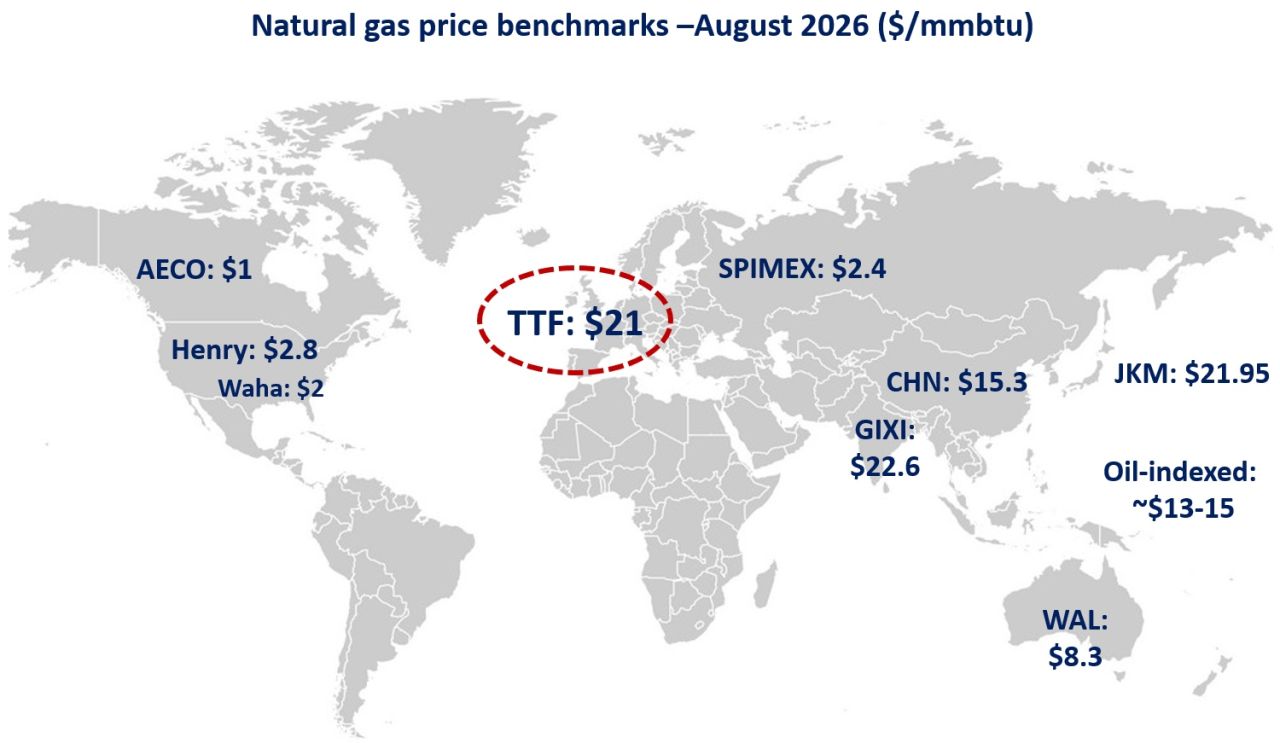
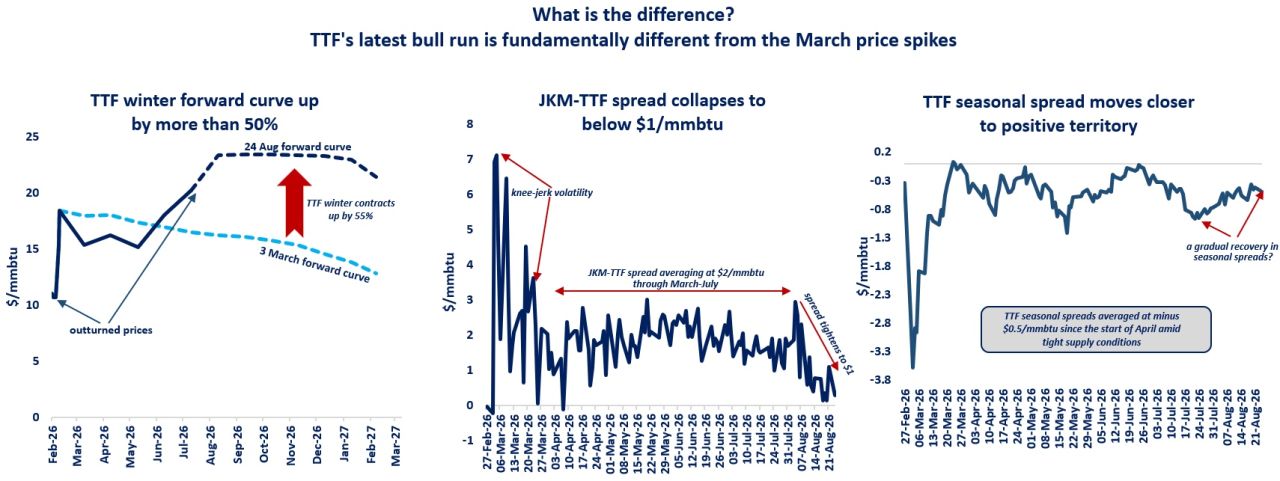
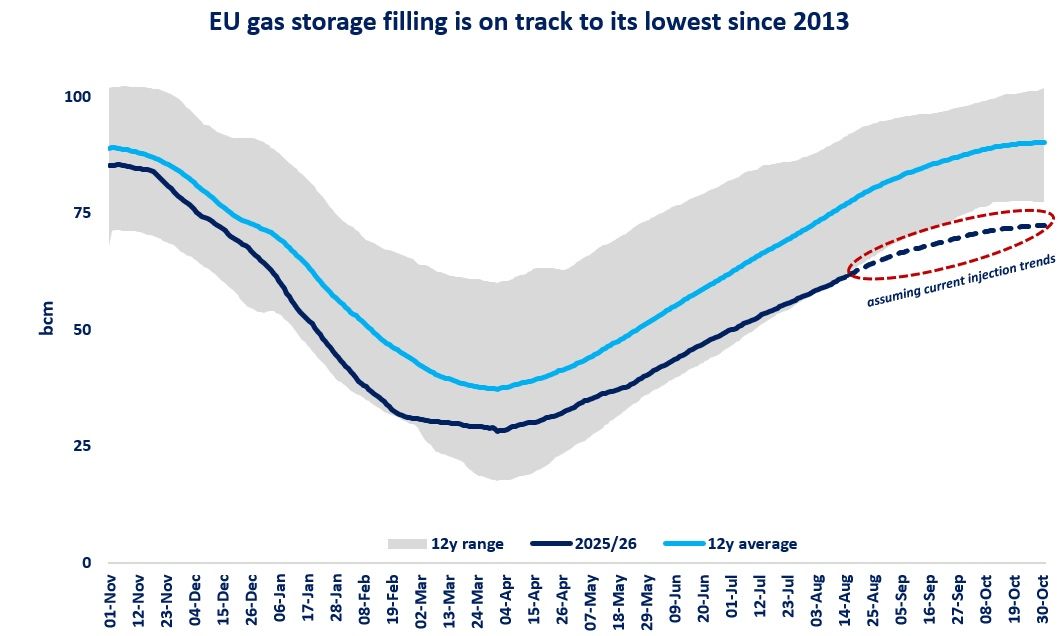
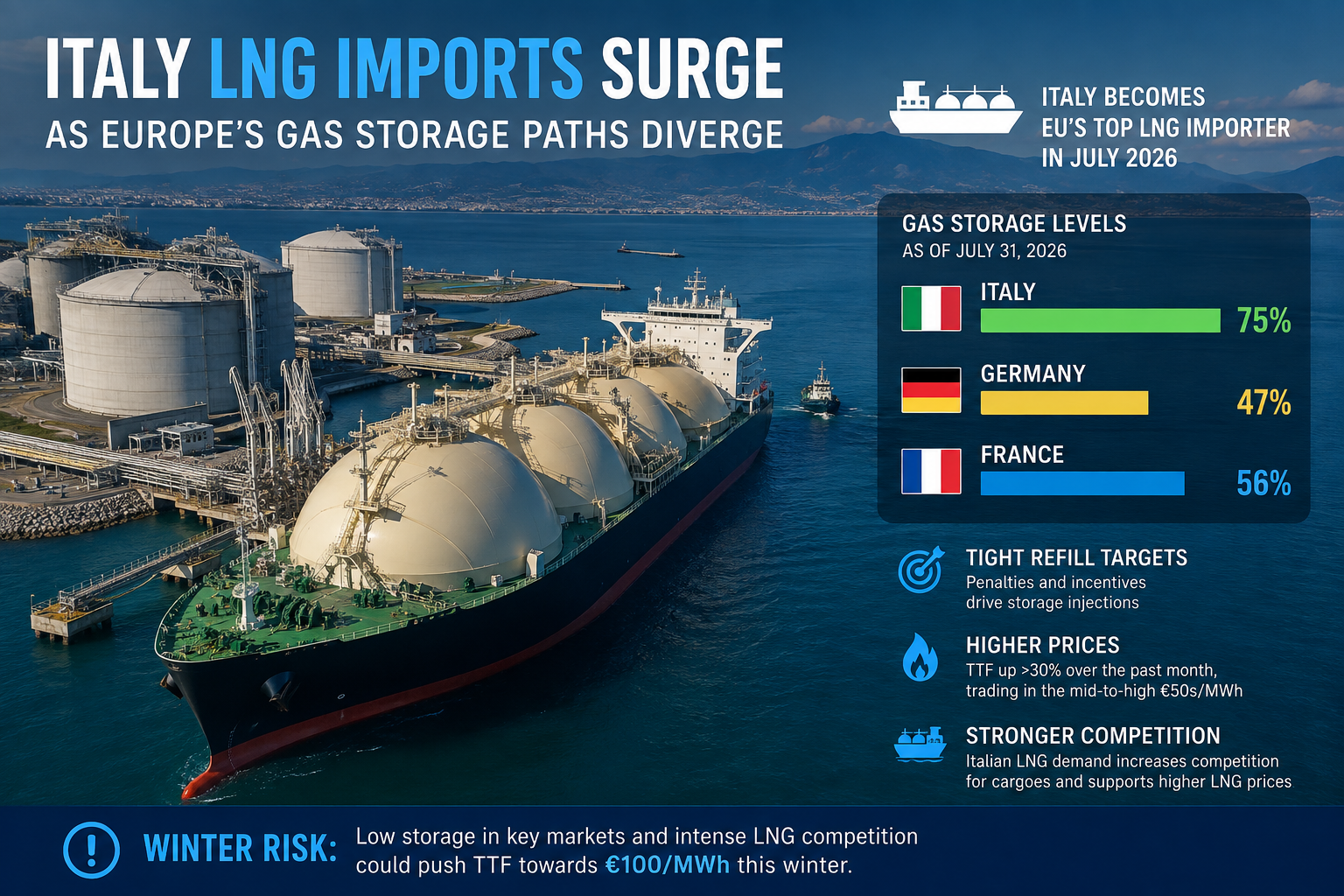
Global gas market developments are examined in a new commentary highlighting five key takeaways from the latest quarterly gas outlook. The analysis looks at LNG supply resilience, Asian demand, coal-to-gas switching and the outlook for global gas markets during the second half of 2026.
It is summer, it is hot, and the latest IEA Quarterly Gas Report is out with a short-term forecast for 2026. The five key takeaways for me are:
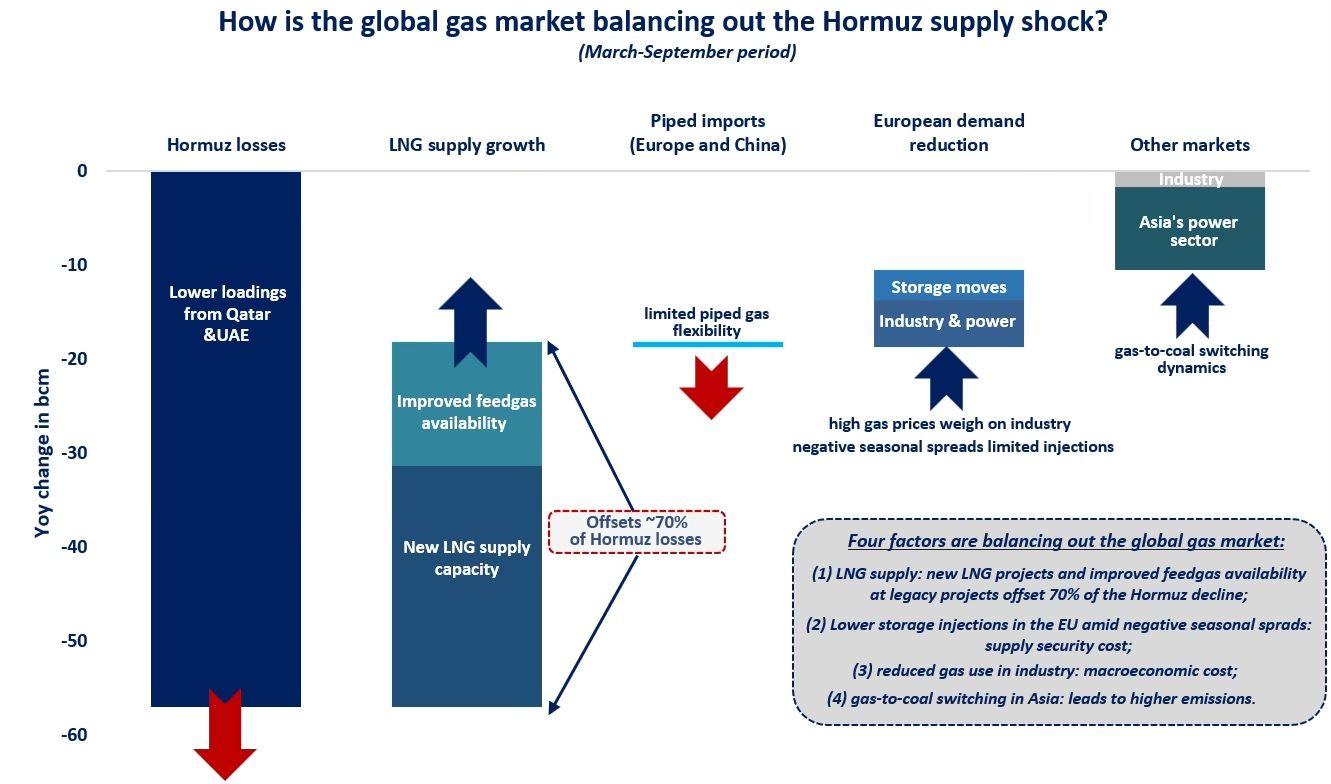
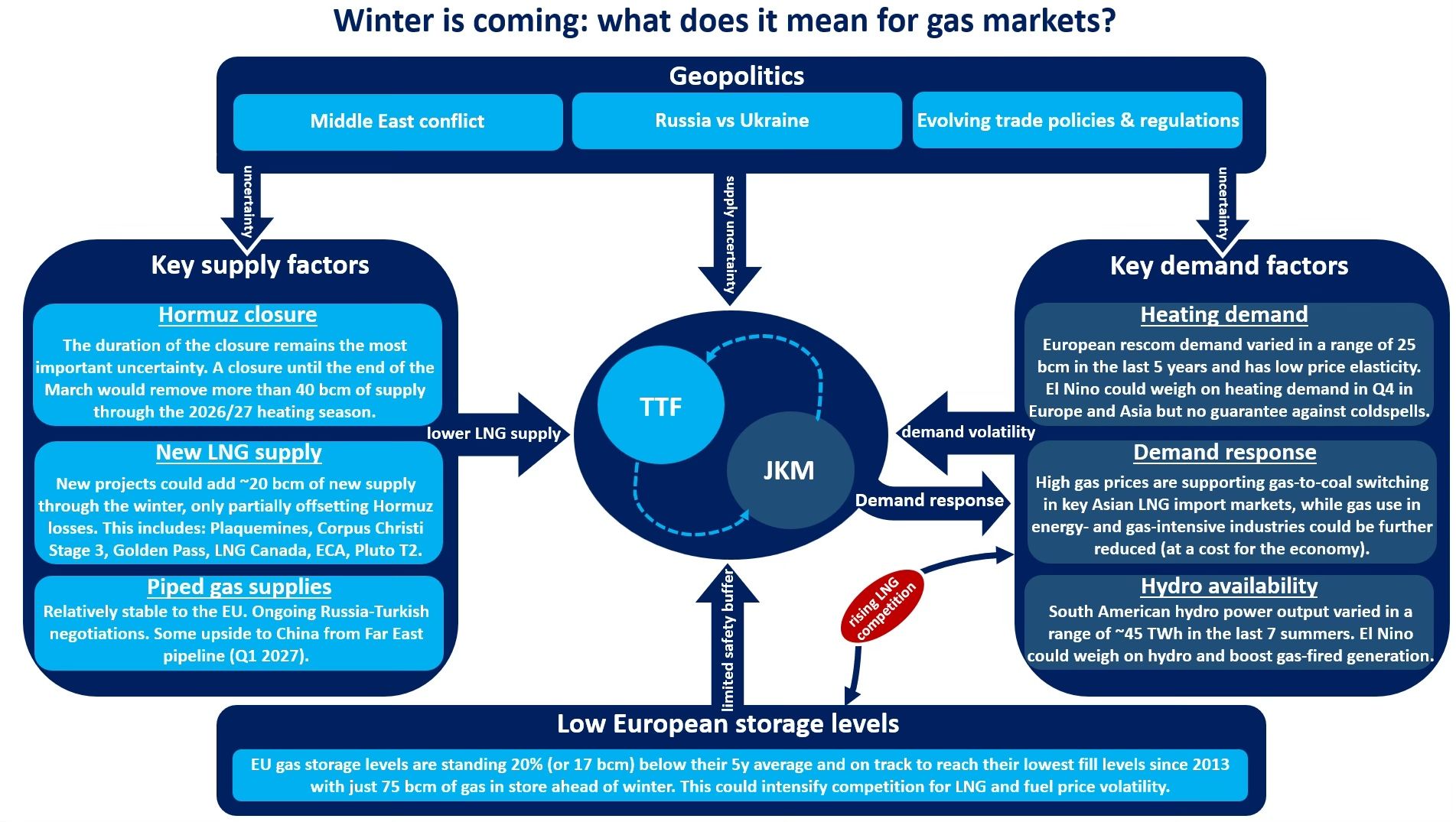
(1) I will survive: While the closure of the Strait of Hormuz represents an unprecedented disruption for the global LNG market, around two-thirds of the supply losses from Qatar and the Emirates were offset by a very strong increase in LNG supply from other producing regions. The ramp-up of new LNG liquefaction plants, including Plaquemines, Golden Pass, Corpus Christi Stage 3 and LNG Canada, is playing a crucial role in backing up the global gas system.
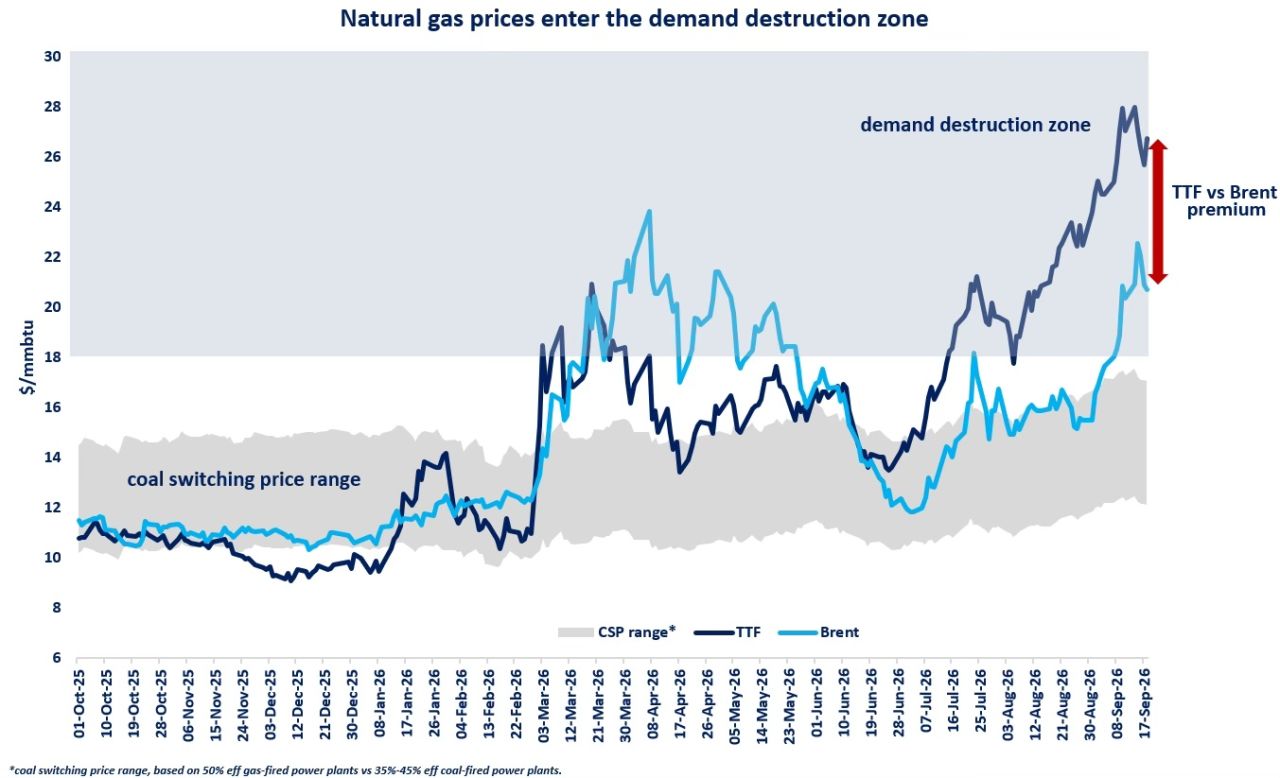
(2) Coal may be on the demand side: Gas-to-coal switching is playing a critical balancing role, especially across Asian markets. This is largely driven by generation economics, but is also supported by a range of administrative and policy measures undertaken by Asian governments to encourage coal over natural gas.
(3) I know what you want: Following a 7% decline through March–May, Asia’s LNG imports recovered rather strongly in June and grew by 7% year-on-year, despite the relatively high LNG import prices. This is primarily supported by rising cooling needs and, hence, stronger electricity demand, which is typically met by gas-fired power plants on the margin. This also highlights the increasingly critical role of natural gas in the electricity systems of these markets.
(4) Straight outta Hormuz: The working assumption is that the Strait will reopen in Q3 and allow for a full ramp-up of the non-damaged LNG liquefaction plants in Qatar and the Emirates by the beginning of October. Under these assumptions, global LNG supply would remain broadly flat in 2026, although any delays to the reopening would push global LNG trade into contraction for its first time since 2012.
(5) Hit me baby one more time: Global gas demand is expected to decline by 0.5% in 2026, marking its third annual contraction this decade. Losses are largely concentrated in the Middle East, where war damaged local gas production facilities and disrupted gas-intensive industries. In addition, higher LNG spot prices are set to weigh on Asia’s gas demand, especially in the region’s most price-sensitive markets.
Today’s report is dedicated to the memory of colleagues who lost their lives in the explosion at the Barzan gas supply facility and the helicopter crash at Ras Tanura.
What is your view? How will the gas market evolve through the remainder of 2026?
Source: Greg Molnár, LinkedIn commentary on the latest Quarterly Gas Report (July 2026).