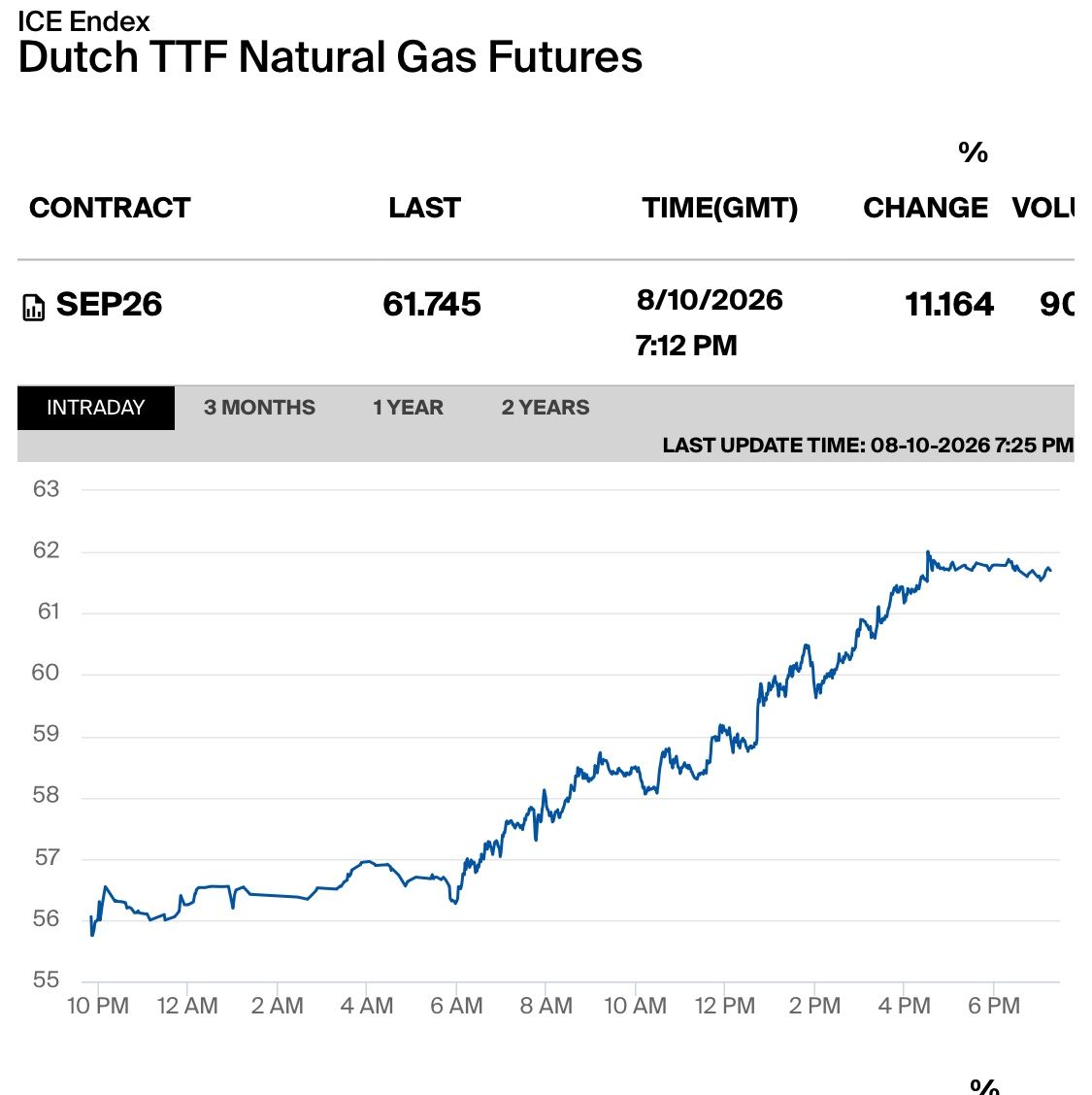
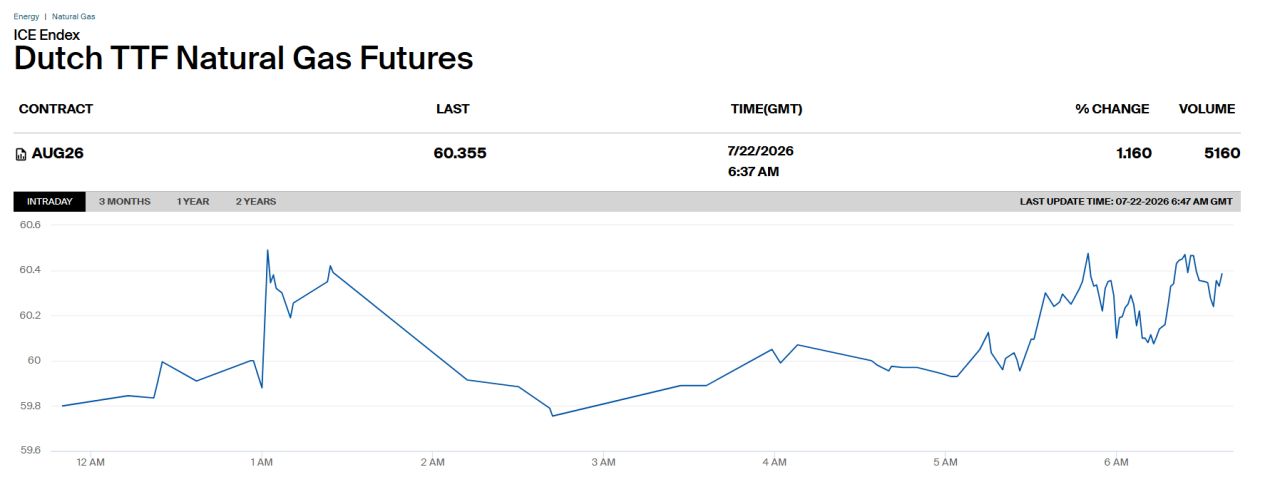
TTF trading hours have been extended from 10 to 21 hours, marking a major shift for European gas markets with far-reaching implications for trading, risk management and global market participation.
European gas and power trading hours were just extended from 10 to 21 hours, a significant change with profound implications on operations, risk management and ultimately to the globalisation of European gas markets.
European gas trading volumes rose by more than fifteenfold in the last 20 years, while TTF increasingly evolved into a global gas wheel, where global LNG players are actively hedging risk and fine tuning their positions in a rapidly changing market context.
The rather restrictive European trading window in a way failed to capture TTF’s rapidly changing role and let be honest, was quite punitive for non-Europe based traders, including folks in Houston and Singapore…
The new trading window puts all into a more equal footing, while longer trading hours create more opportunities in an increasingly globalised gas market.
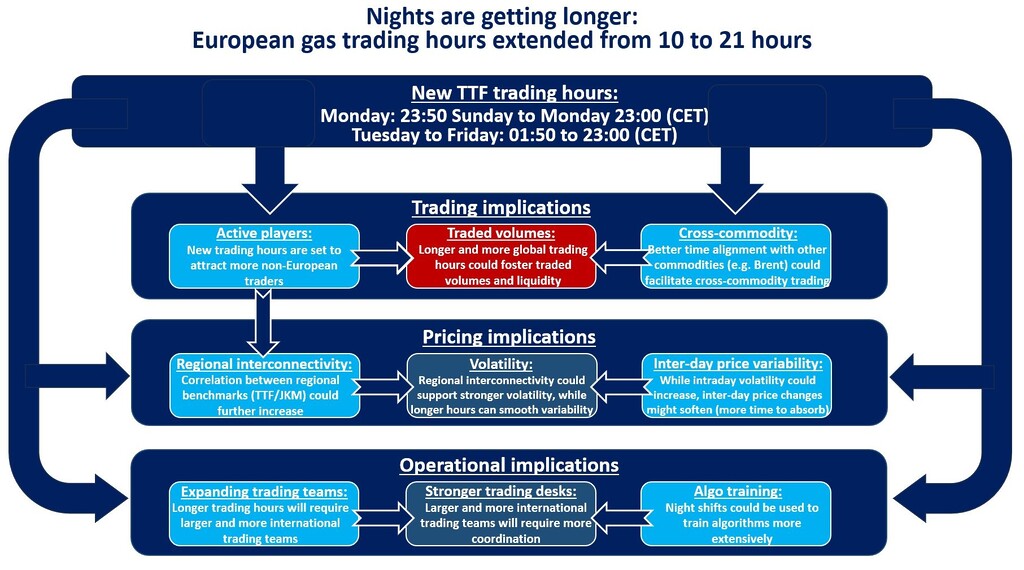
Longer trading hours are set to attract more volumes from non-European based market players, who are increasingly using TTF for risk management purposes. In addition, a better time-alignment with other global commodities (such as Brent or JKM) could facilitate the execution of cross-commodity trading strategies.
All of this could contribute to higher trade volumes which would further enhance the depth and the liquidity of TTF as a global gas trading venue.
The impact on price volatility is less clear.
The better alignment of the TTF-JKM trading windows could support further regional interconnectivity and correlation between Asian and European gas prices. This closer relationship could drive more volatility (as price trends transpire more easily from one region to the other).
On the other hand, longer trading days gives more time to the market to absorb supply/demand changes or geopolitics… so while within-day volatility might increase, the day-to-day price changes could actually soften. Time will tell, how this will actually play out…
But what is very certain is that trading desks will need to adapt.
Organising night shifts will require larger and more international trading desks, with the need for more cross-time-zone coordination. And algos could further strengthen their role, especially during the late night hours.
TTF is now officially 23 years old, it has grown up and bedtime rules are over…
Source: Greg Molnar