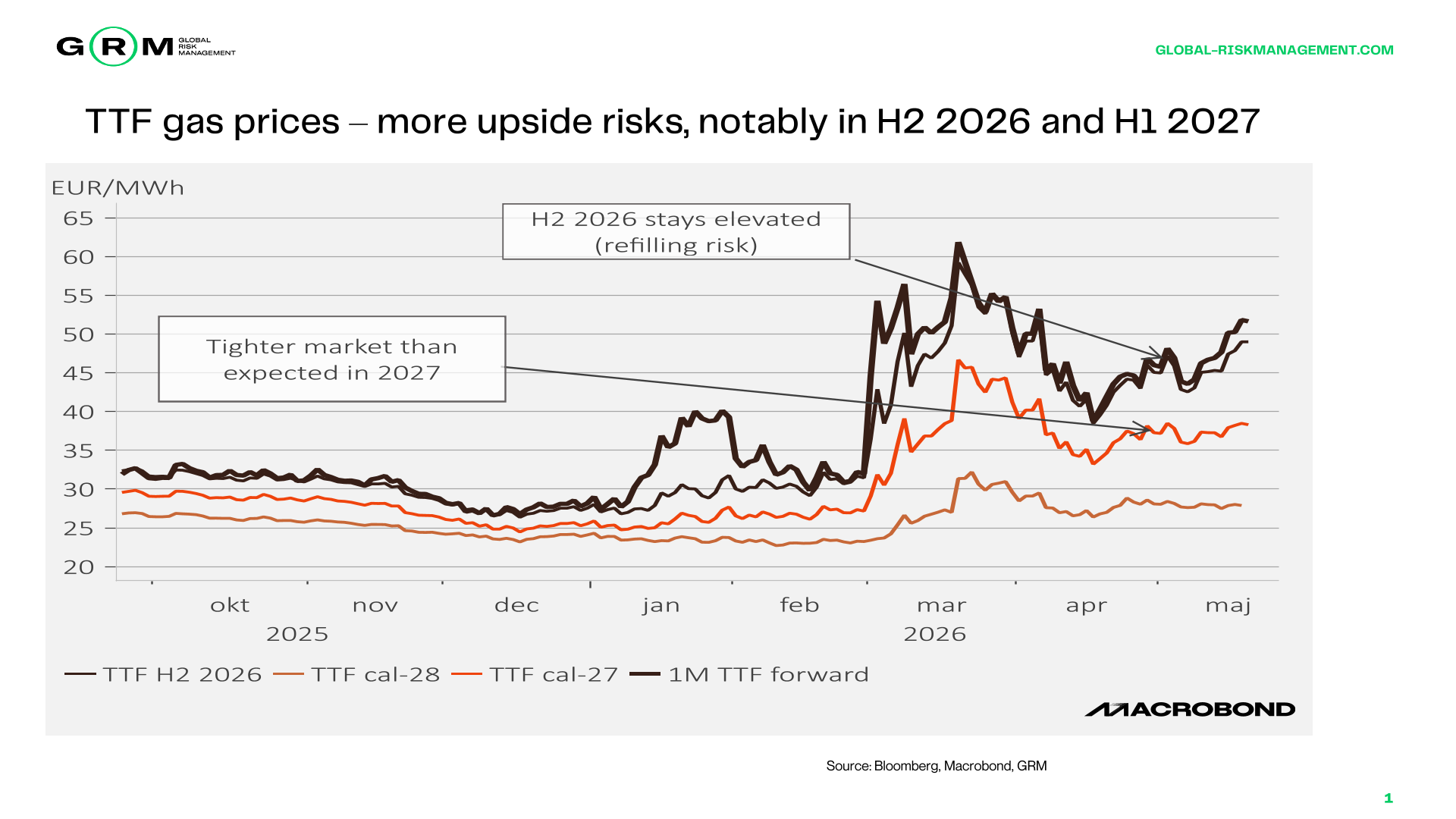
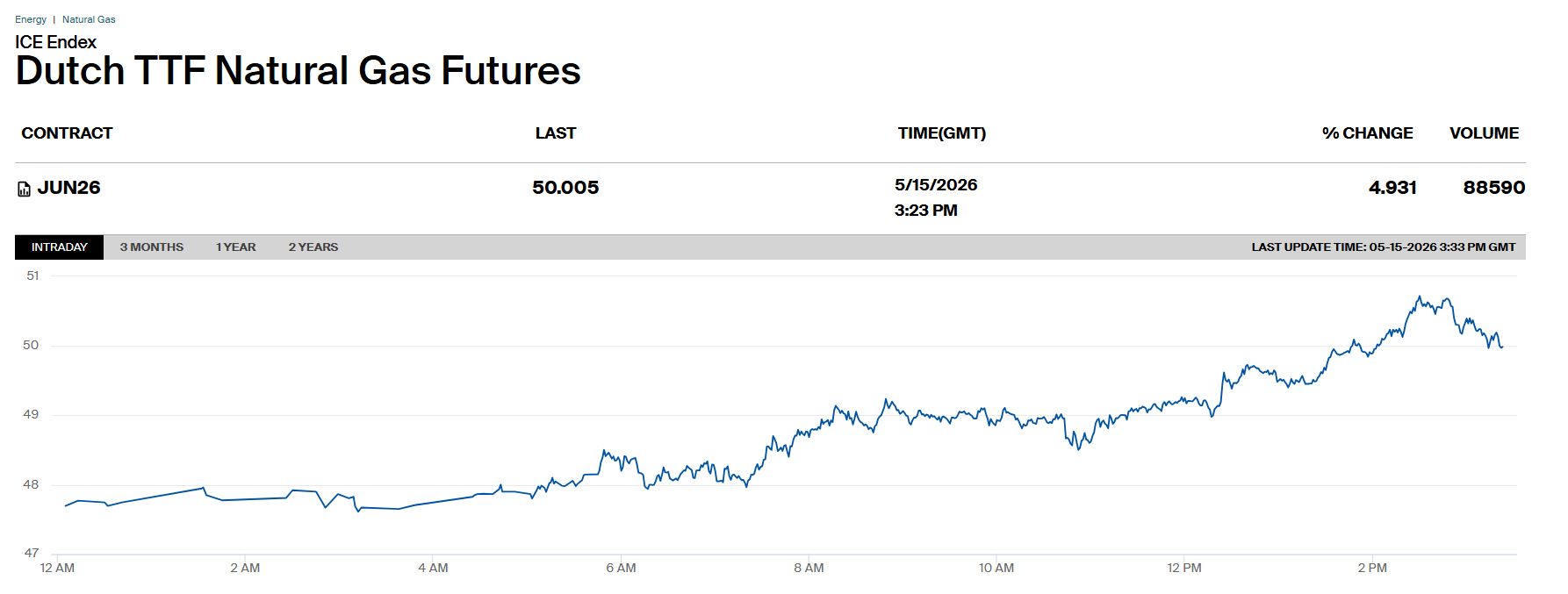
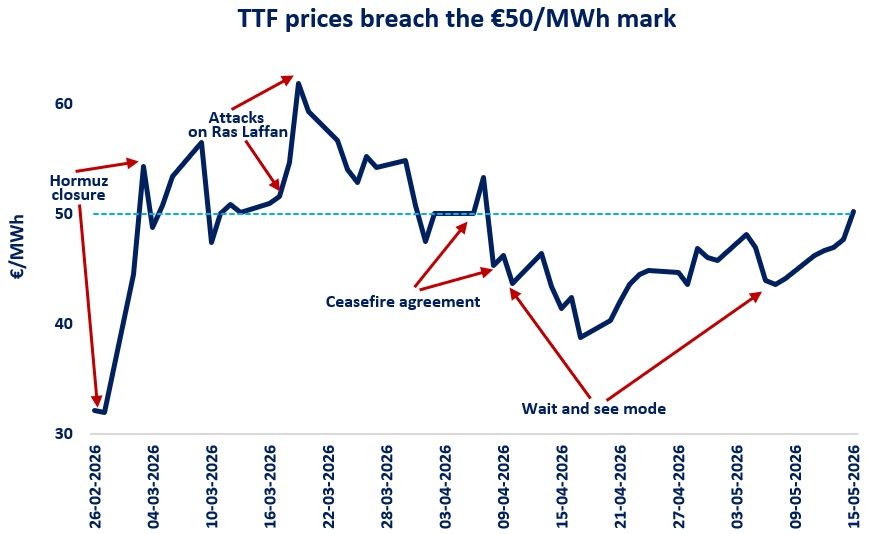
TTF price volatility returned to European gas markets after prices fell sharply as traders reassessed the scale of LNG disruption linked to tensions around the Strait of Hormuz, with market participants divided over whether the move reflects a lasting easing of risk premiums or simply another swing in an increasingly headline-driven and volatile trading environment.
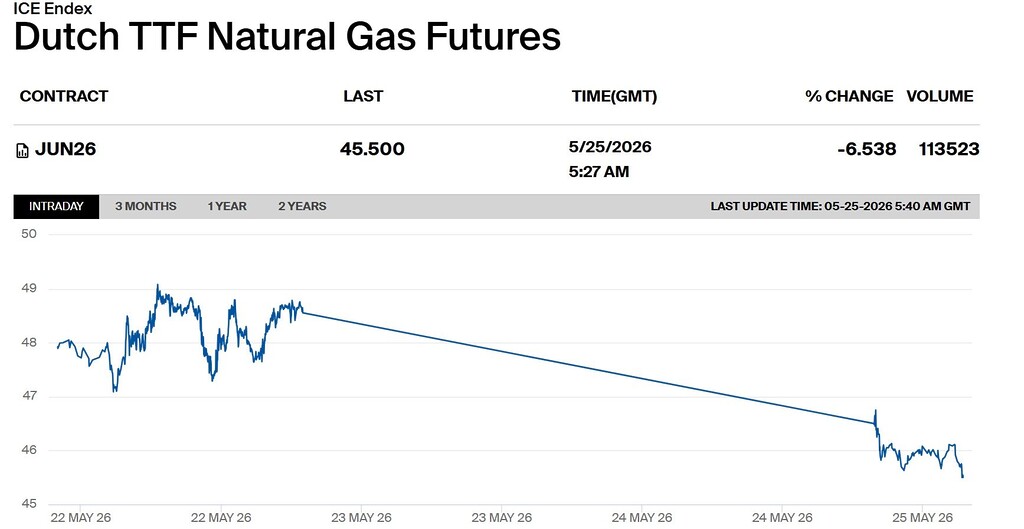
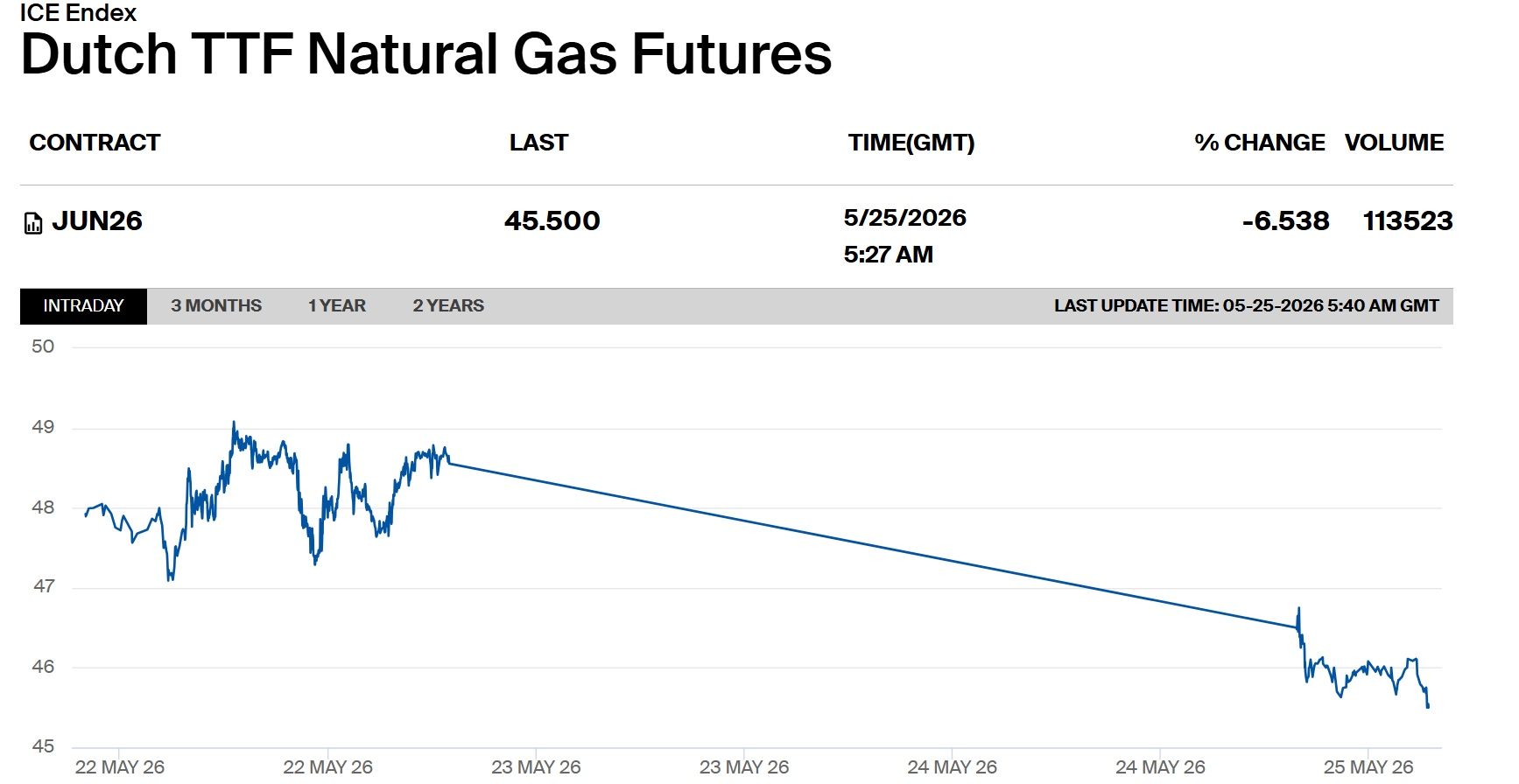
TTF fell by more than 6% early in the session amid hopes that a potential agreement involving Iran could help ease concerns over LNG flows through Hormuz, according to commentary shared by Greg Molnár on LinkedIn.
Molnár noted that only seven LNG cargoes reportedly passed through the Strait in May — four from Qatar and three from the UAE — compared with what he described as a more typical monthly flow of around 100 cargoes.
The sharp move lower in TTF sparked debate among traders, analysts and LNG market participants over whether markets may have overestimated the scale of immediate supply disruption risks.
Some commenters suggested the move may also have been amplified by lower liquidity linked to the US Memorial Day holiday, warning that market direction could quickly reverse once normal trading conditions resume.
Others argued that while some geopolitical risk premium may now be easing, Europe’s increasing reliance on flexible LNG imports means the region is also importing more global volatility into its gas market.
“LNG flexibility is valuable, but it also imports global volatility into the European gas balance,” one market participant commented.
Several contributors also pointed to broader uncertainty surrounding:
- insurance costs
- shipping risks
- speculative positioning
- and the durability of any geopolitical de-escalation involving Iran and the wider Gulf region.
While TTF’s sharp decline may suggest markets are becoming more comfortable with current LNG flow conditions through Hormuz, many participants argued that volatility itself may remain the only real “one-way ticket” for European gas markets until regional tensions ease more decisively.
Source: Greg Molnár via LinkedIn / ICE Futures Europe data