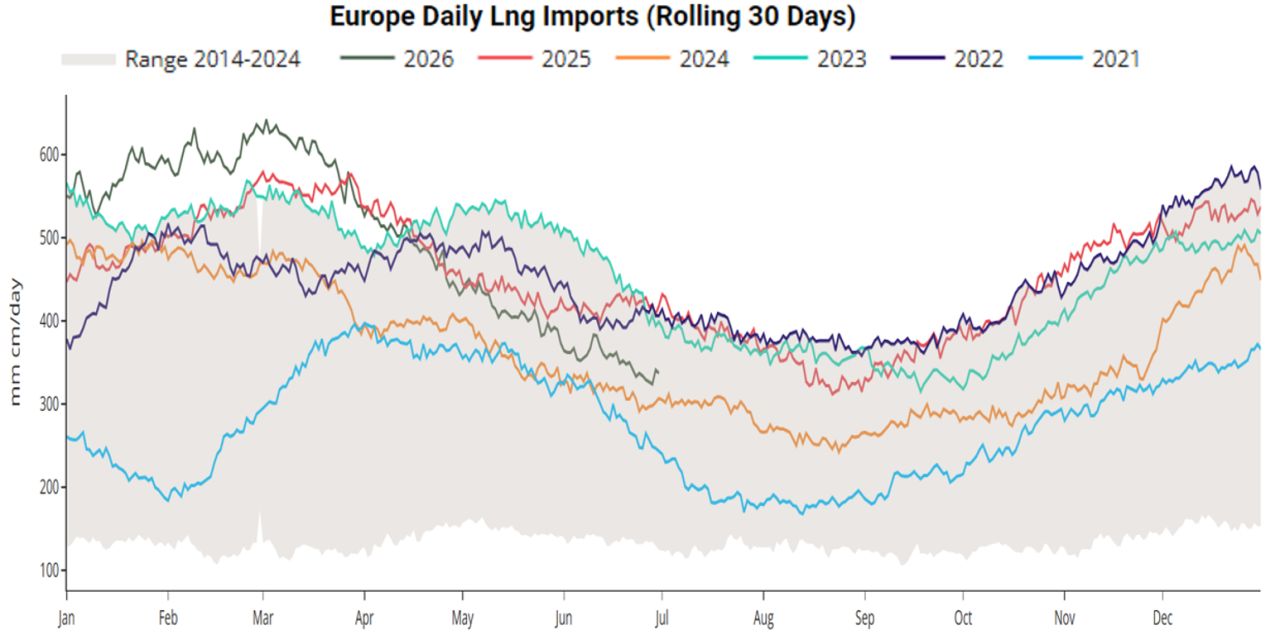

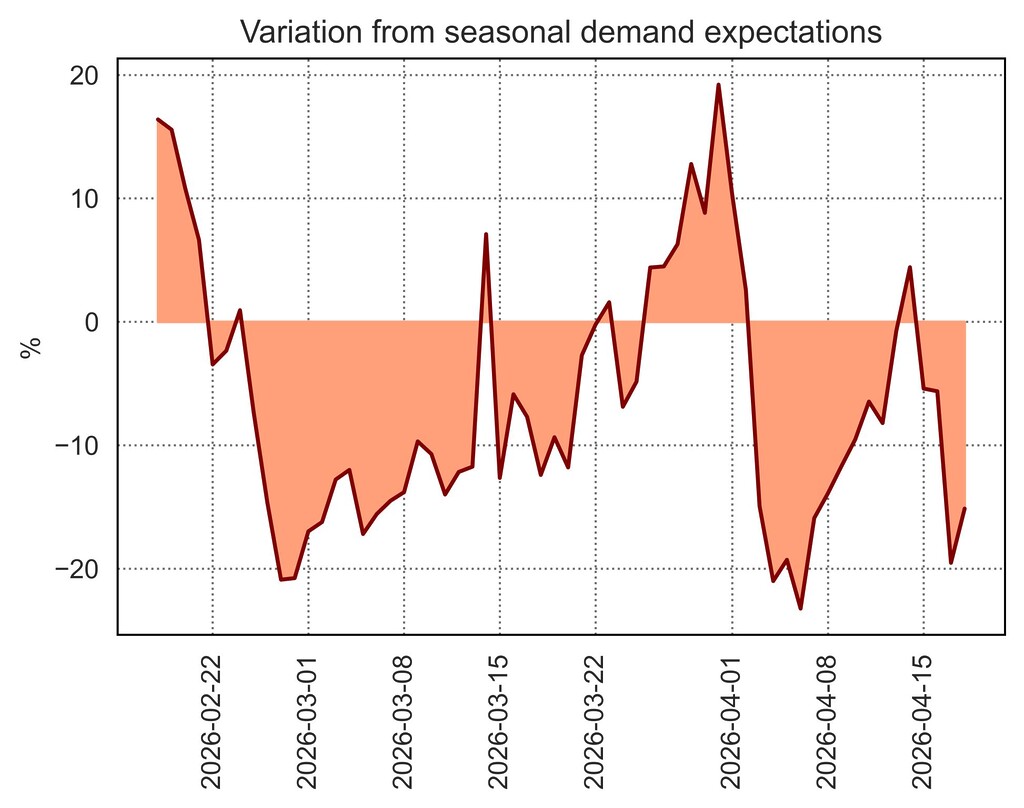
European gas demand has remained significantly below seasonal expectations due to unseasonably mild weather, helping to stabilize the market despite geopolitical tensions and reduced LNG imports. This decline has played a key role in offsetting supply disruptions, including concerns around the Strait of Hormuz, while still allowing steady storage injections across Europe.
Unseasonably low demand in Europe, primarily driven by favourable weather, continues to play an important role in limiting the market impacts of the closure of the Strait of Hormuz and is supporting storage injections despite a reduction in European LNG imports over the last two months.
Since the start of the U.S. and Israeli war against Iran, total European apparent demand has been over 50 TWh below seasonal expectations: this is equivalent to a reduction of ca. 50 LNG cargoes from Europe’s import requirements during the summer and is enough to offset the impact of two weeks of closure of the Strait of Hormuz.
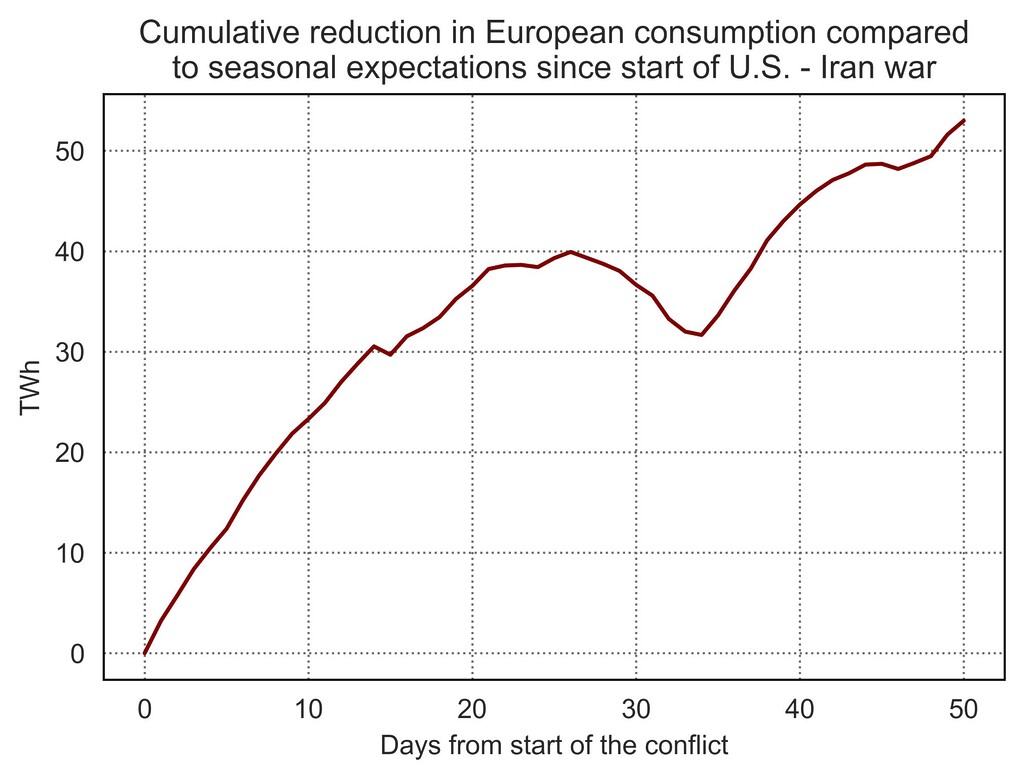
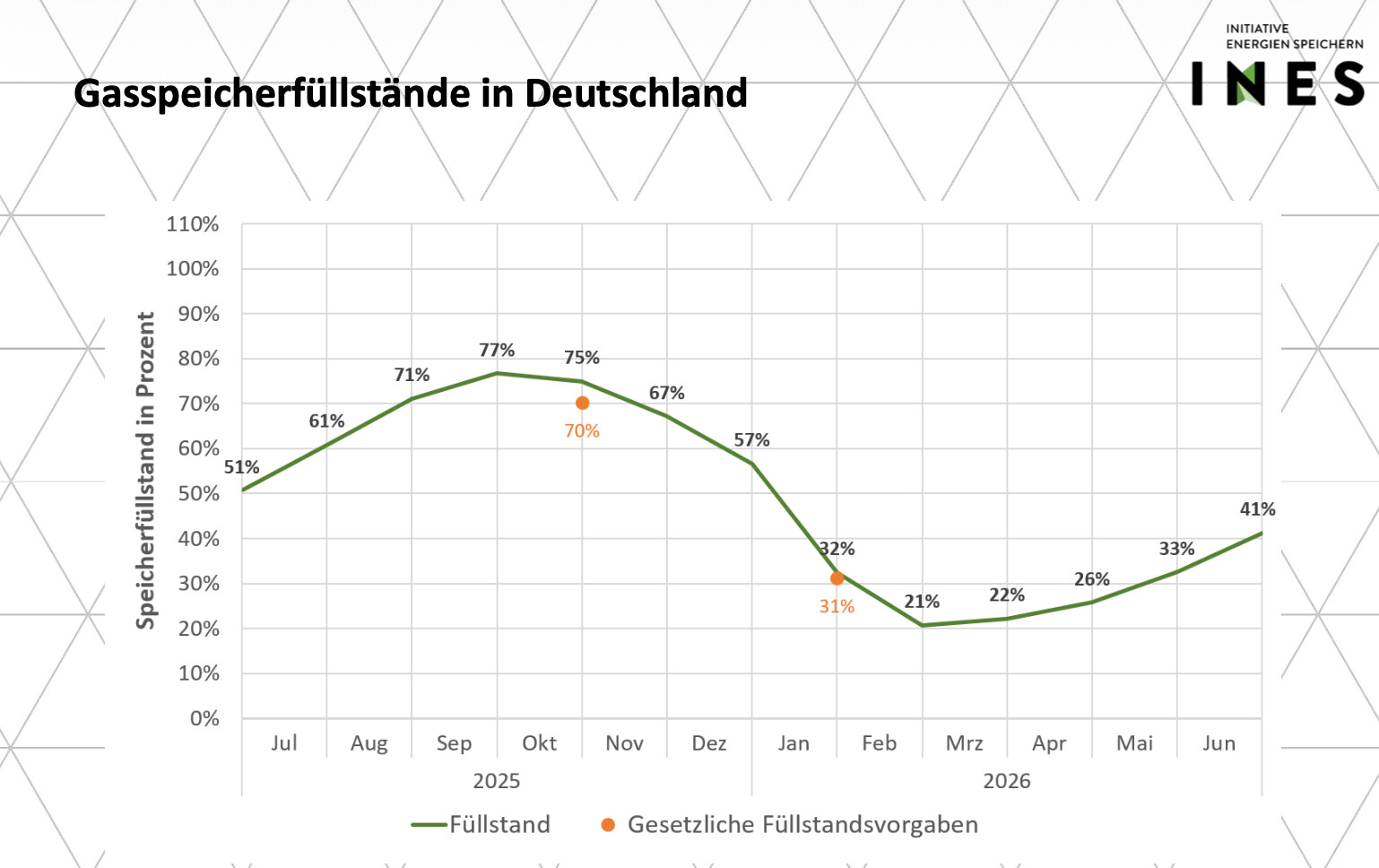
While the majority of this reduction occurred in the first three weeks of the conflict, the start of April has also seen demand remain consistently below seasonal expectations. This has enabled storage injections so far to not deviate too much from the levels seen last year, which had also seen unseasonably low demand in April, despite a year-on-year reduction in LNG sendout.
source: Giovanni Bettinelli