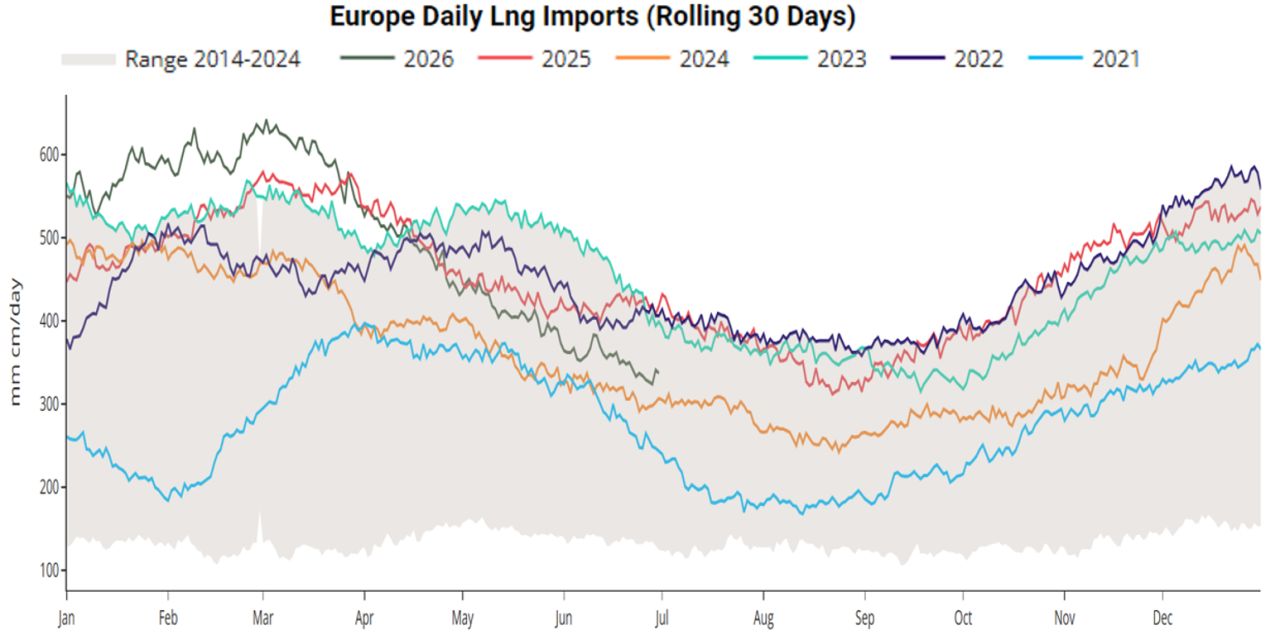
Russian LNG exports surged to record levels in March 2026, with Europe absorbing a growing share of Yamal LNG cargoes as the Hormuz crisis tightened global LNG supply.
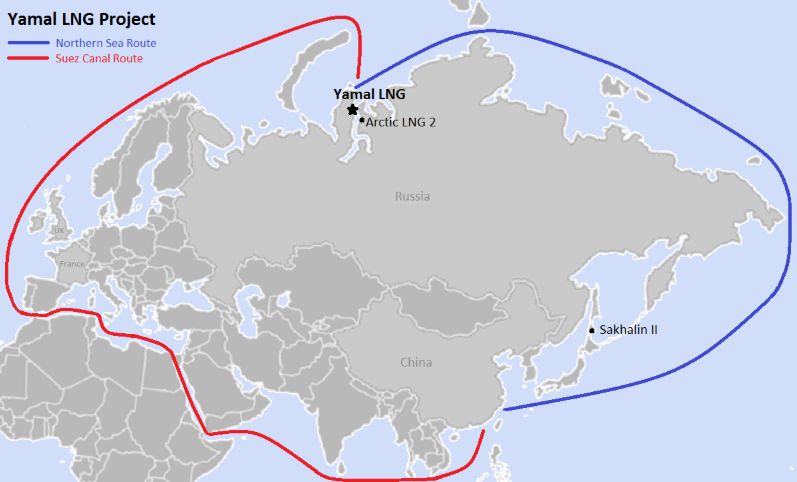
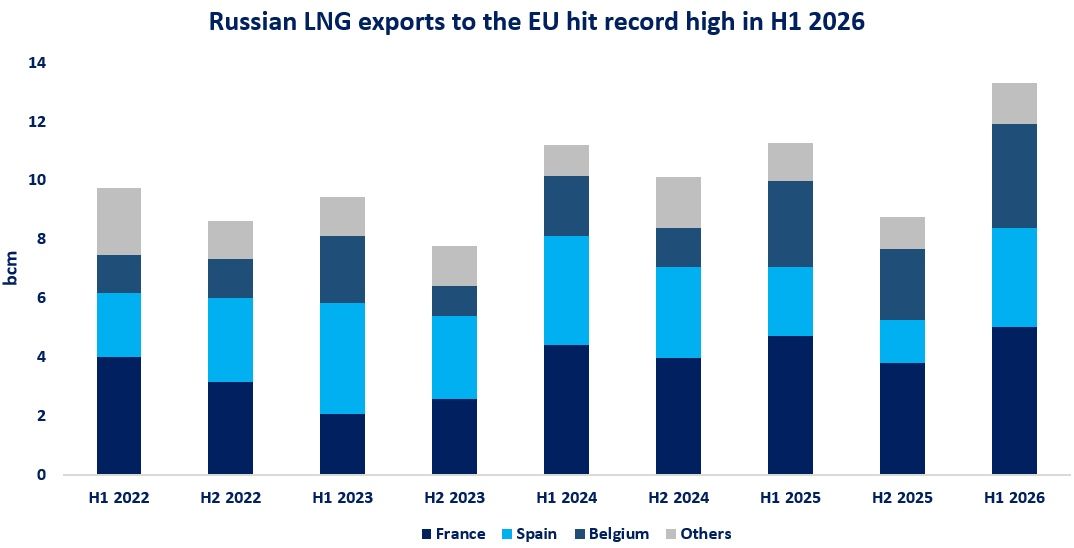
The EU has never imported as much LNG from Russia as it did in March 2026. According to data from Bruegel, the EU imported approximately 2.45 billion cubic metres (bcm) of Russian LNG, with European terminals fully unloading cargoes from Yamal LNG, the largest unsanctioned terminal managed by the private firm Novatek.
These figures represent a 20% increase month-on-month and a staggering 40% increase year-on-year.
This data suggests that the Hormuz crisis and the subsequent curtailment of Qatari LNG shipments—which are traditionally bound for Asia under long-term contracts—are severely squeezing the physical supply of gas to Europe.
Paradoxically, the EU still intends to fully ban Russian LNG imports by the beginning of 2027 to complete the phase-out initiated after the invasion of Ukraine.
Last week, the EU adopted the 20th package of sanctions against Russia. This latest round targets the energy industry’s infrastructure, trying to reduce the Kremlin’s revenues determined by the export of hydrocarbons.
The same introduces mandatory due diligence checks for the sale of tankers, thereby making it more difficult for Russia to expand its shadow fleet, and bans the provision of maintenance and other services for Russian LNG tankers and icebreakers.
Moreover, the EU has also sanctioned from January 1 the import of gas condensate, a type of light oil which is a by-product of both Yamal LNG and Arctic LNG-2.
The recent spike in imports may also be a “last call” effect: a ban on Russian LNG spot cargoes was implemented on April 25. Utilities and traders likely rushed to secure Yamal LNG volumes before legal access became restricted.
However, the financial trend is undeniable.
As a matter of fact, in the first quarter of 2026 EU payments for Russian Yamal LNG Hit €2.88 billion. Alone, March represented a total bill of €1.33 billion for European purchases of Russian LNG, traditionally heading towards countries such as Span, France, Belgium and the Netherlands.
The EU welcomed 97% of the total number of LNG cargoes from Yamal, totalling 69 in the three-month period.
Source: Francesco SASSI (Linkedin)