
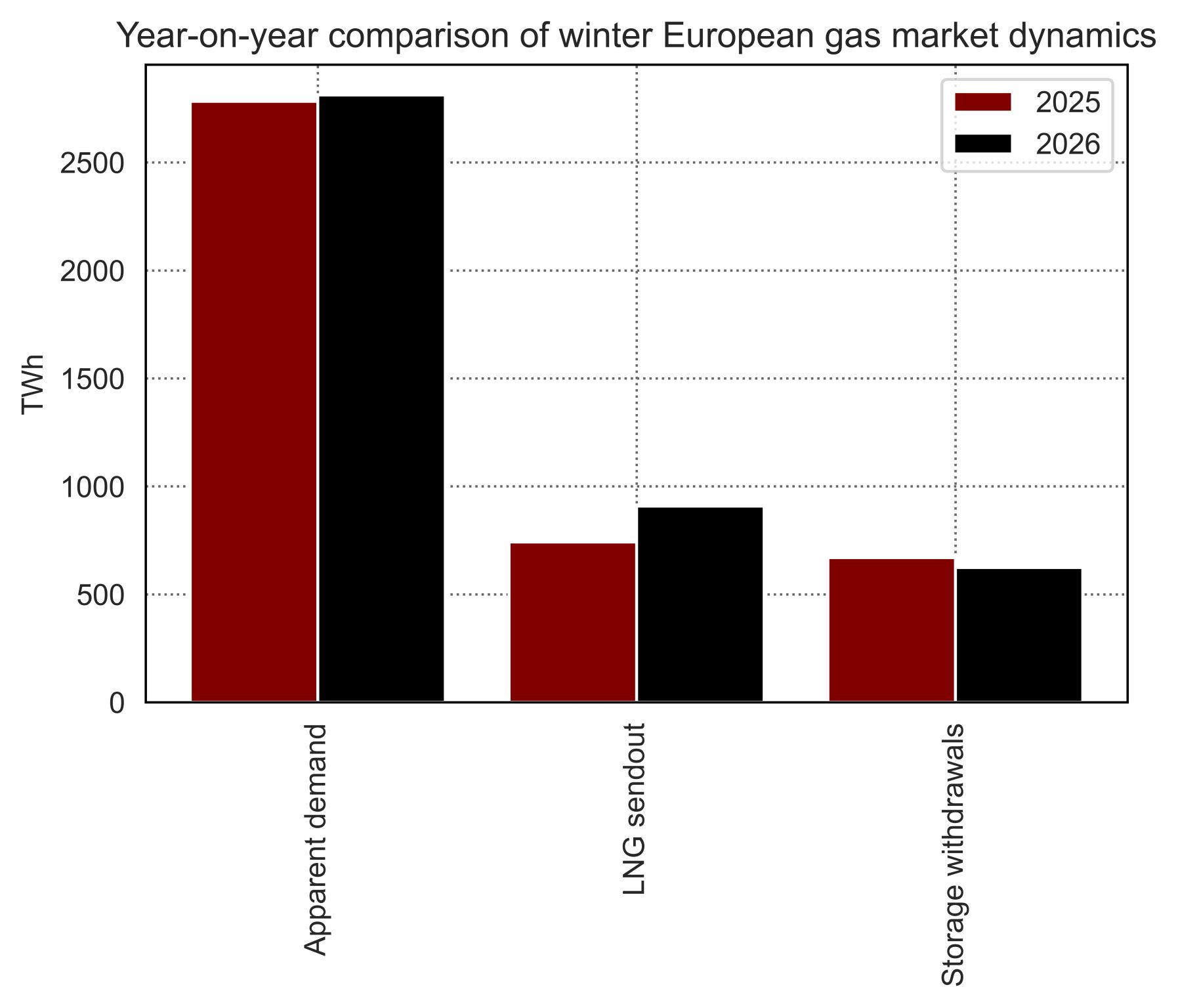
European gas demand during the 2025-26 winter was less than 3 bcm higher than the previous year.
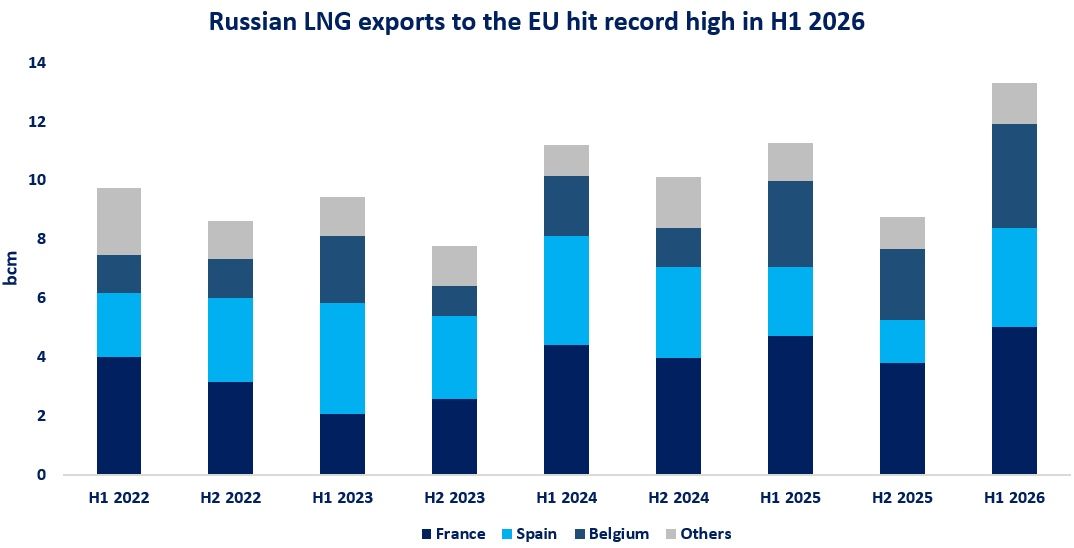
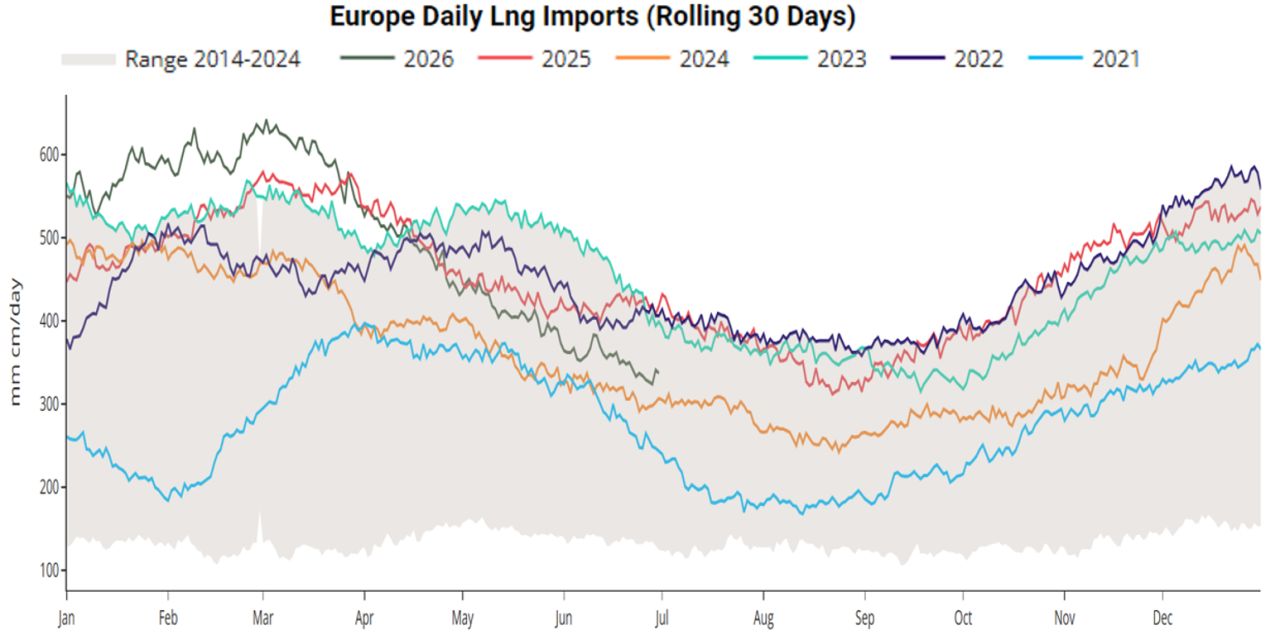
European apparent gas demand during the 25-26 winter was less than 3 Bcm higher than the previous year. Over the course of the just ended winter, storage withdrawals were actually lower than the previous year, despite an increase in exports to Ukraine on top of this marginally higher demand. This took place primarily thanks to a 22% year-on-year increase in LNG imports.
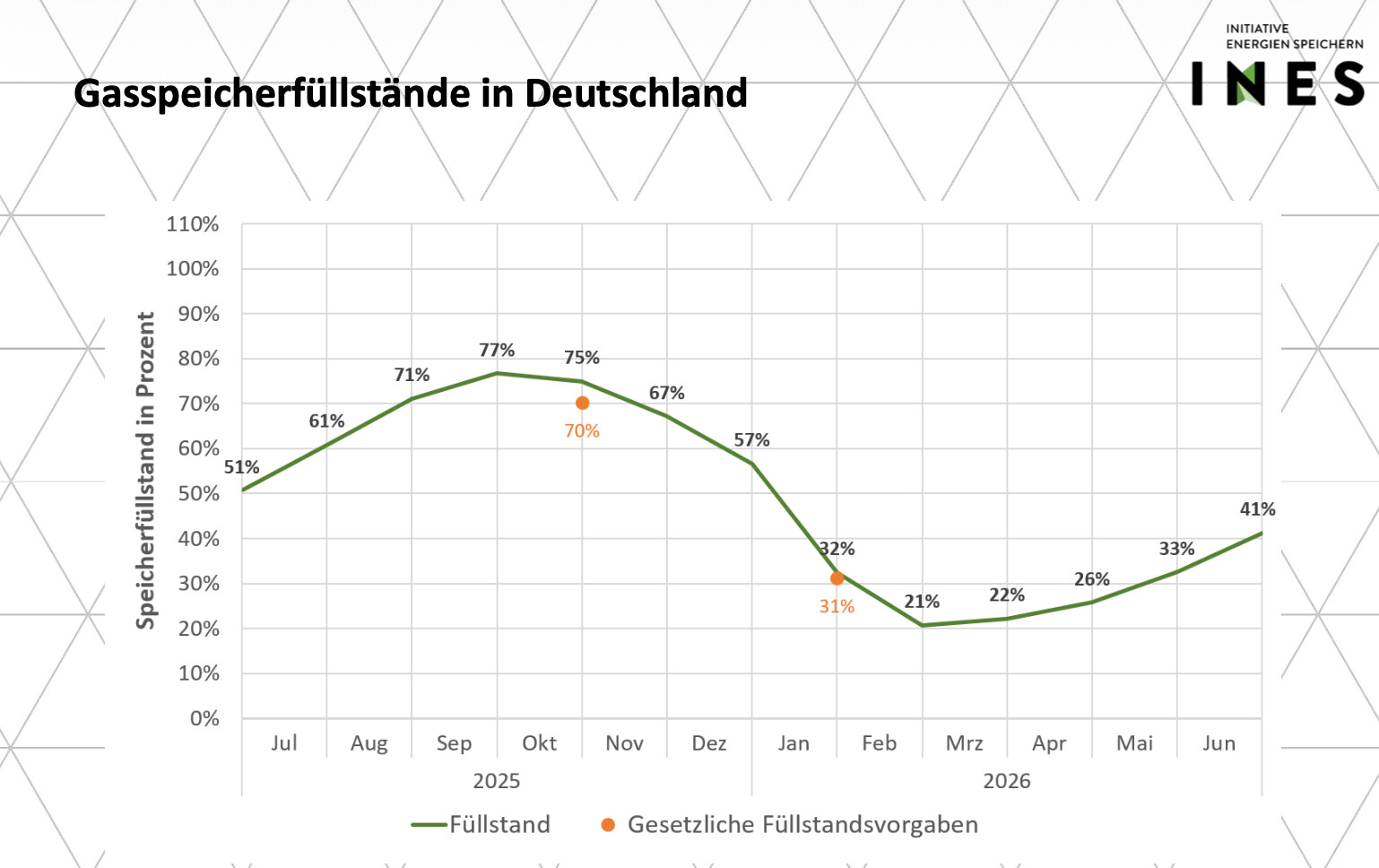
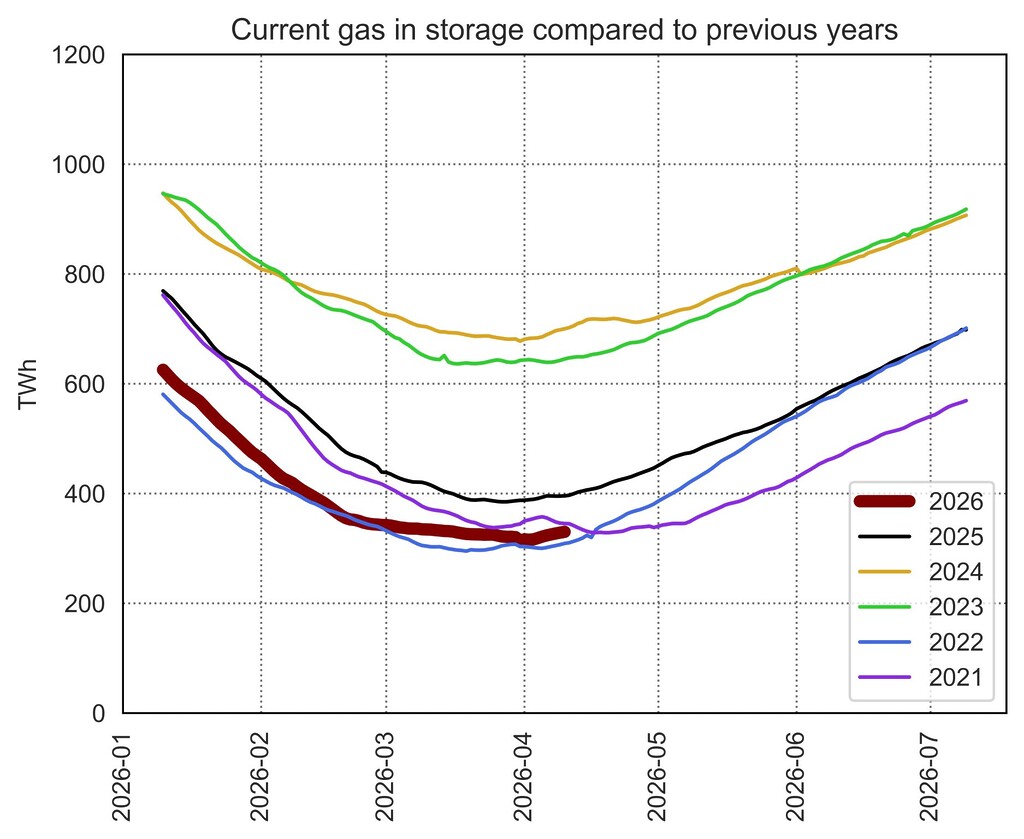
The fact that EU storage levels were on 1st April 2026 6% lower than the previous year is therefore primarily attributable to the fact that the 25-26 winter started with considerably lower volumes in storage than the previous years, not to unseasonably high demand during the winter. This, in turn, is a key cause of Europe’s exposure to global LNG spot markets in the current global supply crisis.
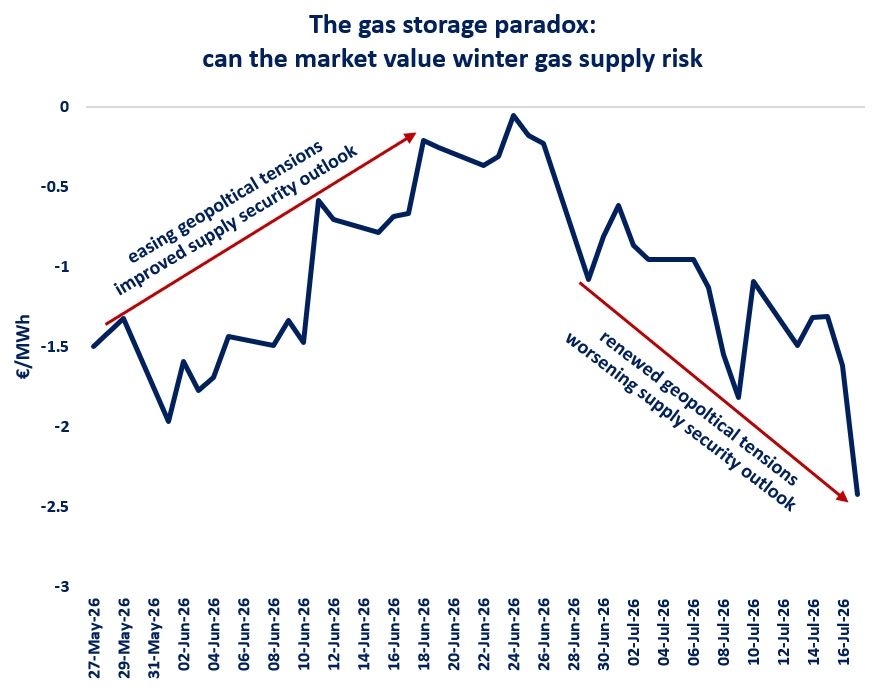
This outcome has at least in part been caused by the expectation of an abundance of global LNG supply in 2026, which was supposed to flip market balances in favour of importers such as Europe. This was key in reducing the market’s perception of the risk of ending the 25-26 winter with storage at level well below recent years.
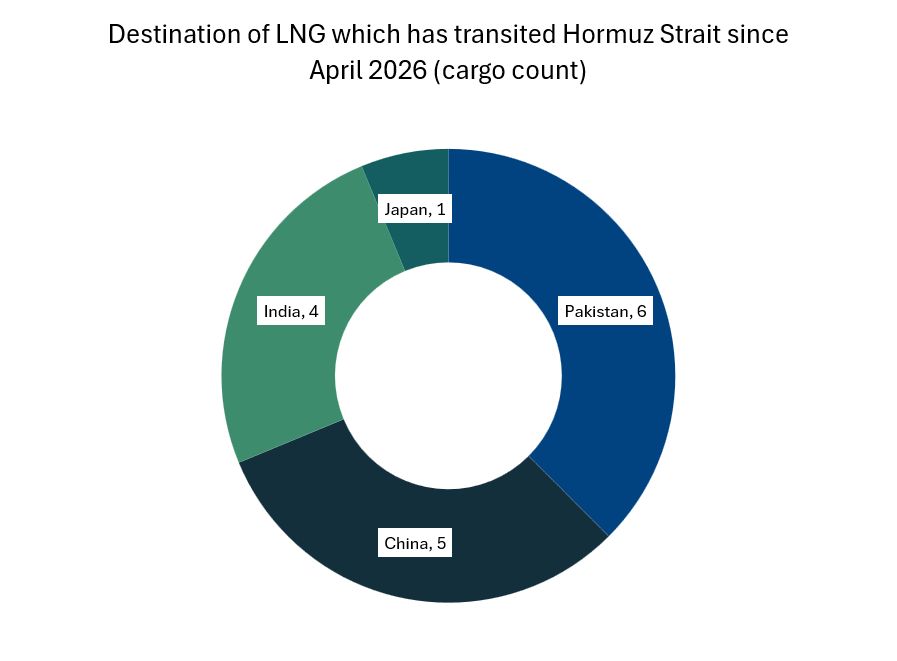
Therefore, the closure of the Strait of Hormuz, which was not and could not be accounted for by natural gas markets, has opened a global supply crisis to which Europe is made significantly more vulnerable exactly because of this reliance on liberalized global gas markets and a stable international order.
Francesco Sassi and I have been writing for a few months about how growing geopolitical instability and the breakdown of established norms are reshaping expectations for global gas markets. The current situation Europe finds itself in is a perfect test case, as it demonstrates how a reliance on stable and predictable market mechanisms has been turned into a strategic vulnerability in this new global order.
Iran’s newly found power over the Strait of Hormuz can therefore be seen as just another step in the transition to a period of more structural volatility and in which a normal functioning of liberalized global markets can no longer be relied upon.