European gas storage refill in 2026 is set to be more challenging, with higher LNG requirements and increased uncertainty around supply, writes Anne-Sophie Corbeau. A key concern is how the EU will refill its storage this year, especially if the war continues, as the broader outlook remains far from reassuring.
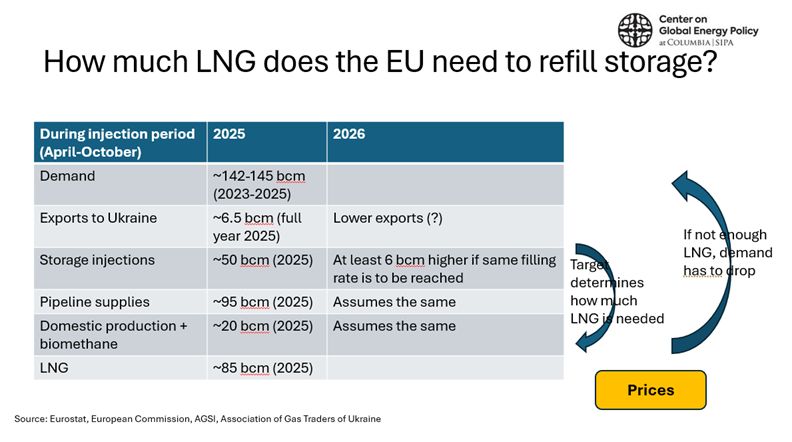
Looking at previous years, EU gas demand was between 140–145 bcm during the injection season (April–October). Last year, there was around 90 bcm of pipeline gas, over 20 bcm of domestic production (including biomethane), and 85 bcm of LNG delivered during that period. Because of the damages inflicted by Russia, Ukraine’s imports increased substantially.
In 2026, we can reasonably expect the same level of pipeline gas supplies. Norway expects slightly higher production, which should compensate for lower exports from Russia, noting that regulation will impact pipeline supplies in late spring. Tom Marzec-Manser seems to be optimistic about Algerian gas supplies.
There could be less gas from the UK depending on balances and respective UK and European gas prices.
No dramatic change is to be expected regarding production. There may even be some upside from Denmark, as early 2025 numbers were low, as well as from biomethane.
Ukrainian imports will depend on many factors, including production destruction by Russia, which has so far been quickly repaired, and developments involving Hungary.
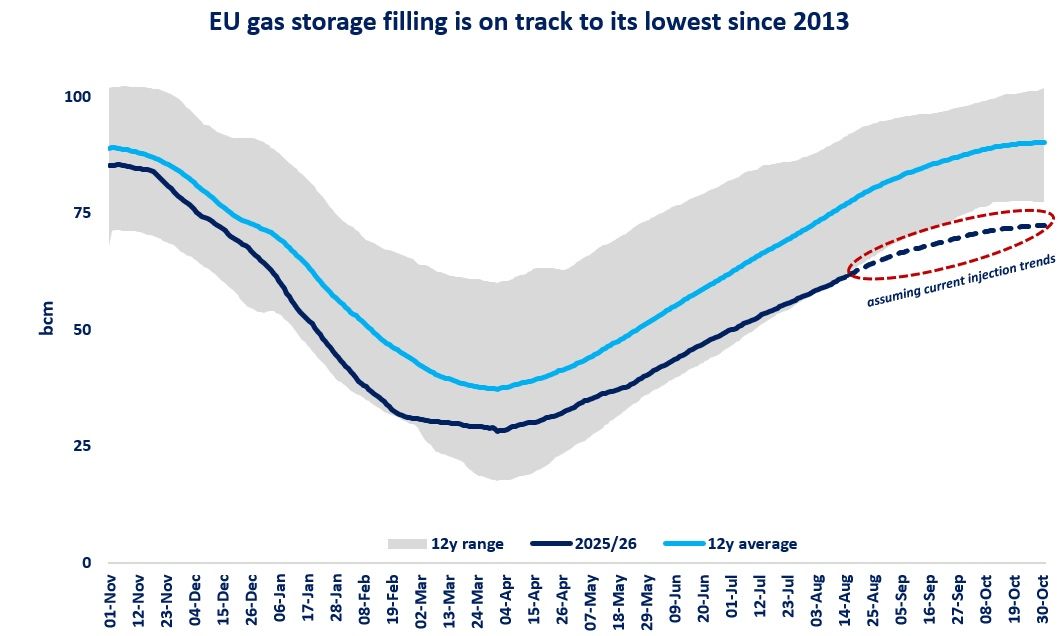
Unless EU demand declines, more LNG will need to be imported than in 2025 to reach the same storage levels as late 2025 (around 83%), as the injection period is starting with lower gas storage levels.
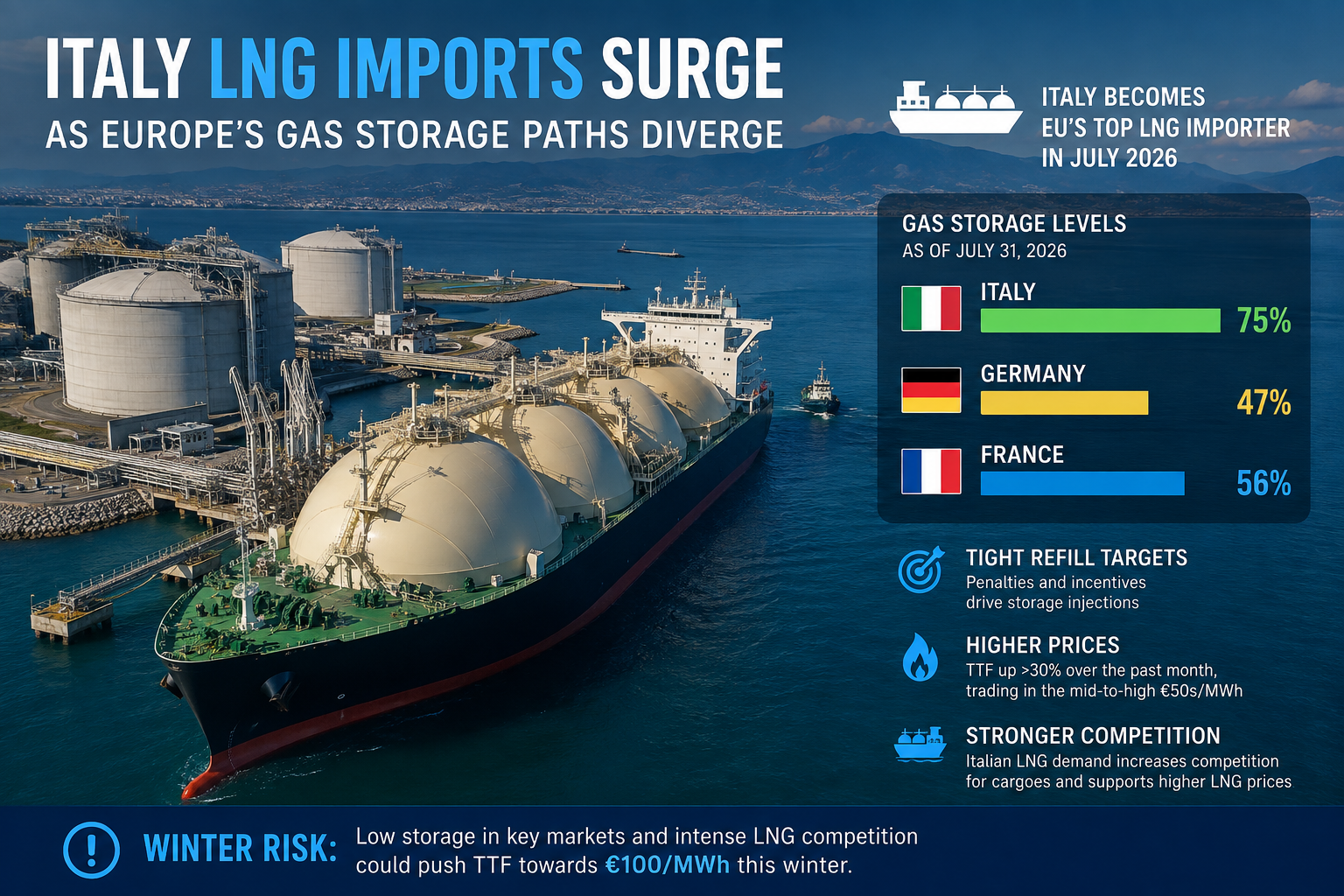
EU LNG imports in March 2026 were record high, as Europe is still receiving LNG cargoes from Qatar and has not yet seen signs of diversions.
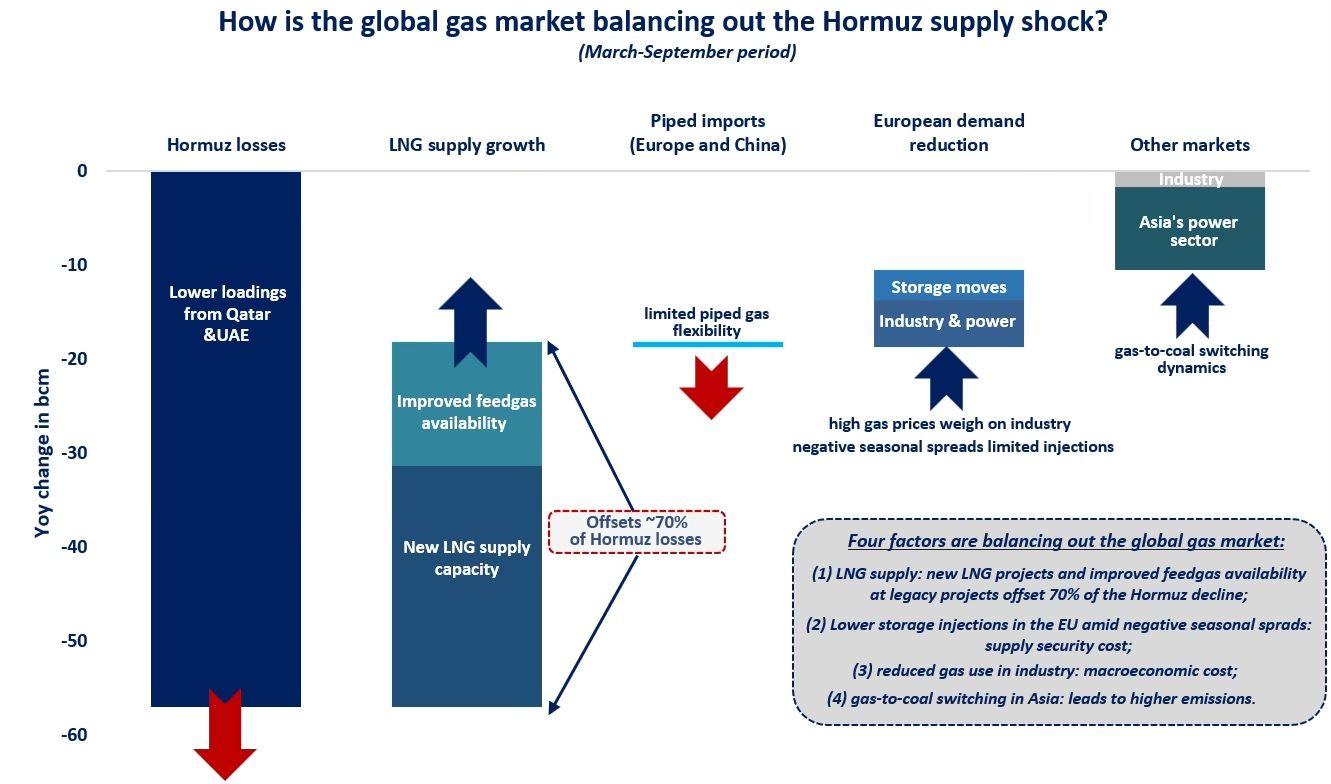
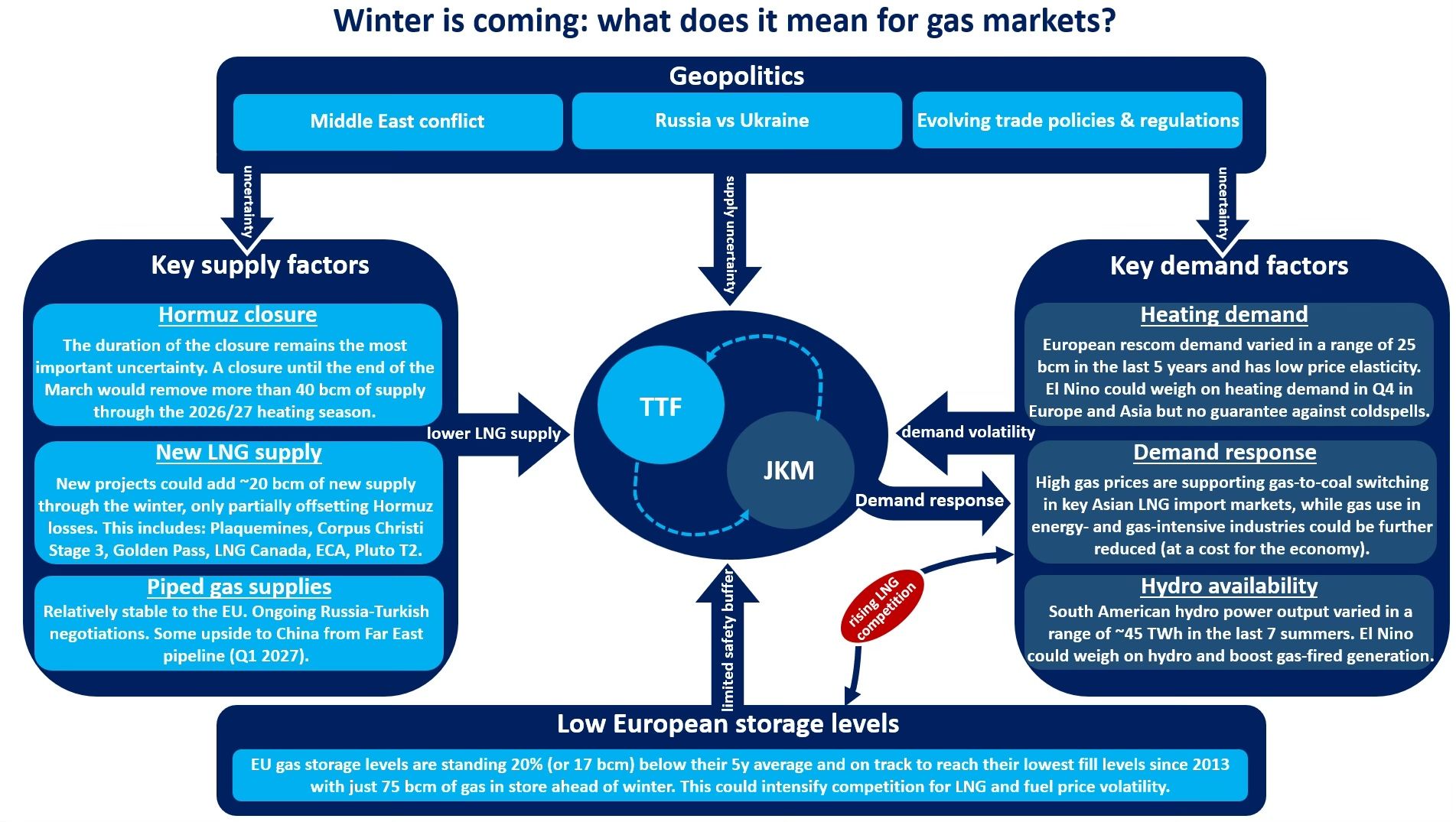
If disruption in the Strait of Hormuz continues, it is fair to assume that Europe will not receive as much LNG as in 2025. In that case, demand will need to drop quickly.
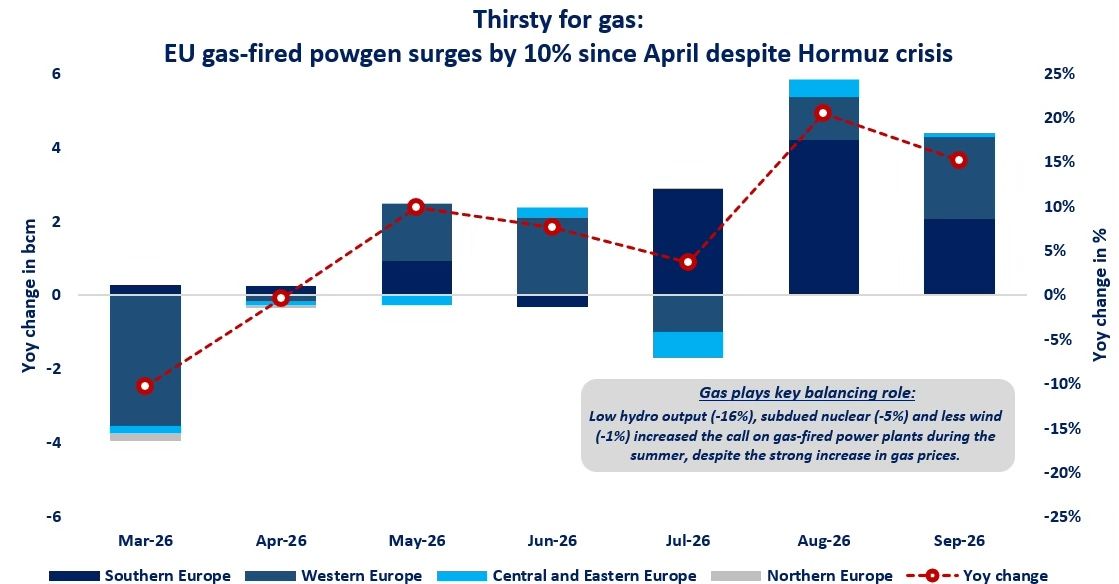
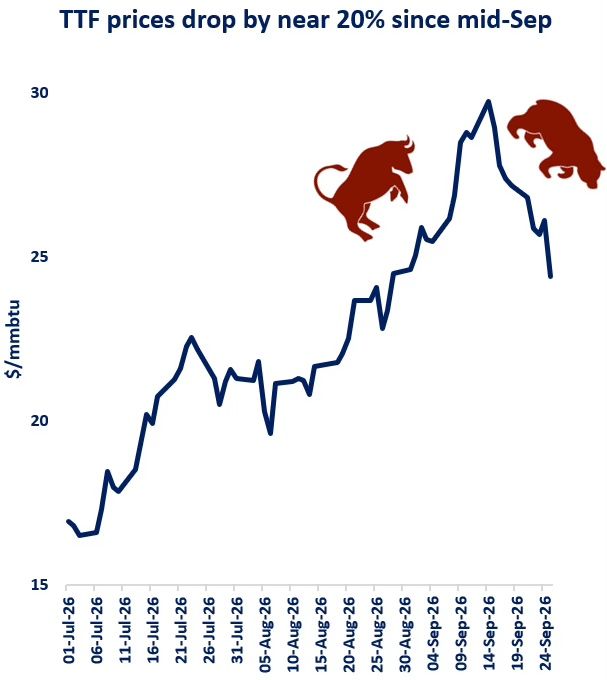
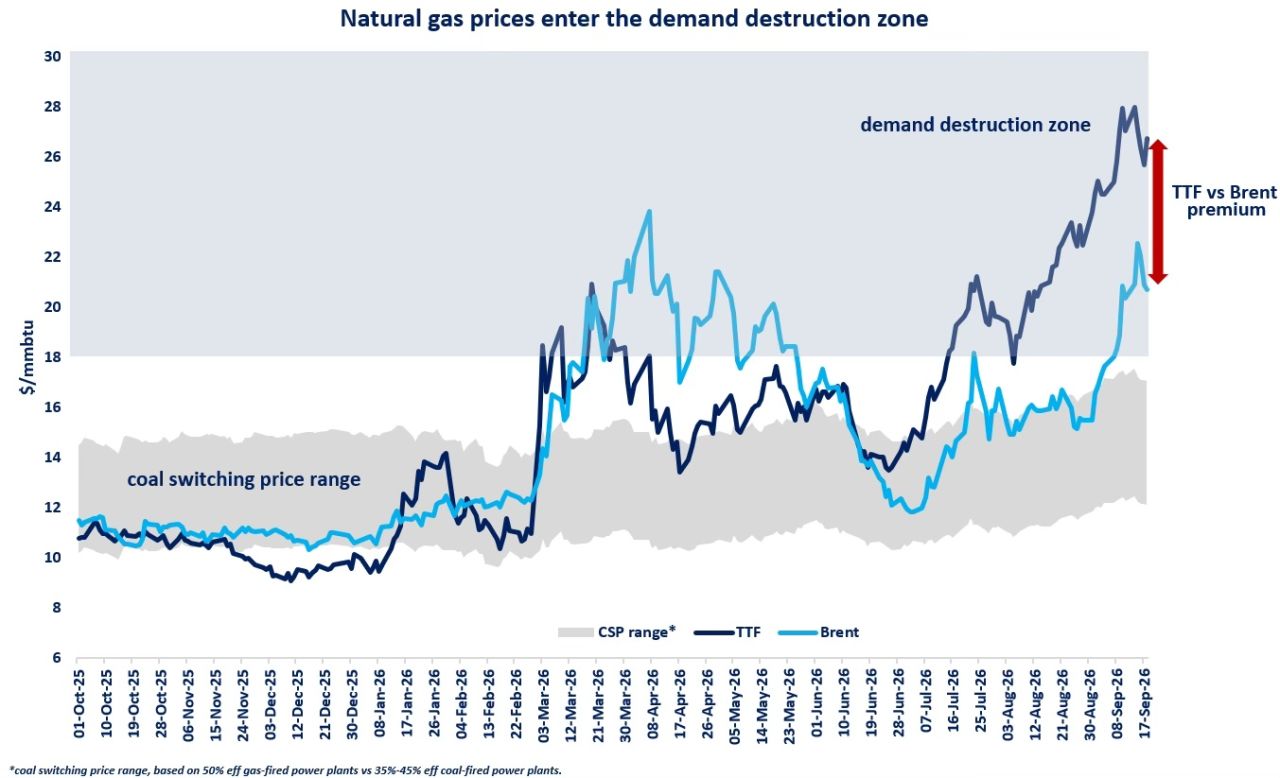
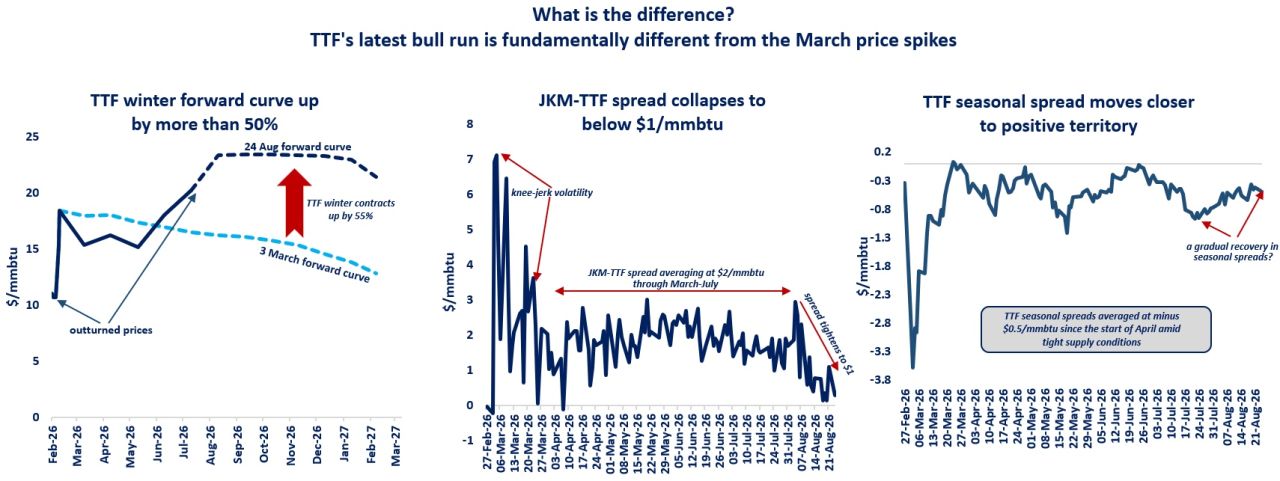
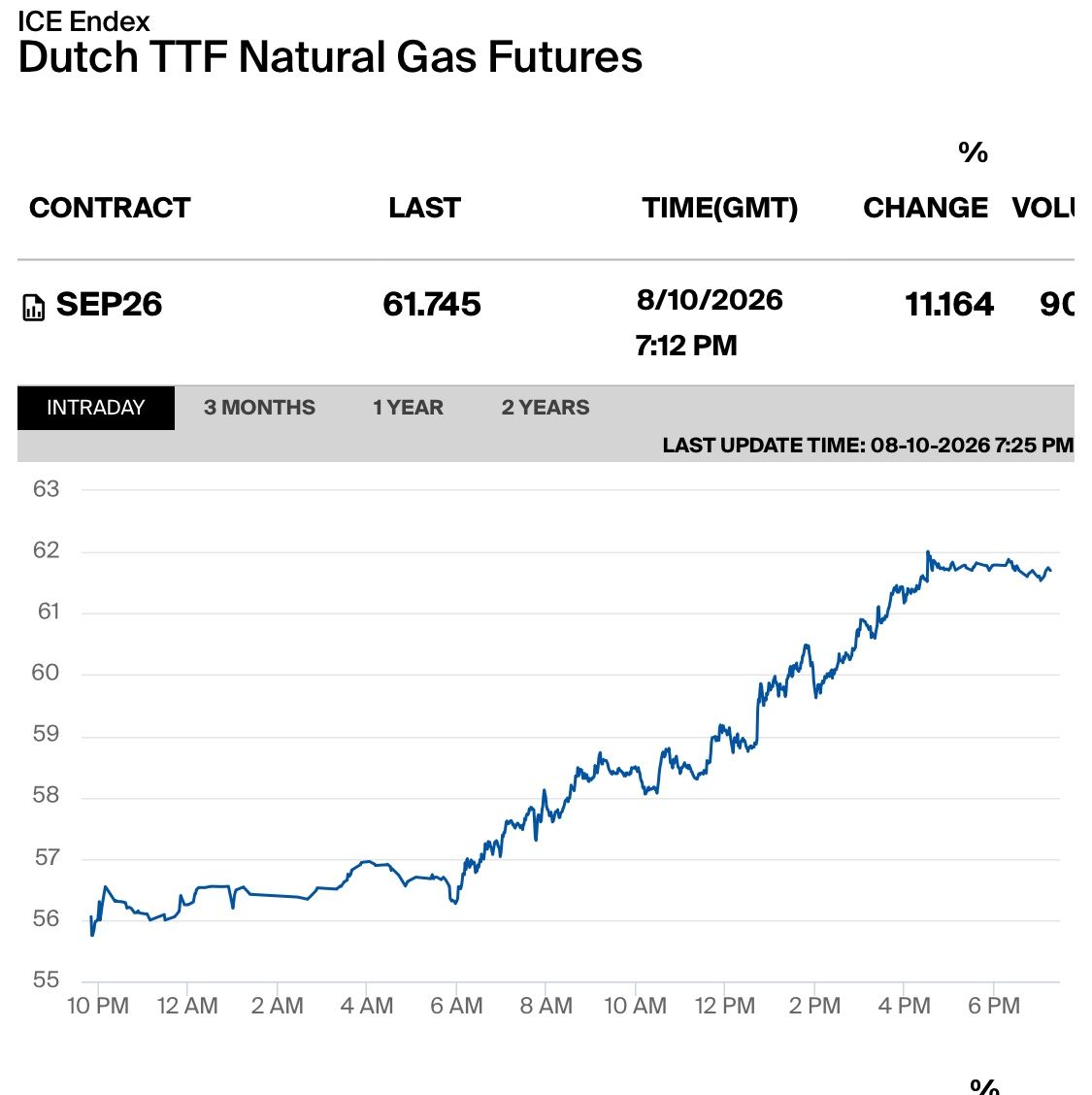
Some reduction will come from gas-to-coal switching, but that may prove insufficient. If the system does not balance, prices will increase until demand is destroyed.
Source: Anne Sophie CORBEAU