European gas prices are facing renewed upside pressure as low EU storage levels, tighter LNG availability, rising Asian demand and geopolitical risks combine to create what could become a new “perfect storm” for the market heading into summer.
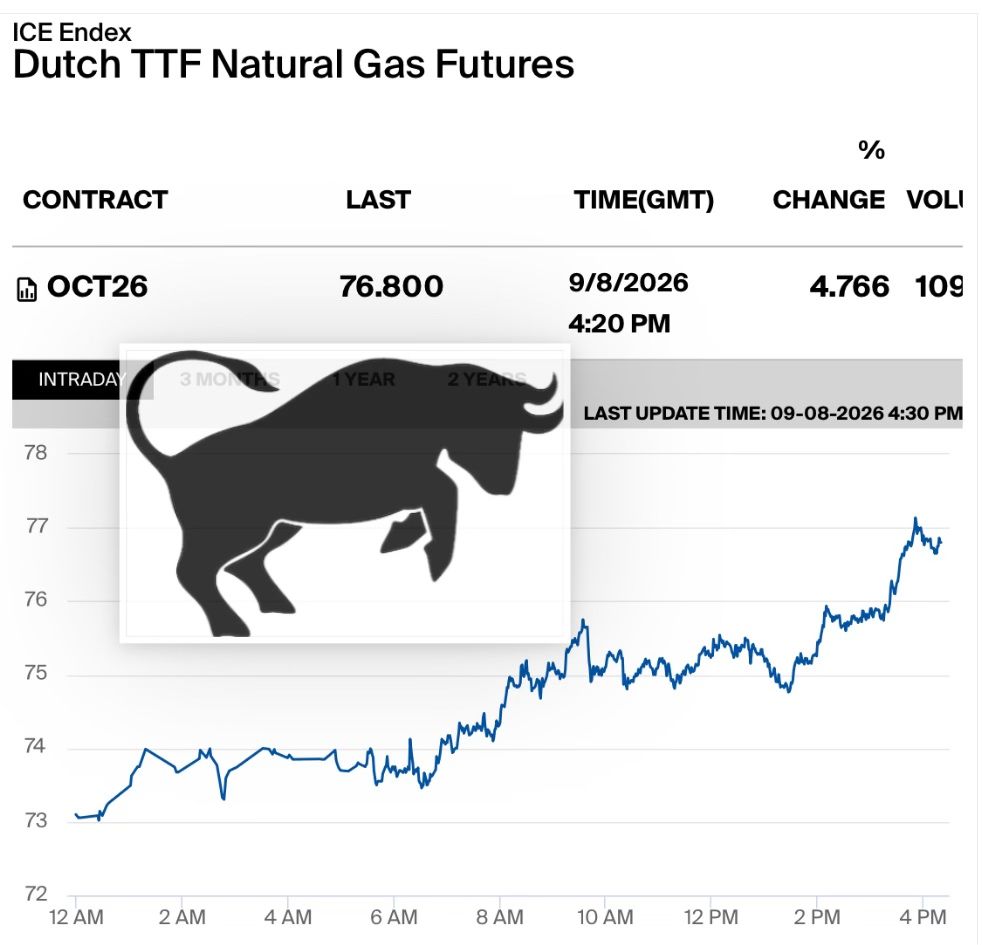
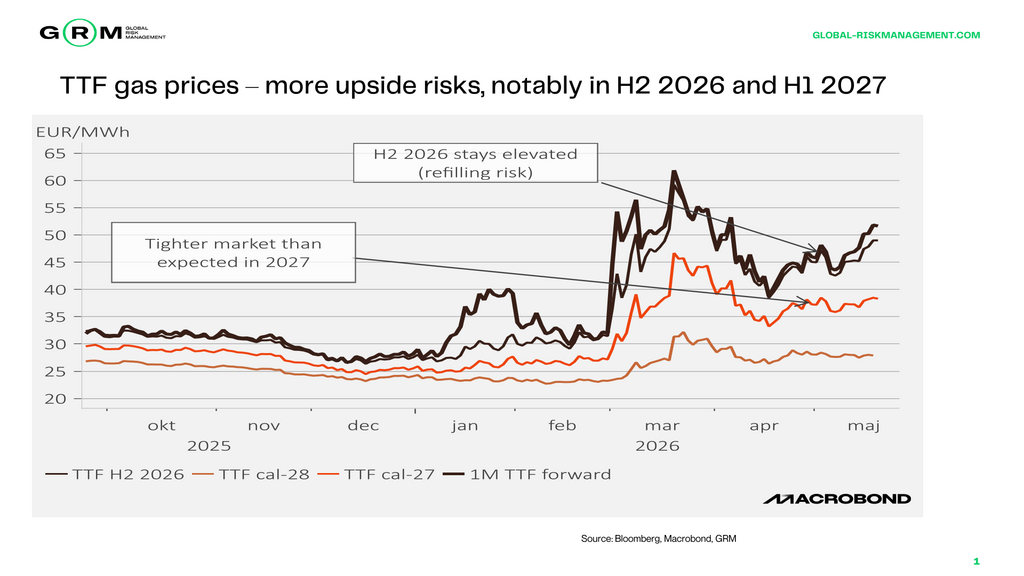
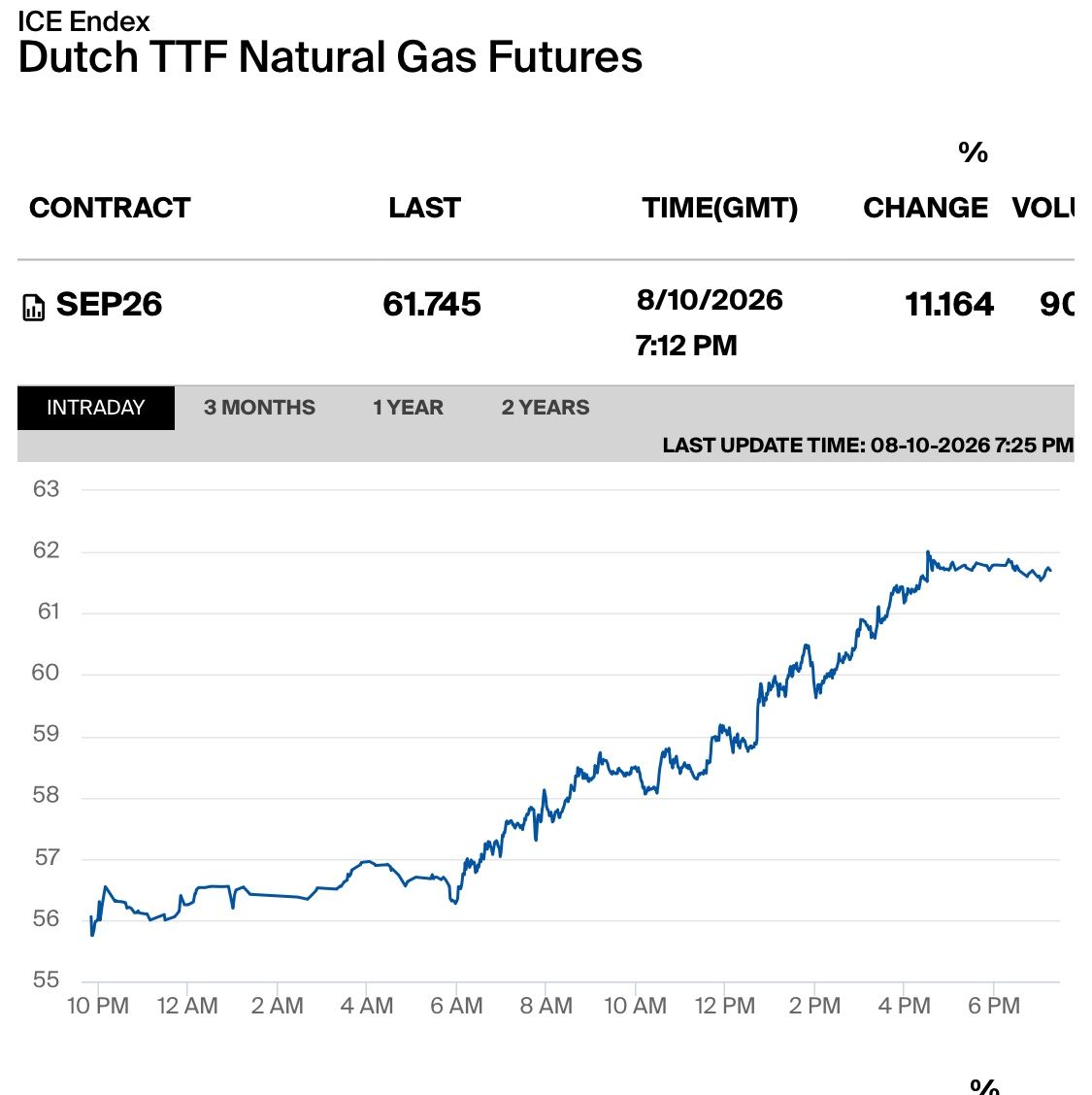
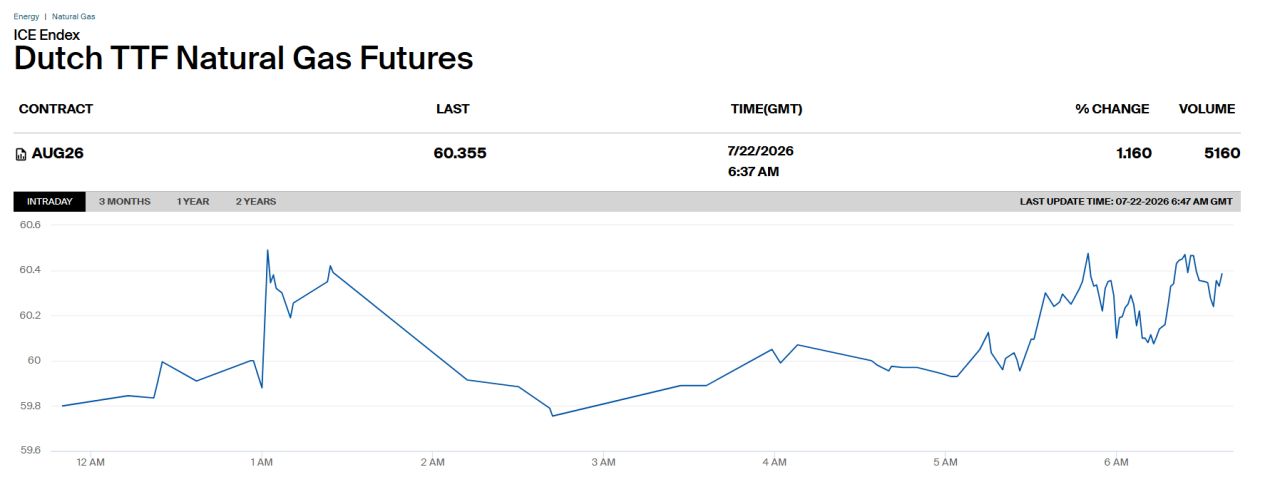
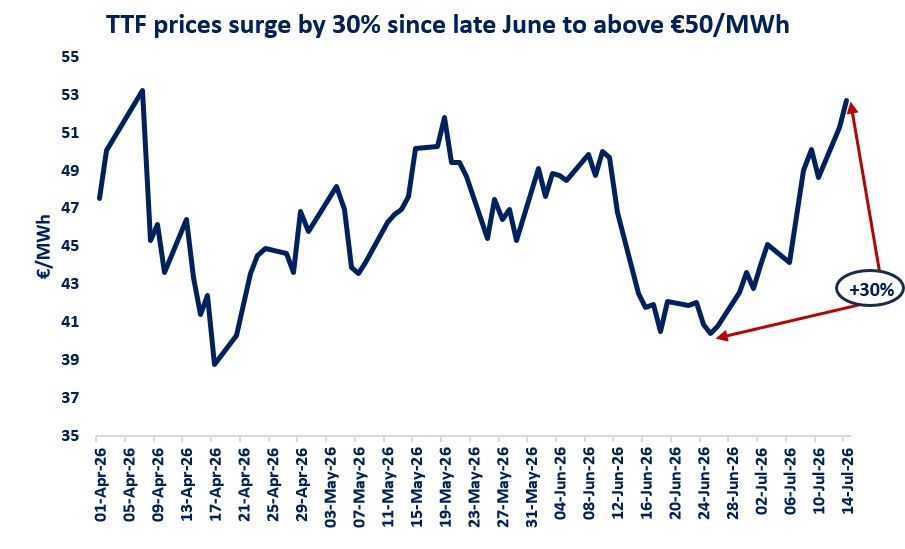
The TTF front contract is trading around EUR 51.5/MWh this morning. Prices are up close to 25% from the low in mid-April, but still well below the highs seen in March, when TTF briefly moved above EUR 60/MWh.
However, I see a growing risk of higher prices as summer approaches. Below, I have listed some of the factors that concern me. See also the charts below.
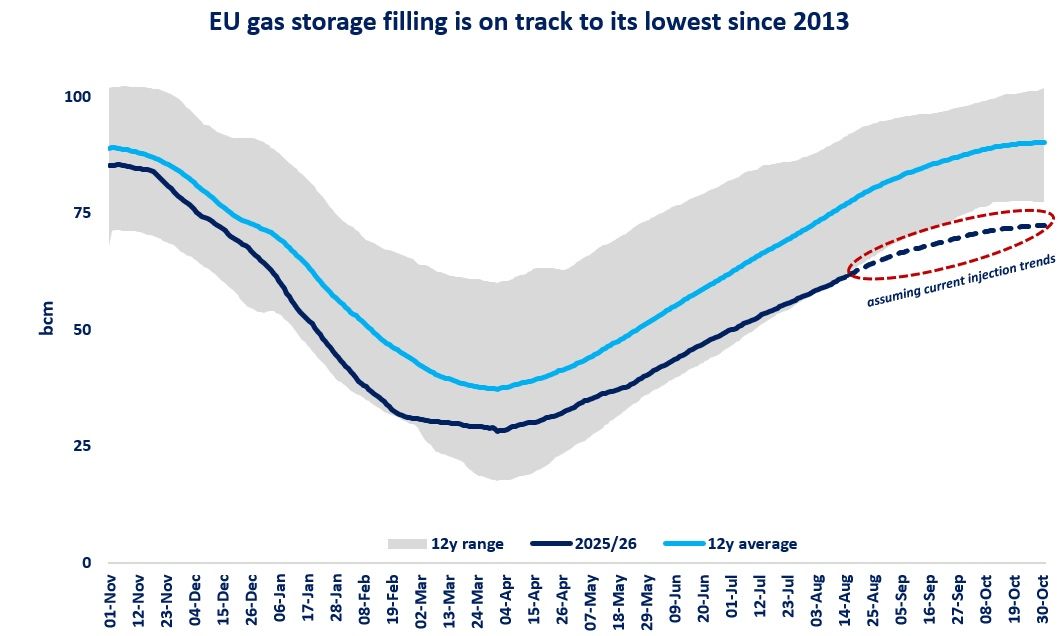
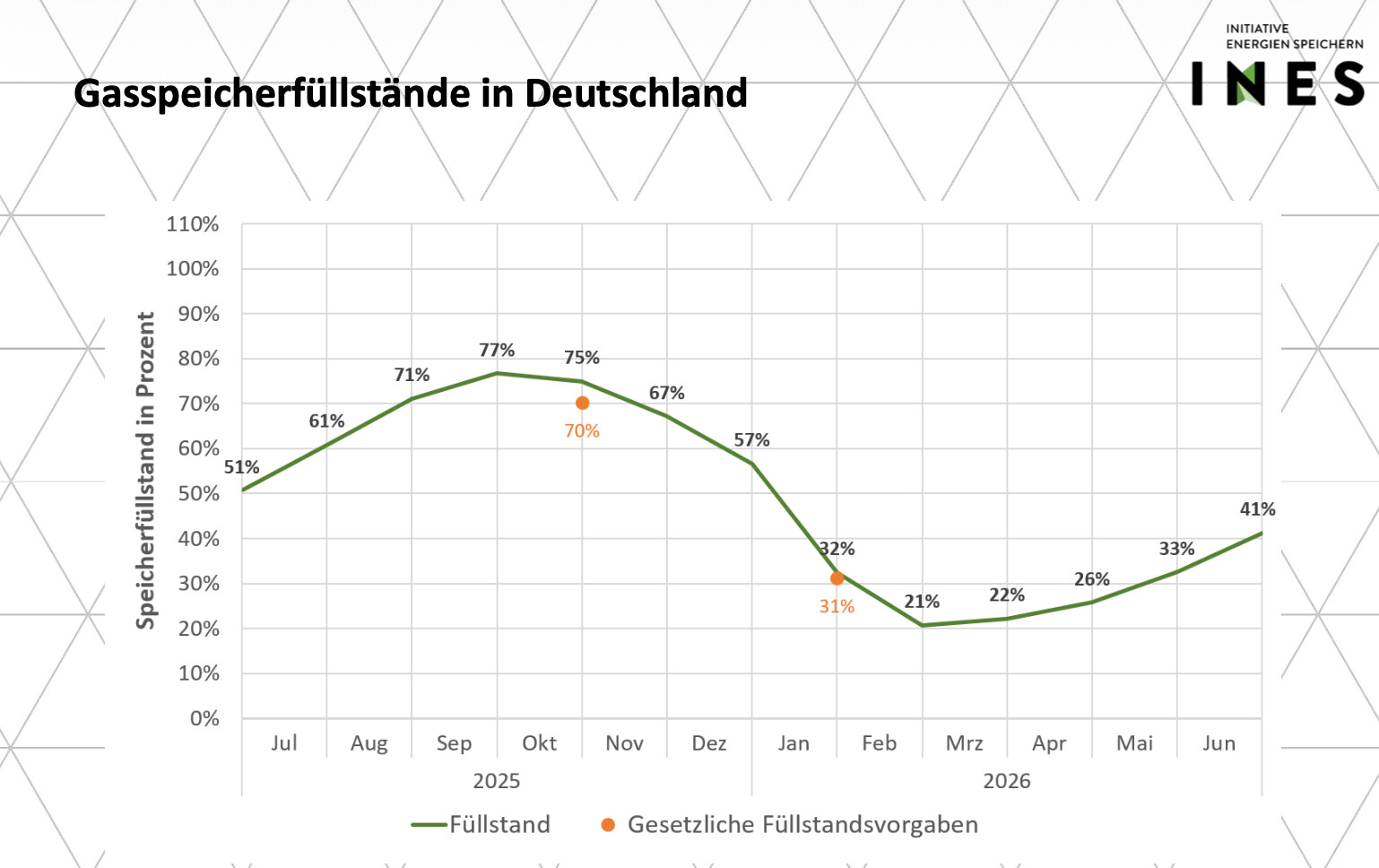
• EU storage sites are only 36.7% full, which is 8.1 and 4.9 percentage points lower than in 2025 and the crisis year 2022, respectively.
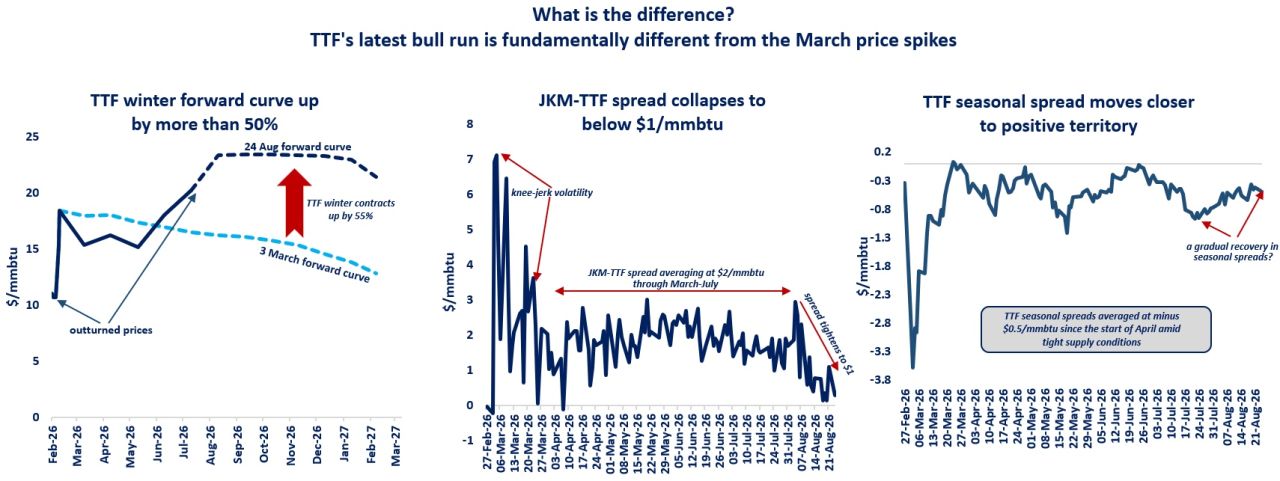
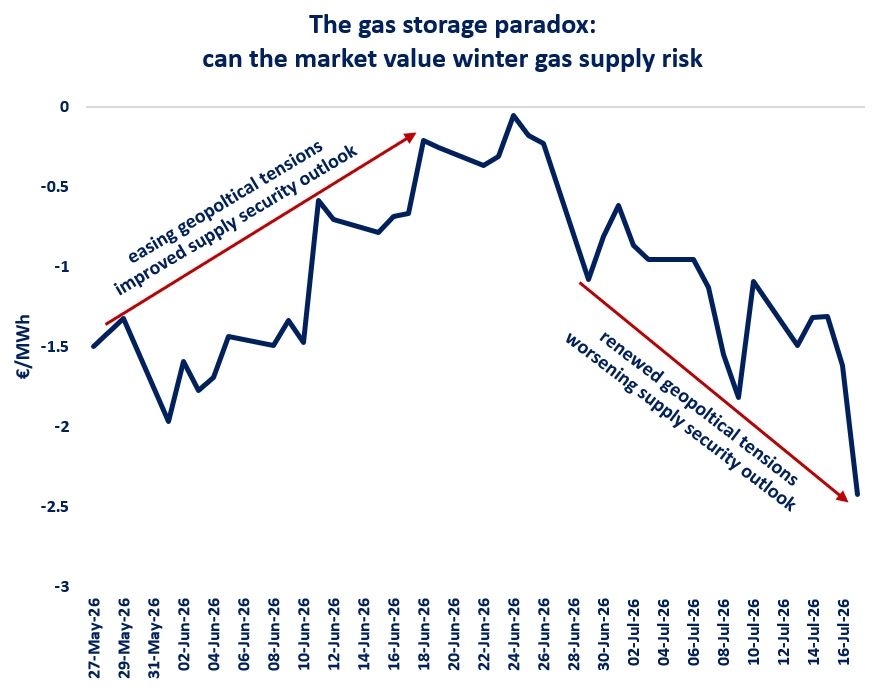
• Summer contracts are trading above winter contracts, which does not provide an incentive to inject gas into storage for winter consumption, as it is very expensive to hedge the price risk. In simple terms, it means buying high and selling low. The Jun 26 contract is trading almost 4% above the Dec 26 contract
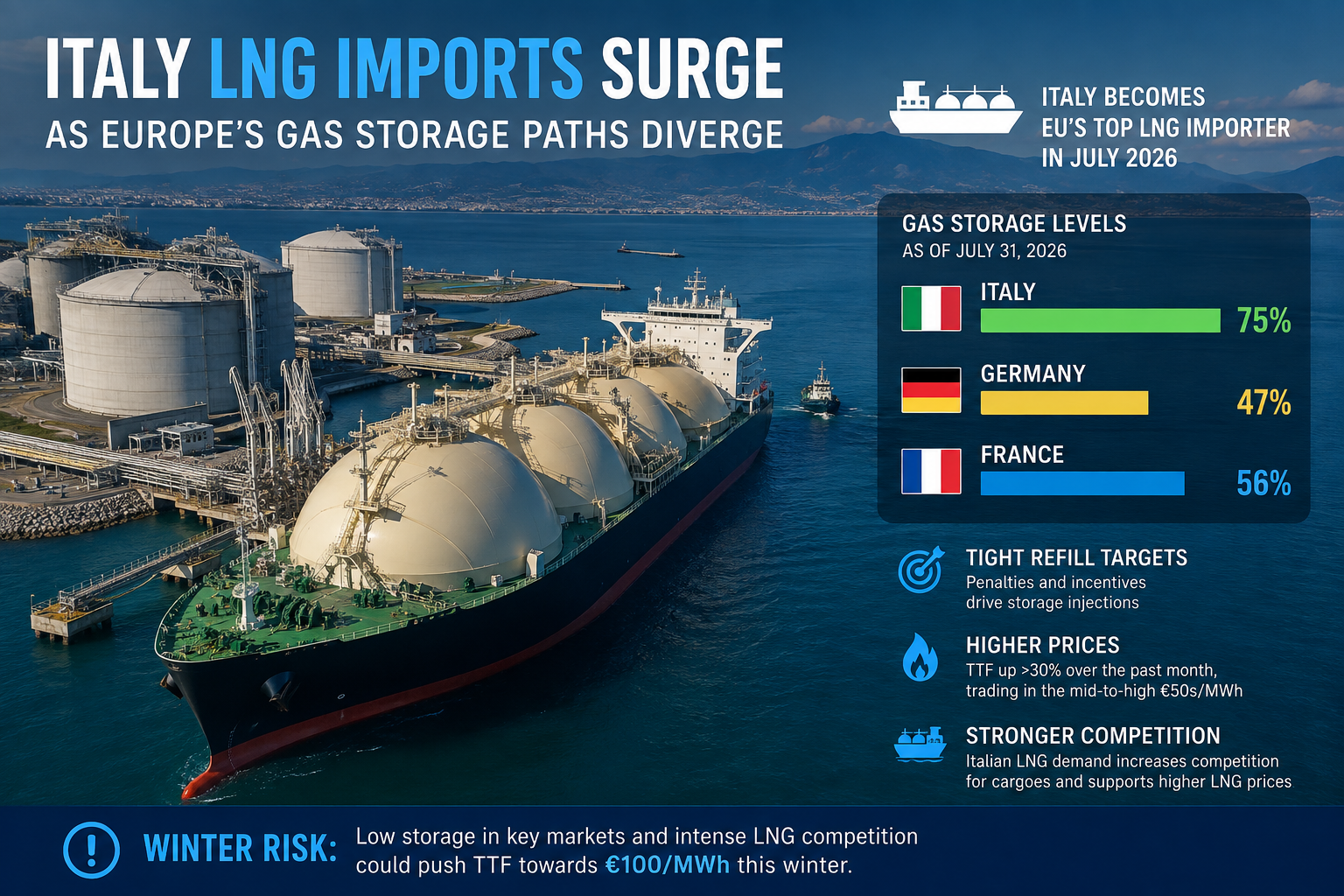
• EU LNG imports are weak. In contrast, China’s LNG imports are rising again after some weak months. There are reports that LNG vessels heading for the EU have turned around and sailed towards Asia
• Weather forecasts point to warmer-than-normal weather in Asia in June, increasing demand for energy for air conditioning
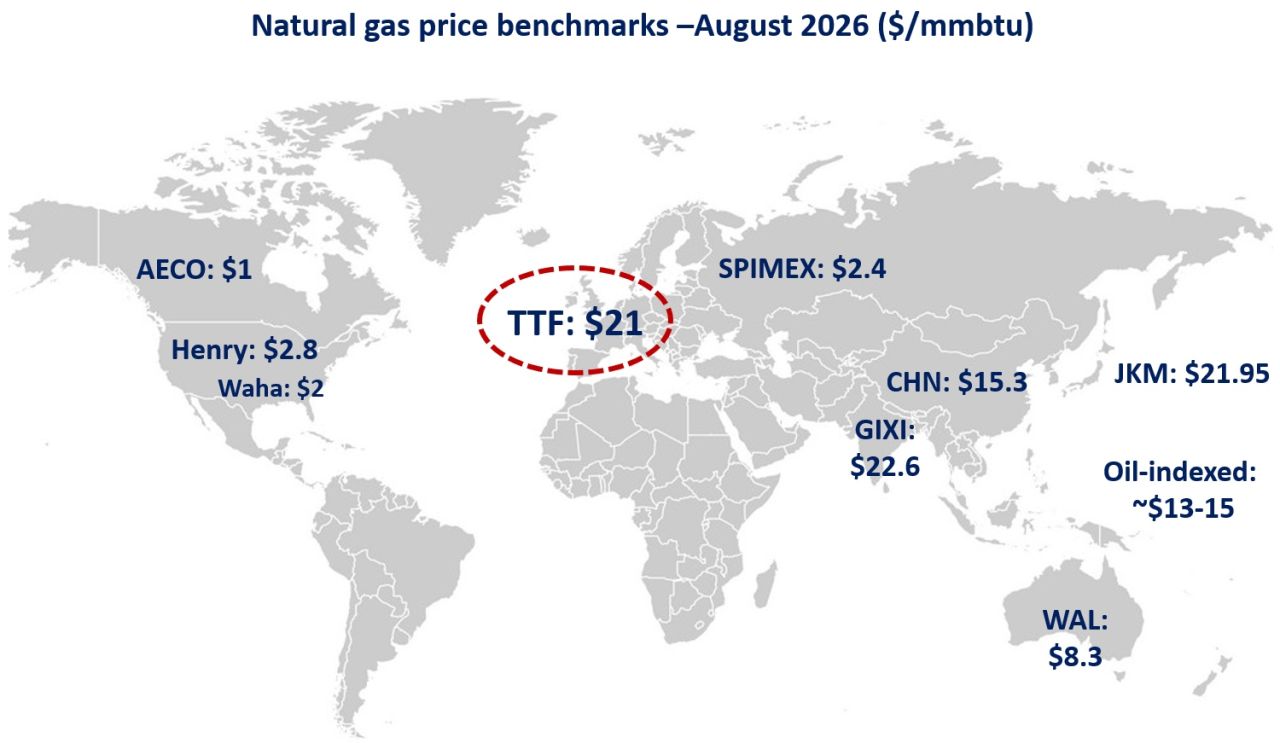
• It is more attractive to send US LNG to Asia than to Europe when taking into account the costs of gas, liquefaction and transport, i.e. netback. Europe needs to bid up the price to attract LNG
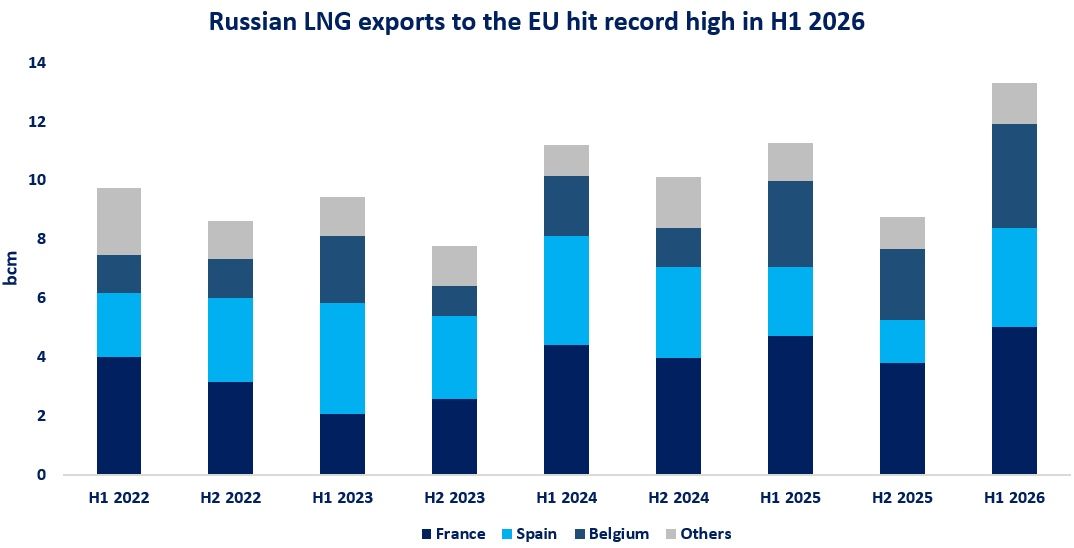
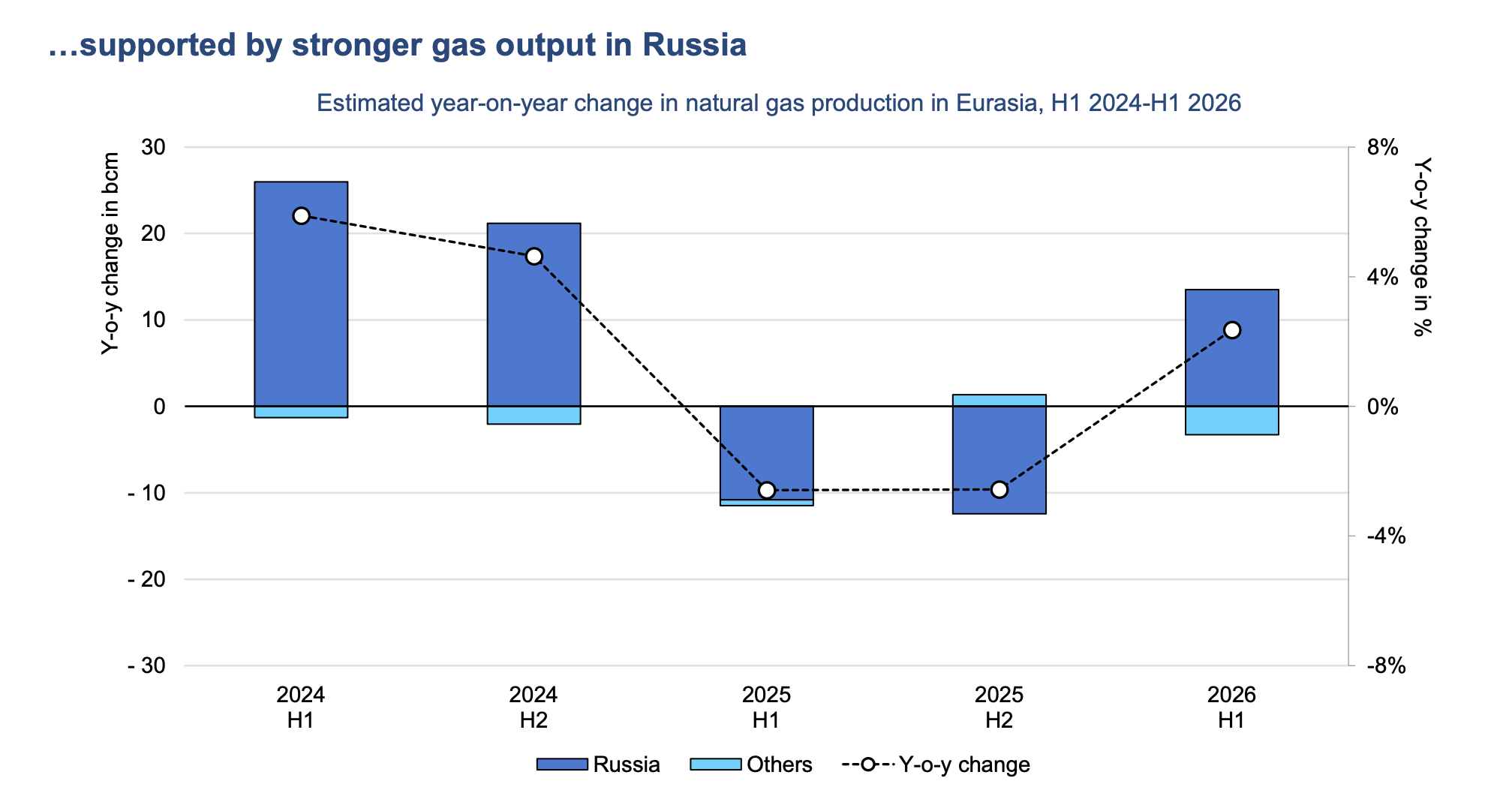
• Europe remains dependent on Russian gas via TurkStream and Russian LNG. The year 2022 showed that Putin is not afraid to use gas as a means of pressure against Europe, and the phase-out of Russian LNG is on track to start early next year.
• There is maintenance at two Norwegian gas fields, and there is a risk of strike action at Australian LNG facilities from tomorrow
• We see a rising risk that speculators will seriously return to the gas market. The outlook for higher prices is probably better than for oil
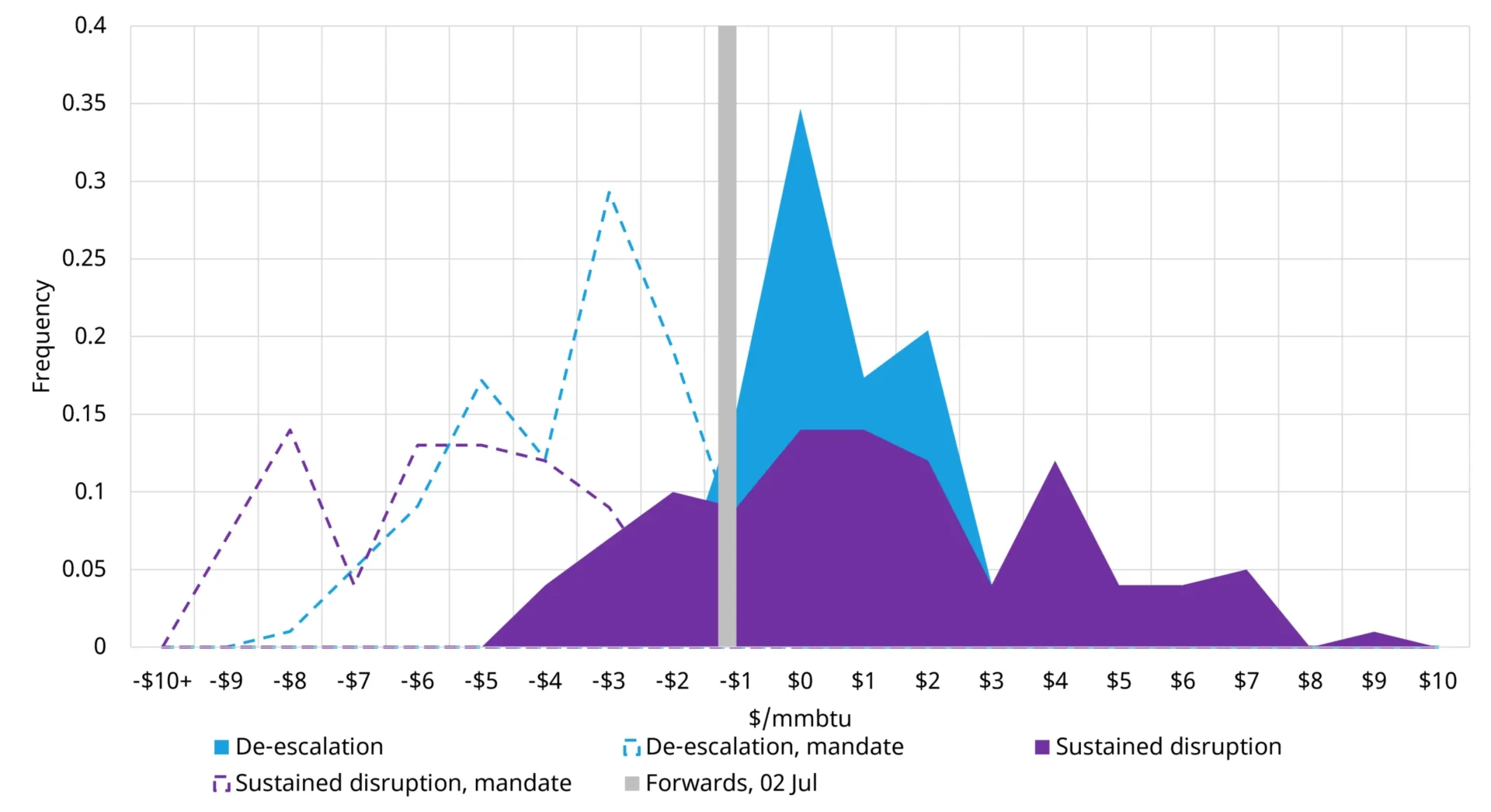
• Finally, the Strait of Hormuz may remain closed for an extended period of time. Hence, we are still short 20% of global LNG supply, and it will take time for Qatar to ramp up production once the Strait eventually opens. Notably, the two destroyed Qatari LNG trains out of 14 will remain idle for several years
Source: Arne Lohmann Rasmussen (Linkedin)