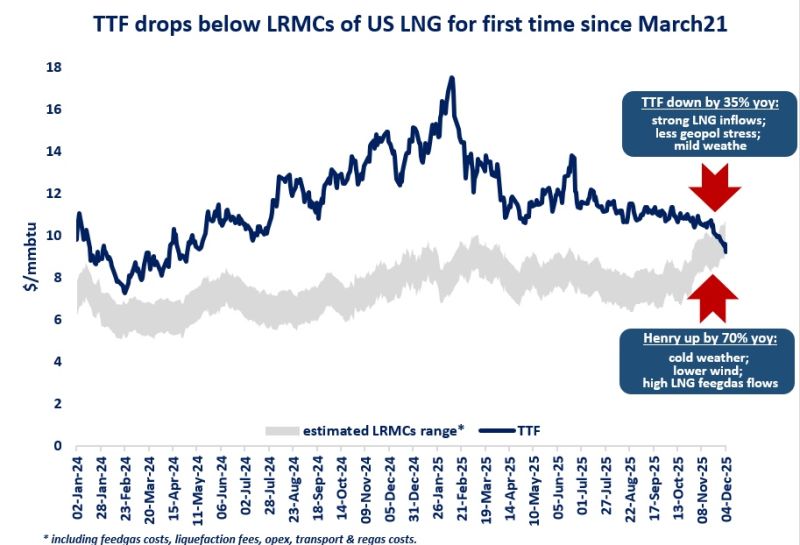
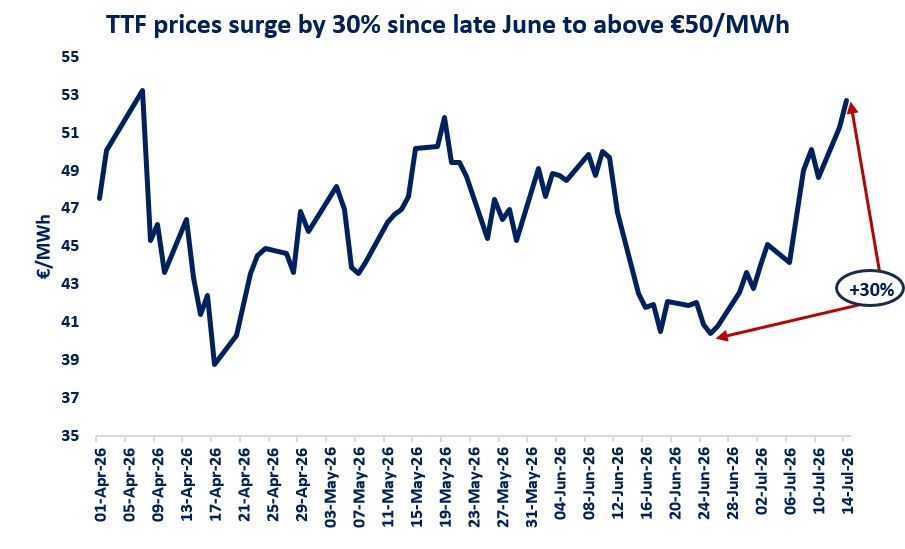
TTF prices dropped below the long-run marginal cost of US LNG last week for the first time since March 2021, with the TTF-Henry Hub spread tightening to just around $4/mmbtu.
TTF and Henry Hub faced opposite price pressures over the last year, with TTF prices plummeting by 35% yoy, while Henry surged by more than 70% compared to last year.
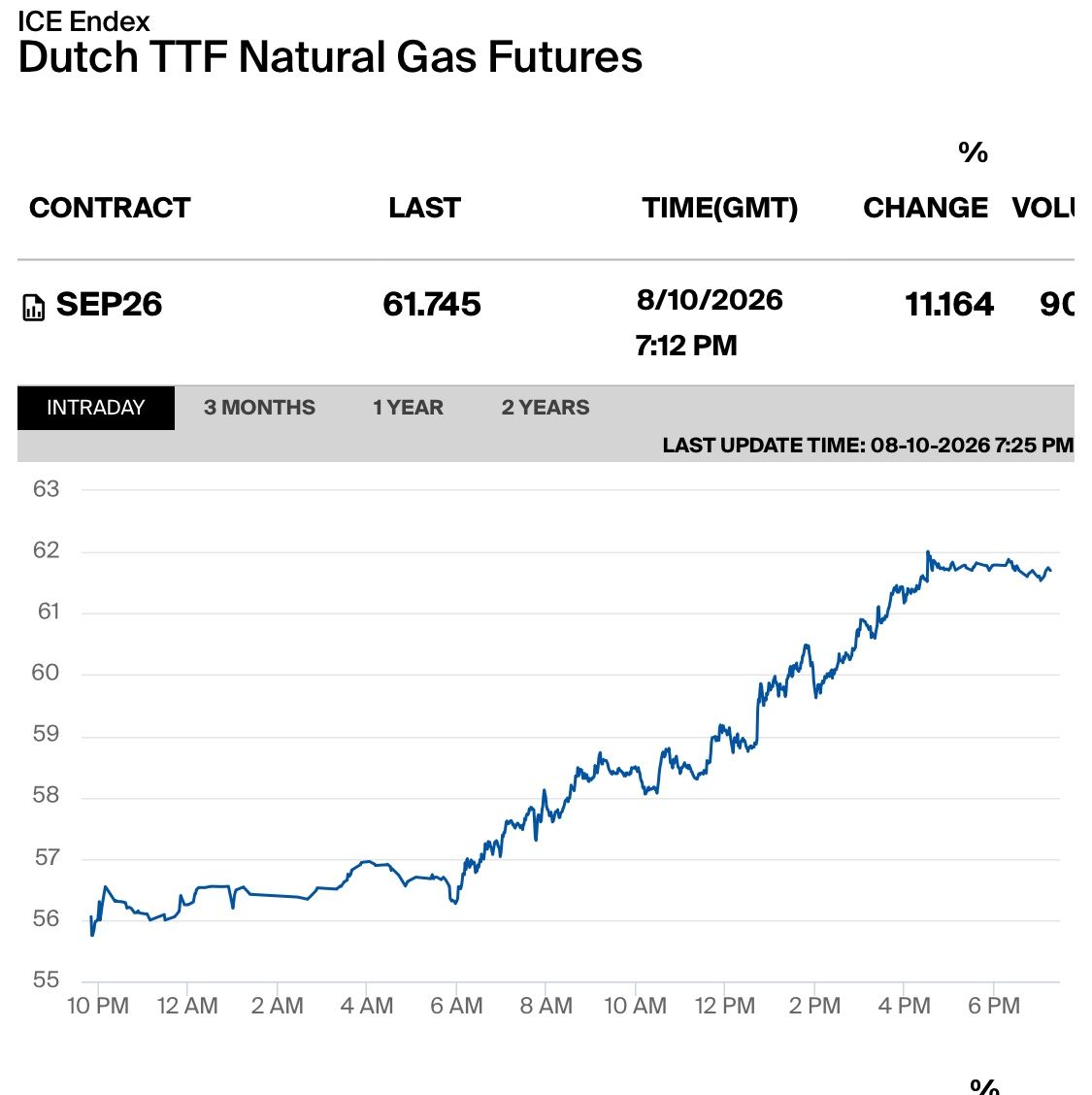
In Europe, strong LNG inflows (up by 30% yoy) kept gas prices under pressure, while reduced geopolitical stress weakened upward volatility. Milder winter weather, together with improving wind speeds, added further short-term downward pressure on prices. TTF prices collapsed below $9.5/mmbtu to reach their lowest level since Apr-24.
Henry was pretty much the opposite story: after the unsustainably low 2024 prices, recovery was driven by a combination of a cold Q1, strong LNG exports and higher storage injections through Q2–3. In recent weeks, Arctic cold spells boosted space heating at a time when LNG feedgas flows climbed to record levels, while slow wind drove up gas-fired powgen. Henry Hub prices surged to near $5.5/mmbtu – their highest level since Dec-22.
As a consequence, the TTF-Henry spread collapsed to just near $4/mmbtu, while TTF prices fell below the long-run marginal costs of US LNG.
The current phenomenon is primarily driven by short-term factors: the tighter-than-expected supply-demand balance in the US amid an early cold spell.
However, in the medium term the TTF-Henry Hub spread is expected to tighten in a structural manner. The next LNG wave is set to provide downward pressure both on Asian and European spot prices, which could actually fall close to the short-run marginal cost of US LNG.
This trend could also nuance the differentiation between liquefiers, highlighting the natural value of LNG projects with the lowest liquefaction costs.
What is your view? How will the TTF-HH spread evolve? What could this mean for global LNG trade flows? And how could this impact profit margins of key LNG players?
Source: Greg MOLNAR (LinkedIn)