
Barents Sea gas could play a larger role in Europe’s supply mix in the 2030s if the European Union adjusts its Arctic policy framework, according to Rystad Energy analysis.
A rethink of the European Union’s Arctic policy could determine whether Norway’s Barents Sea becomes a meaningful source of pipeline gas for Europe in the 2030s or whether the bloc deepens its reliance on global LNG markets, according to Rystad Energy analysis.
With the European Commission reviewing its 2021 Arctic framework, decisions taken now are critical because Barents projects typically require five to ten years from discovery to production. Clear policy signals could therefore enable new volumes from already-open Norwegian acreage to come online in the mid-2030s, while uncertainty could delay investment and shift Europe further toward LNG imports.
Rystad Energy suggests the EU could unlock additional supply without abandoning climate objectives by narrowing the geographic and operational definition of what constitutes the “Arctic.” A more precise framework could distinguish between frontier exploration areas and zones already opened by Norway, while tying development eligibility to strict emissions and environmental standards. Under Rystad’s base case, Norway continues to supply roughly 20–30% of European gas demand through 2050, even as LNG’s share rises from around 30% today to as much as 50%, increasing exposure to volatile global markets.
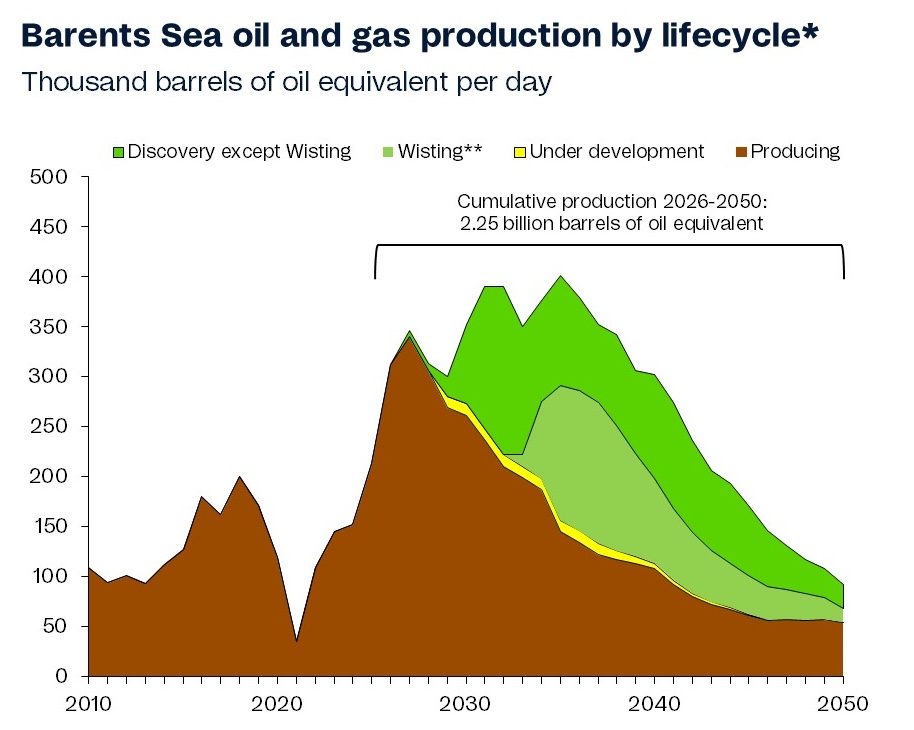
The Barents Sea holds significant untapped resources, but turning them into reliable supply depends on discoveries, coordinated field development and, critically, export infrastructure. Existing outlets are limited, with Hammerfest LNG — largely tied to the Snøhvit field — offering constrained flexibility for additional volumes.
New pipeline connections to the Norwegian Sea network could provide an alternative route, but would require sufficient scale and synchronized project timelines to justify investment.
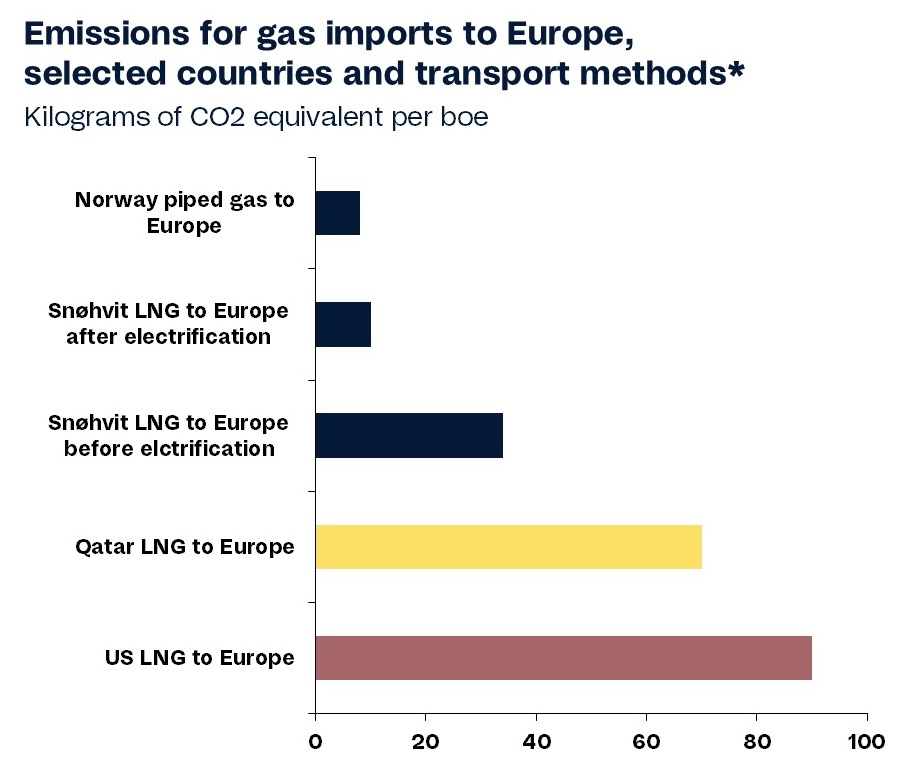
Emissions performance will be central to policymakers’ decisions. Norwegian upstream gas production ranks among the lowest-emitting globally, and pipeline gas from Norway typically has a lower carbon intensity than LNG imports.
Measures such as offshore CO₂ reinjection at Snøhvit and planned electrification of facilities are expected to further reduce the project’s footprint. However, environmental critics argue that lower production emissions do not eliminate the climate impact of gas consumption, ensuring the issue remains contentious.
The EU is therefore weighing a delicate balance between energy security, environmental protection and long-term demand uncertainty. A tightly structured regulatory framework could allow development in already-approved Norwegian zones while keeping more sensitive Arctic areas off-limits, supported by strict methane and CO₂ thresholds, flaring limits, electrification requirements and independent verification.
Additional safeguards for ecosystems and indigenous communities would also be required.
Demand risk remains another key consideration. If European gas consumption declines faster than expected, future infrastructure investments could become stranded. Policymakers may therefore opt for periodic reviews to adjust eligibility criteria as the energy transition progresses.
Ultimately, the outcome of the Arctic policy review will shape whether Europe secures a stable, nearby pipeline supply option from Norway or becomes increasingly dependent on the global LNG market for decades to come.
Source: Rystad Energy “EU Arctic policy review: Barents gas could hold the key for Europe’s energy security and supply diversification” 24 February, 2026