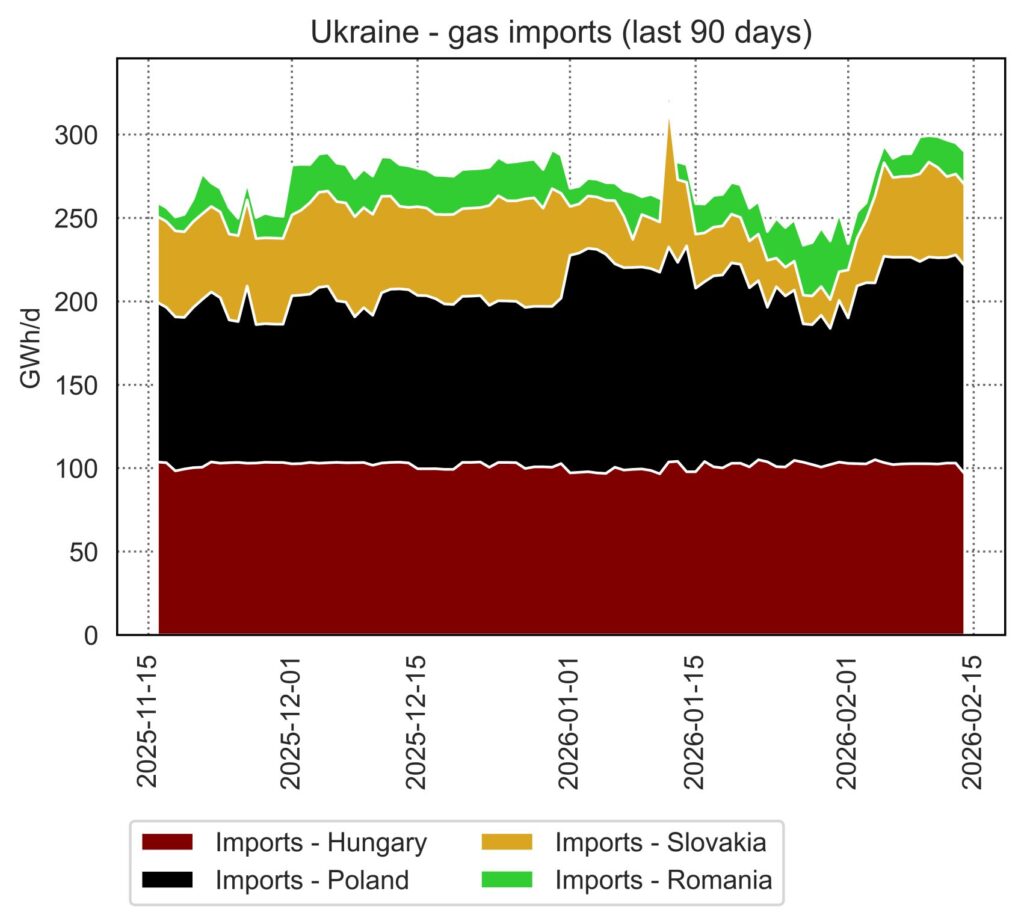
European gas exports to Ukraine have remained relatively constant throughout the winter, at a rate oscillating between 0.7 and 0.8 Bcm per month since the start of October.
Flows showed a small decline in the second half of January, driven primarily by a reduction in exports from Poland and Slovakia.
Total exported volumes have, however, recovered in the first two weeks of February, and last week saw the largest total volume of exports since the start of the winter.
These volumes are significant: total EU exports to Ukraine have crossed 3.3 Bcm since the start of the winter, over 2 Bcm higher than the previous year.
To put this in context, this is equivalent to just over 50% of the total storage withdrawals since the start of October in the four EU countries that are currently exporting to Ukraine.
This is also over twice as large as the total EU year-on-year increase in storage withdrawals since the start of the winter.
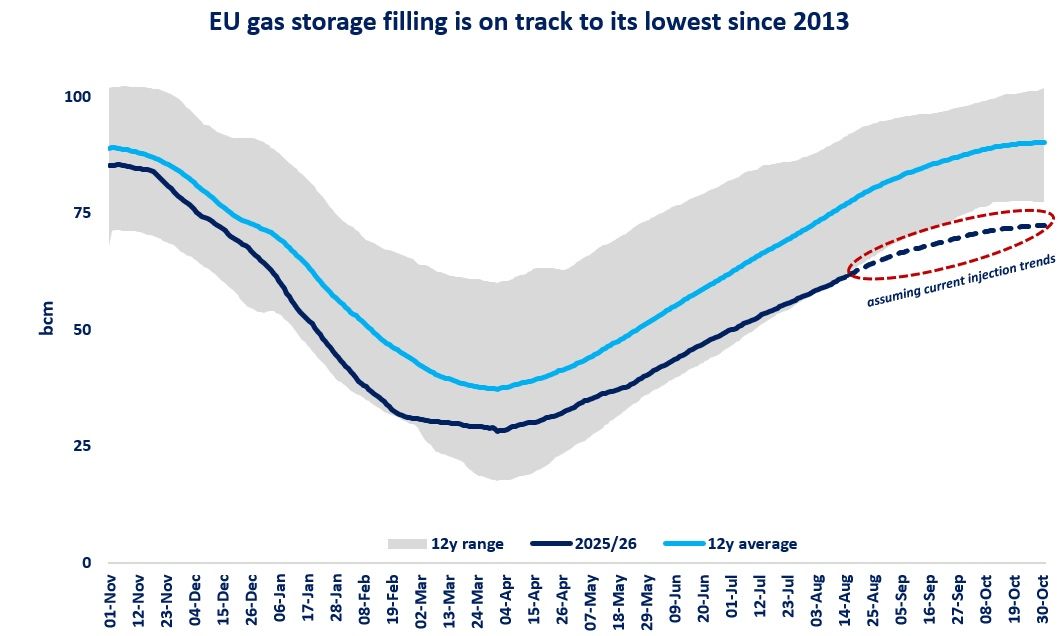
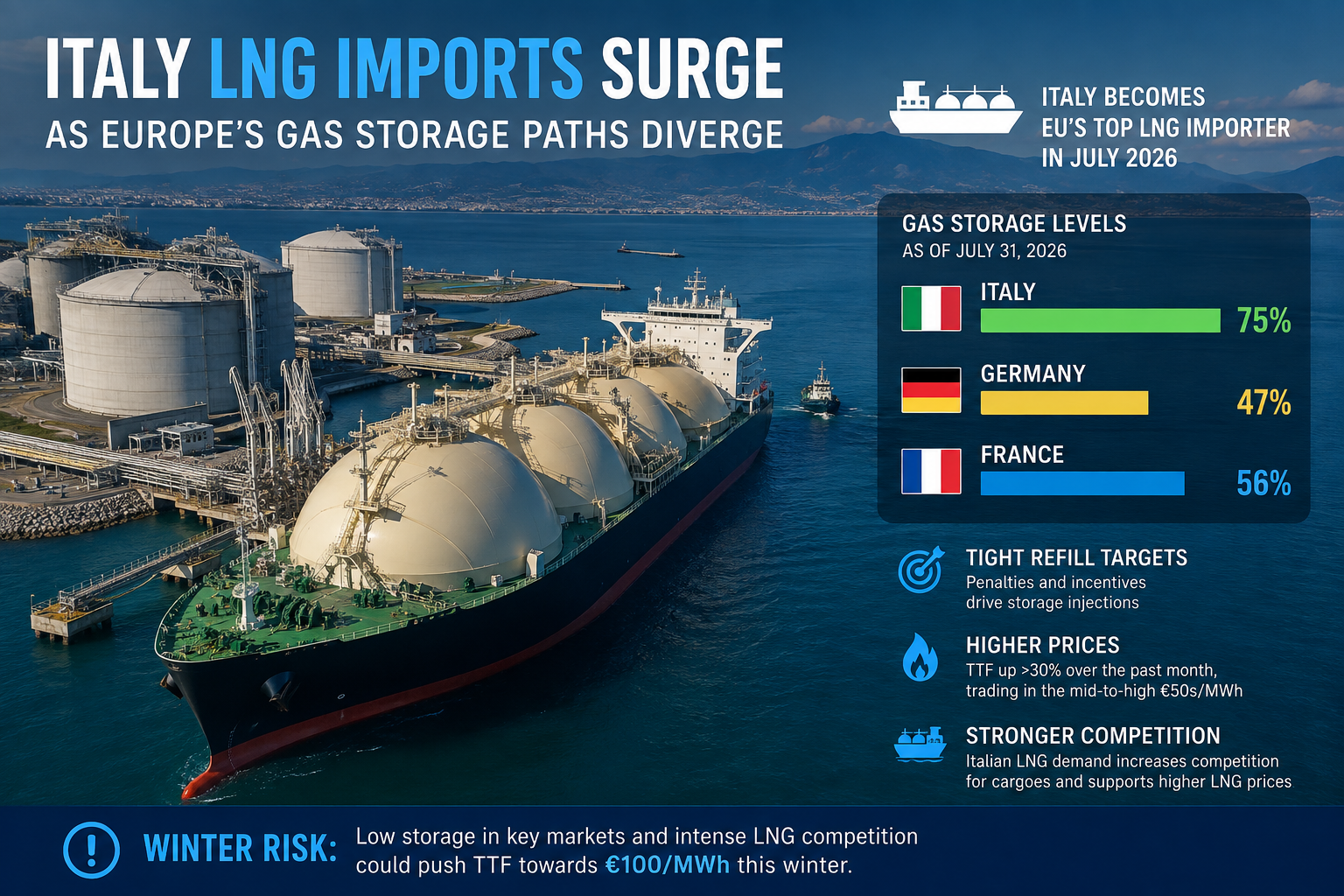
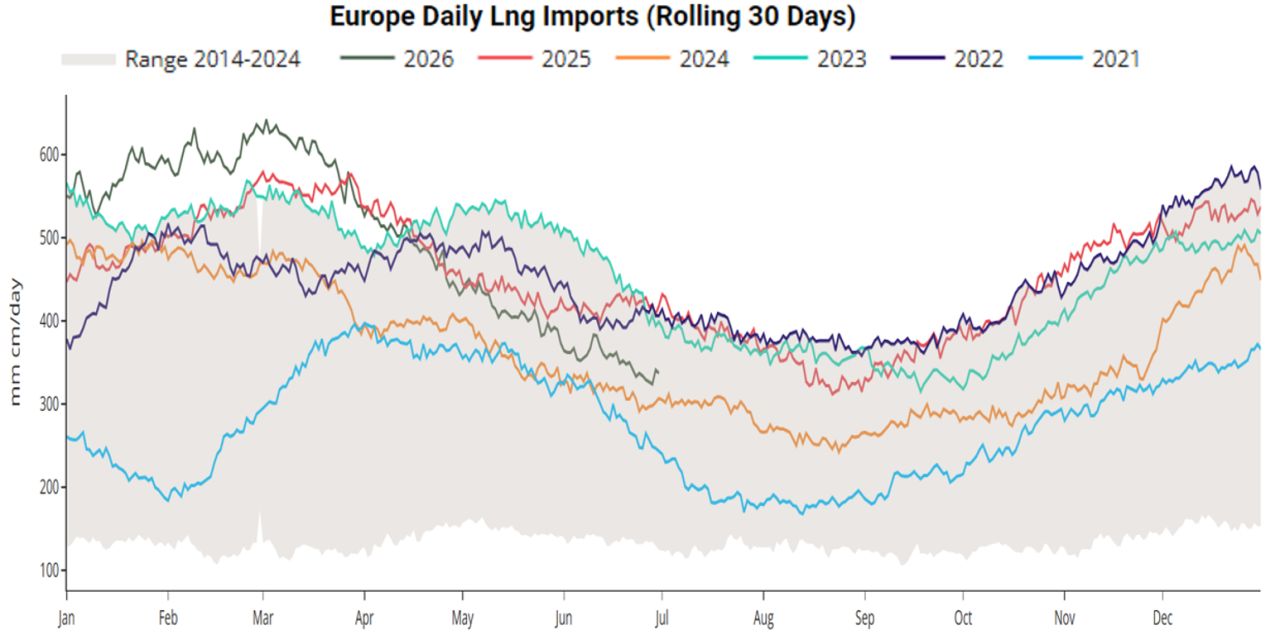
These exports have also had ripple effects throughout the rest of Europe. The most significant example is the ramp-up in German LNG imports and eastward exports in conjunction with the increase in deliveries at the Ukrainian border.
Ukraine’s energy crisis therefore continues to play a significant role in influencing European gas dynamics, and these trends are expected to continue for at least the next 12 months.
As Russian attacks on Ukrainian energy infrastructure continue, the possibility that imports of power and natural gas will grow further next winter also remains a concrete risk.
We use cookies on our website to give you the most relevant experience by remembering your preferences and repeat visits. By clicking “Accept”, you consent to the use of ALL the cookies.
This website uses cookies to improve your experience while you navigate through the website. Out of these, the cookies that are categorized as necessary are stored on your browser as they are essential for the working of basic functionalities of the website. We also use third-party cookies that help us analyze and understand how you use this website. These cookies will be stored in your browser only with your consent. You also have the option to opt-out of these cookies. But opting out of some of these cookies may affect your browsing experience.
Necessary cookies are absolutely essential for the website to function properly. This category only includes cookies that ensures basic functionalities and security features of the website. These cookies do not store any personal information.
Any cookies that may not be particularly necessary for the website to function and is used specifically to collect user personal data via analytics, ads, other embedded contents are termed as non-necessary cookies. It is mandatory to procure user consent prior to running these cookies on your website.