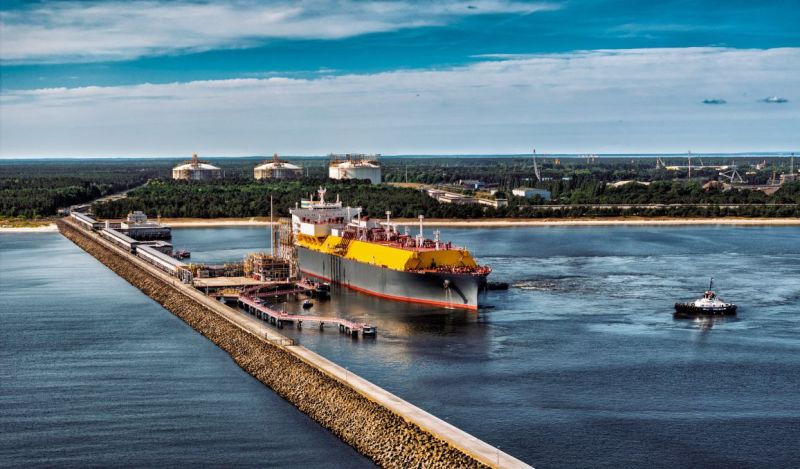
Last week saw multiple announcements of new deals to use US LNG deliveries into Eastern Europe to supply Ukraine and support the phase out of Russian pipeline supplies.
This is evidence of how growing US LNG portfolios are likely to leverage the growing connection between LNG exports and the Trump’s administration’s geopolitical and geoeconomic agenda as a part of their effort to develop new markets and find sinks for the significant portfolio length they have built.
It wouldn’t therefore be unexpected to see US companies take a more prominent role in developing and operating infrastructure in Eastern Europe that enables the delivery of LNG volumes to new markets, as exemplified by Venture Global’s involvement in the Alexandroupolis terminal.
The explicit politicisation of US LNG flows adds a new layer to the market-building efforts of offtakers, as it introduces drivers that could change the perceived value of US LNG relative to other supply sources, or to potential alternatives to natural gas.
This, when considered in the context of the expected impact on prices of the new wave of supply under construction, is contributing to supporting the outlook for natural gas demand, especially in Europe.
This is exacerbated by the fact that the weakness of EU energy policy to external influence, a consequence of its dependence on external entities for its energy imports and defence, but also on internal different point of views regarding energy strategies, has come increasingly under the spotlight recently.
Risks of potential watering down of planned policies in the near future remains.
The combination of these economic and non-economic drivers also has the potential to change the investment cases for other supply sources and into domestic production in Europe, especially where reserves are falling and development costs are rising, suggesting new tensions over future energy strategies.
Reproduced with permission from: The Geopolitics of Natural Gas (LinkedIn)