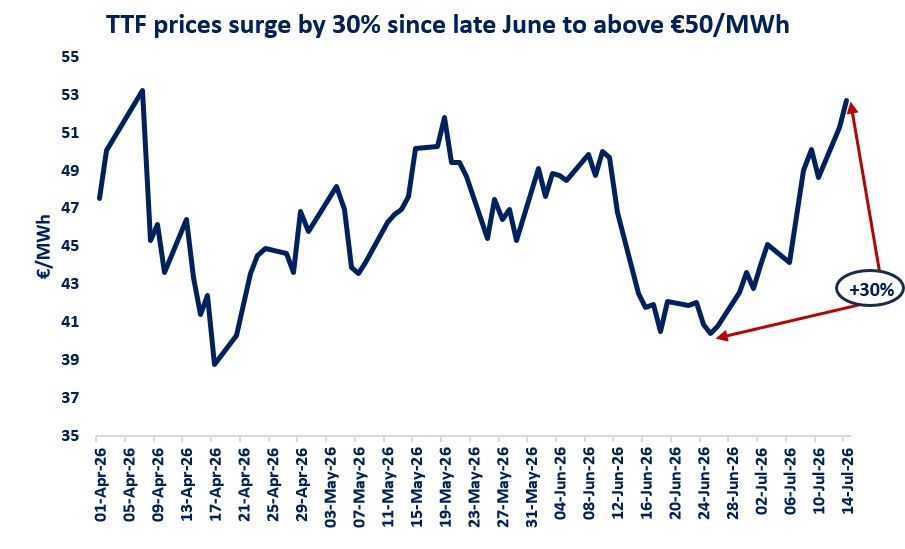
TTF gas prices surged sharply in January as tightening European fundamentals widened the premium over Asian spot LNG benchmarks, underscoring Europe’s sensitivity to weather, storage levels and short-term market signals.
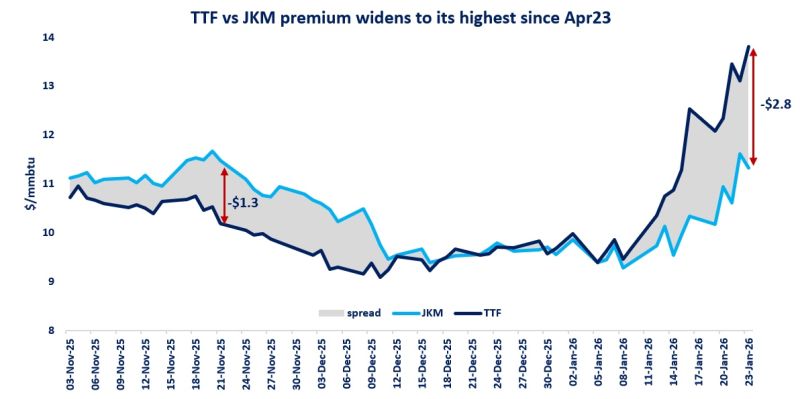
TTF’s premium over JKM widened to its highest level since Apr23, driven by stronger European gas demand and dwindling storage levels.
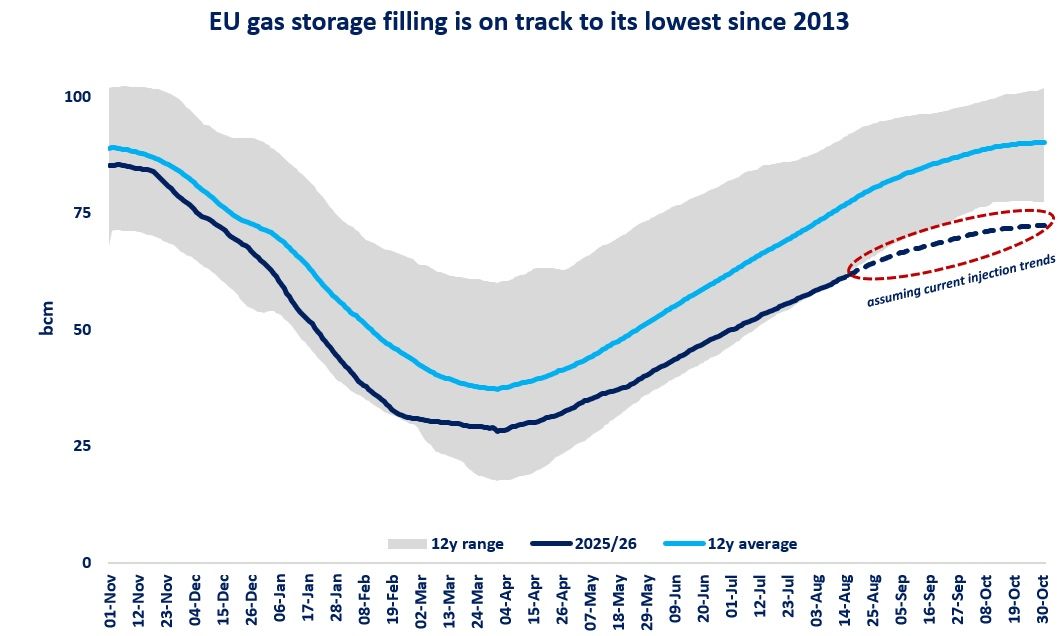
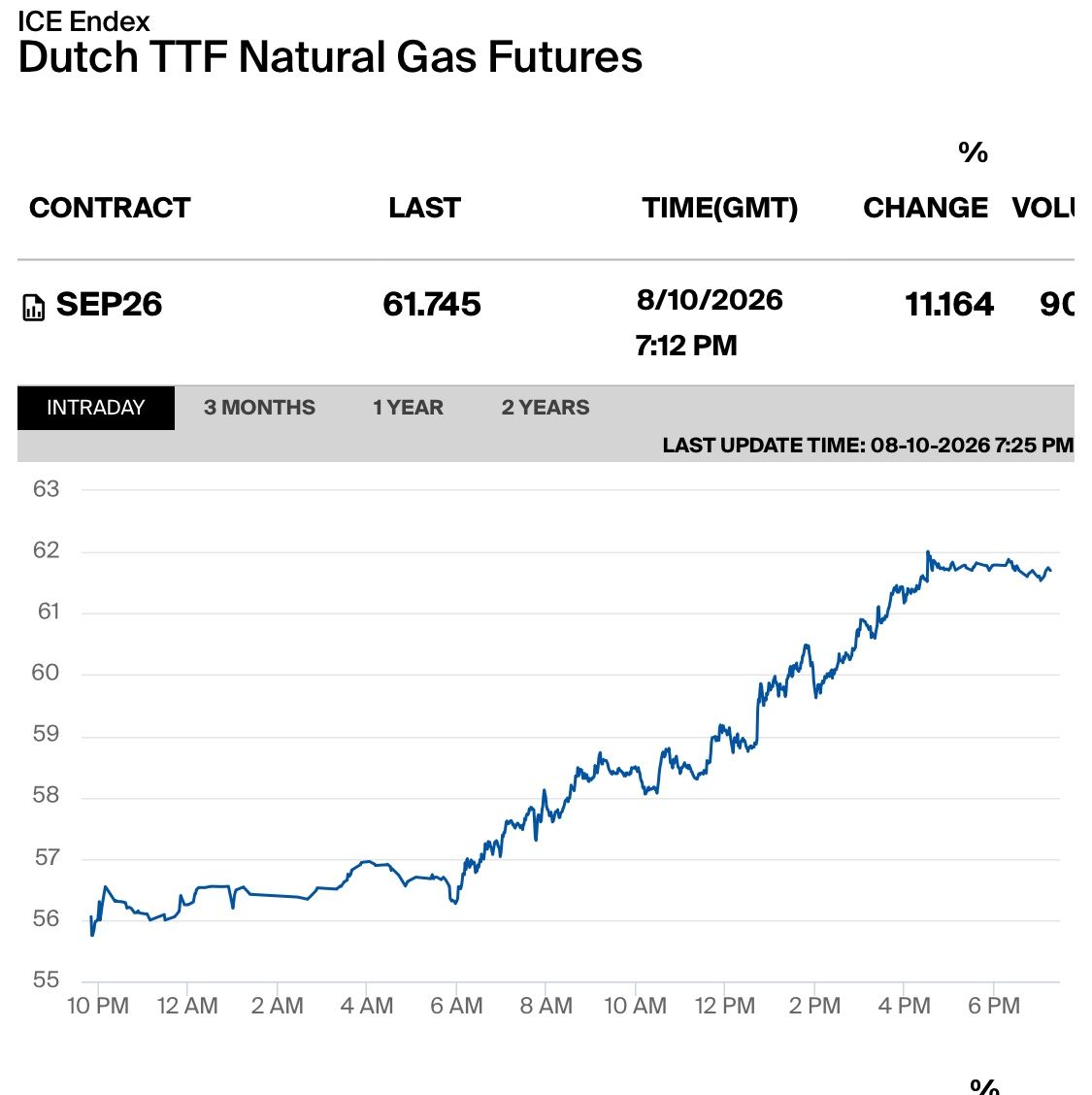
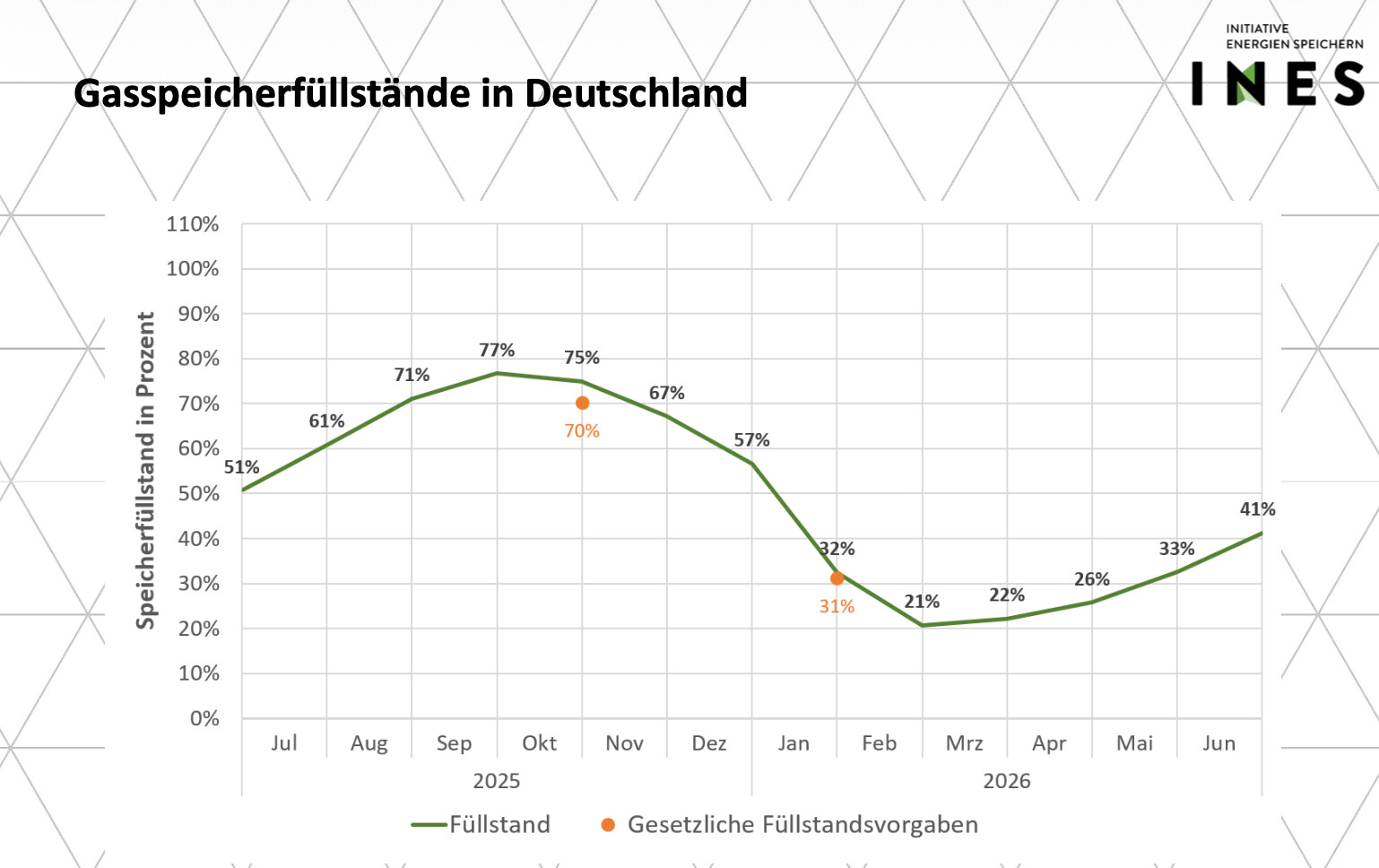
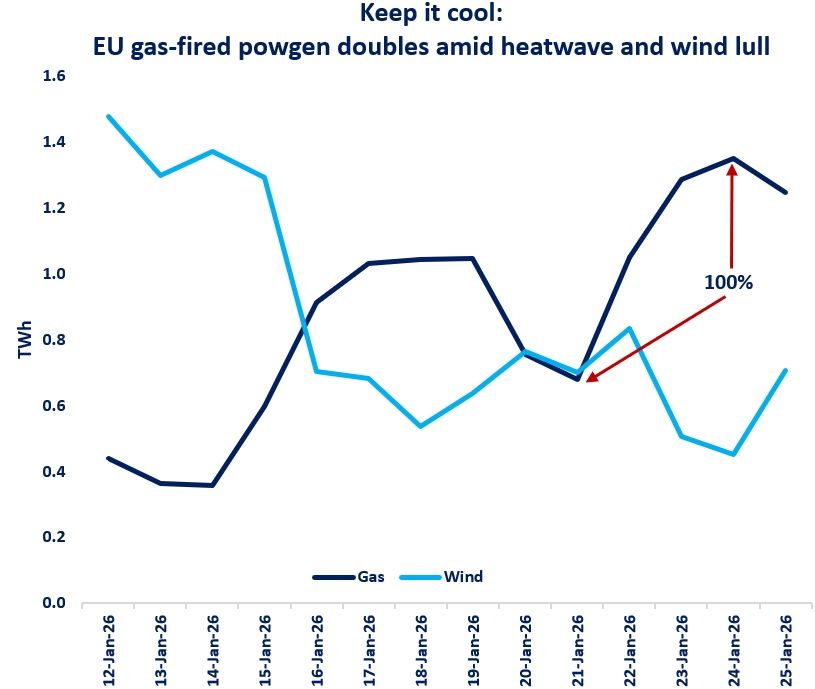
TTF month-ahead prices surged by nearly 50% since the start of January amid the benchmark’s wildest bull run since the 2022 gas crisis. Colder weather together with slower nuclear power output boosted European gas demand by more than 8%, while EU storage levels are now trending below their 5-year average.
JKM followed TTF, although at a more tepid pace, climbing by around 20% since the beginning of the year. While the region is also facing a severe cold spell and has very limited underground storage capacity, Asian spot LNG prices displayed somewhat calmer patterns than TTF.
One key difference between the northeast Asian and northwest European markets is the availability of coal-based generation at scale in Asia, which may have softened spot LNG price movements through coal-to-gas switching optionality across key regional markets.
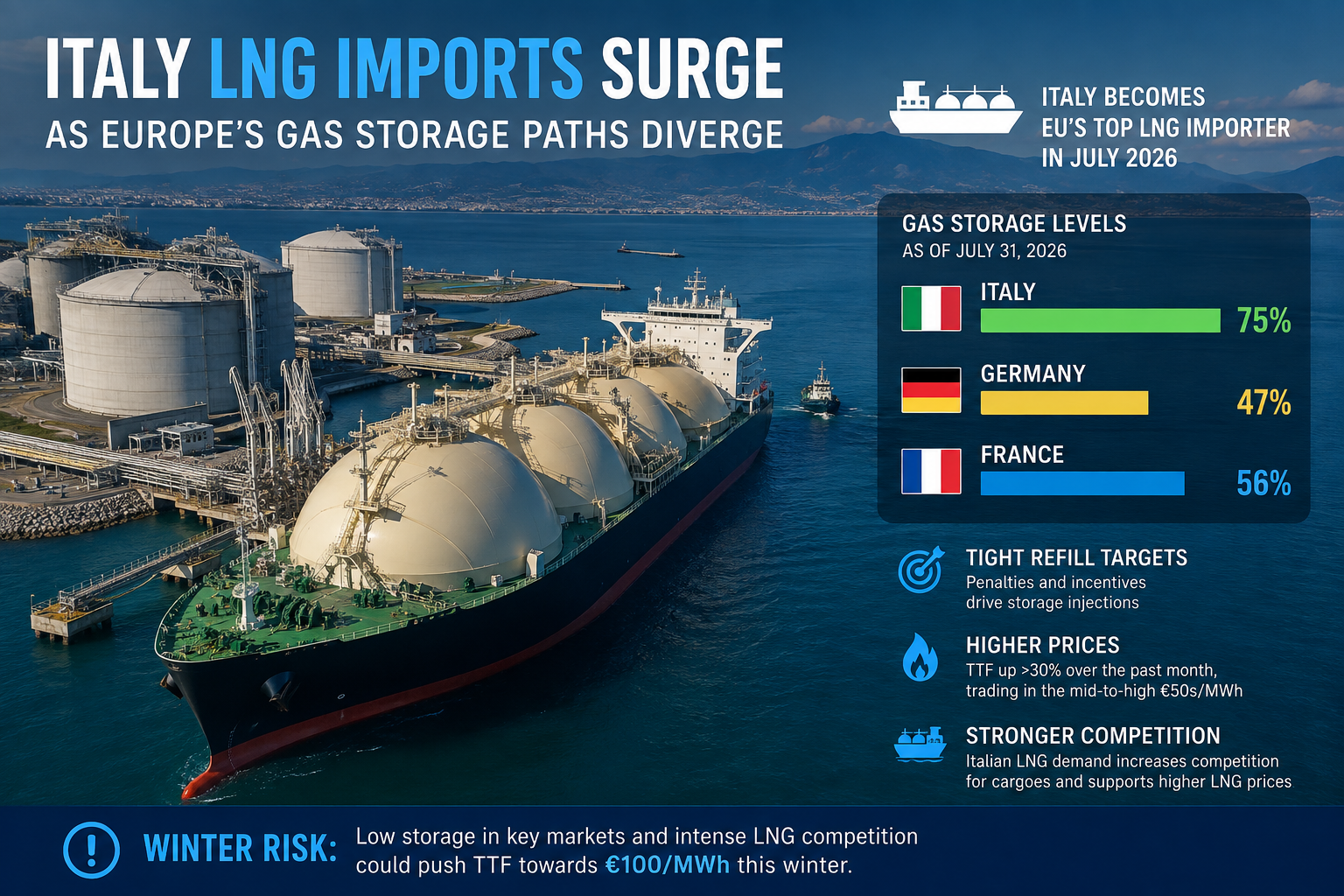
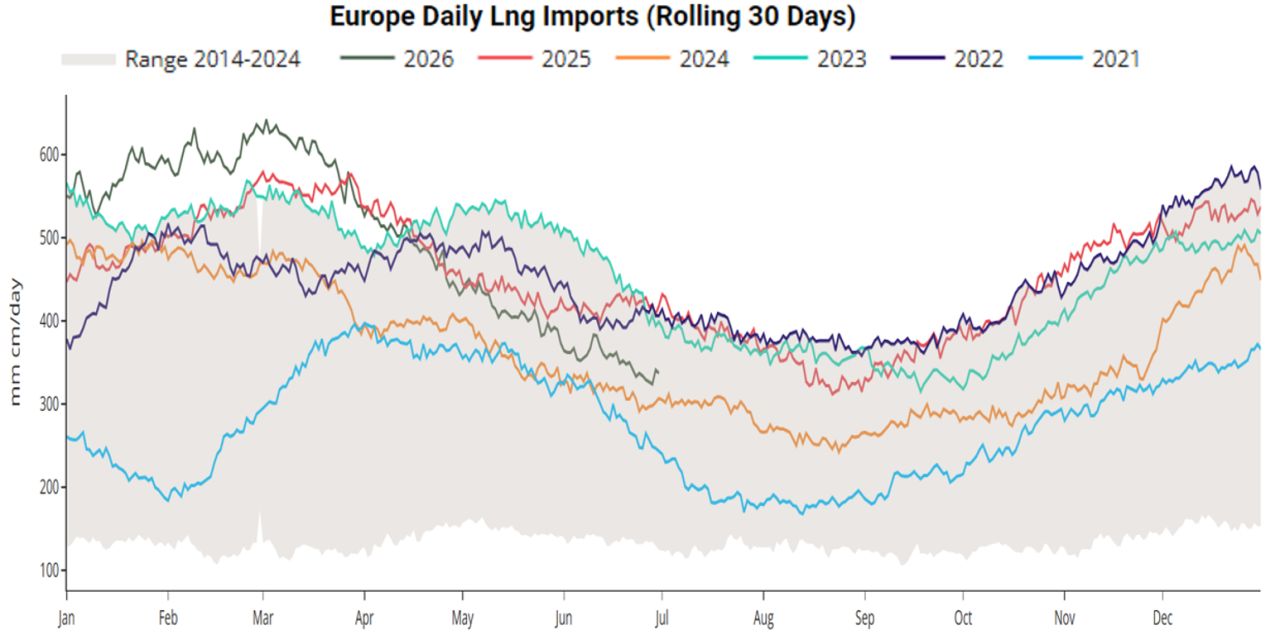
The widening TTF premium over JKM may also indicate that Europe is willing to ramp up LNG imports over the remainder of the winter to moderate storage withdrawals, keeping the region on track for another record-breaking year of LNG imports.
What is your view? How will the global LNG market evolve this year? Will we see stronger competition between Asian and European markets for flexible LNG? And how will the spread evolve?
We use cookies on our website to give you the most relevant experience by remembering your preferences and repeat visits. By clicking “Accept”, you consent to the use of ALL the cookies.
This website uses cookies to improve your experience while you navigate through the website. Out of these, the cookies that are categorized as necessary are stored on your browser as they are essential for the working of basic functionalities of the website. We also use third-party cookies that help us analyze and understand how you use this website. These cookies will be stored in your browser only with your consent. You also have the option to opt-out of these cookies. But opting out of some of these cookies may affect your browsing experience.
Necessary cookies are absolutely essential for the website to function properly. This category only includes cookies that ensures basic functionalities and security features of the website. These cookies do not store any personal information.
Any cookies that may not be particularly necessary for the website to function and is used specifically to collect user personal data via analytics, ads, other embedded contents are termed as non-necessary cookies. It is mandatory to procure user consent prior to running these cookies on your website.