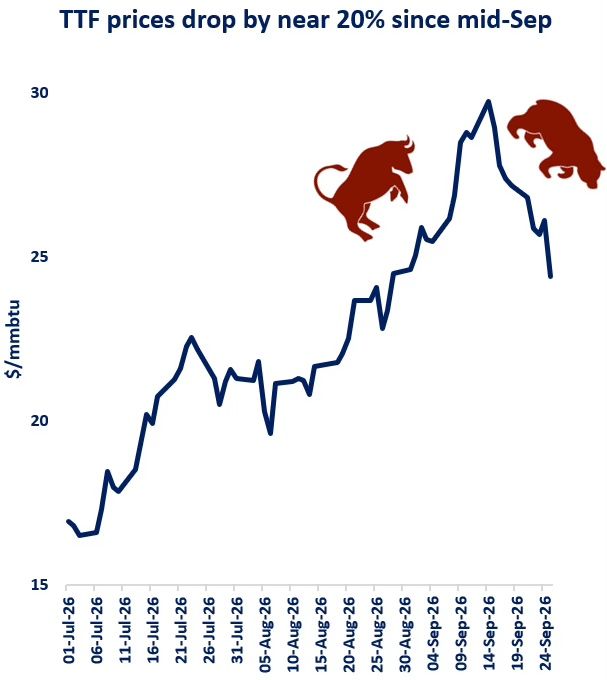
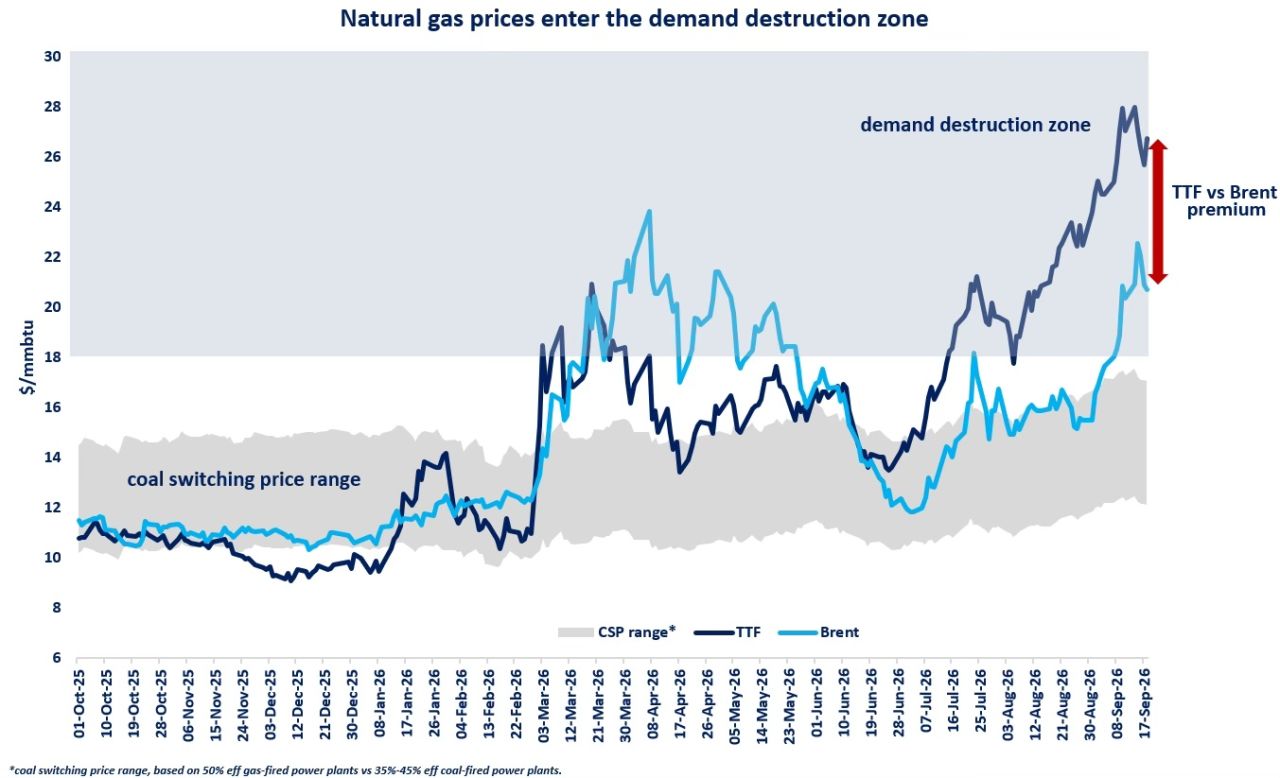
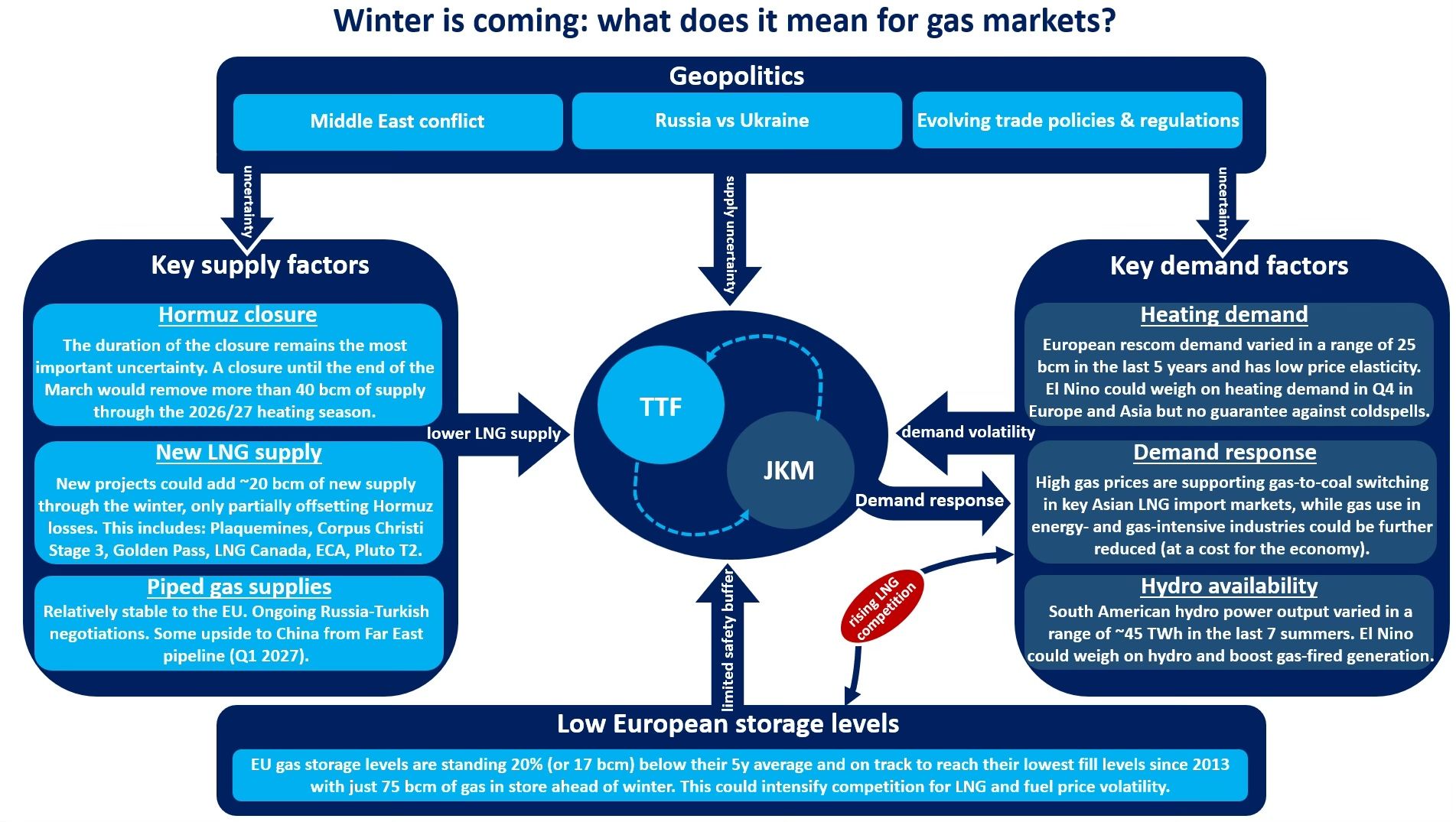
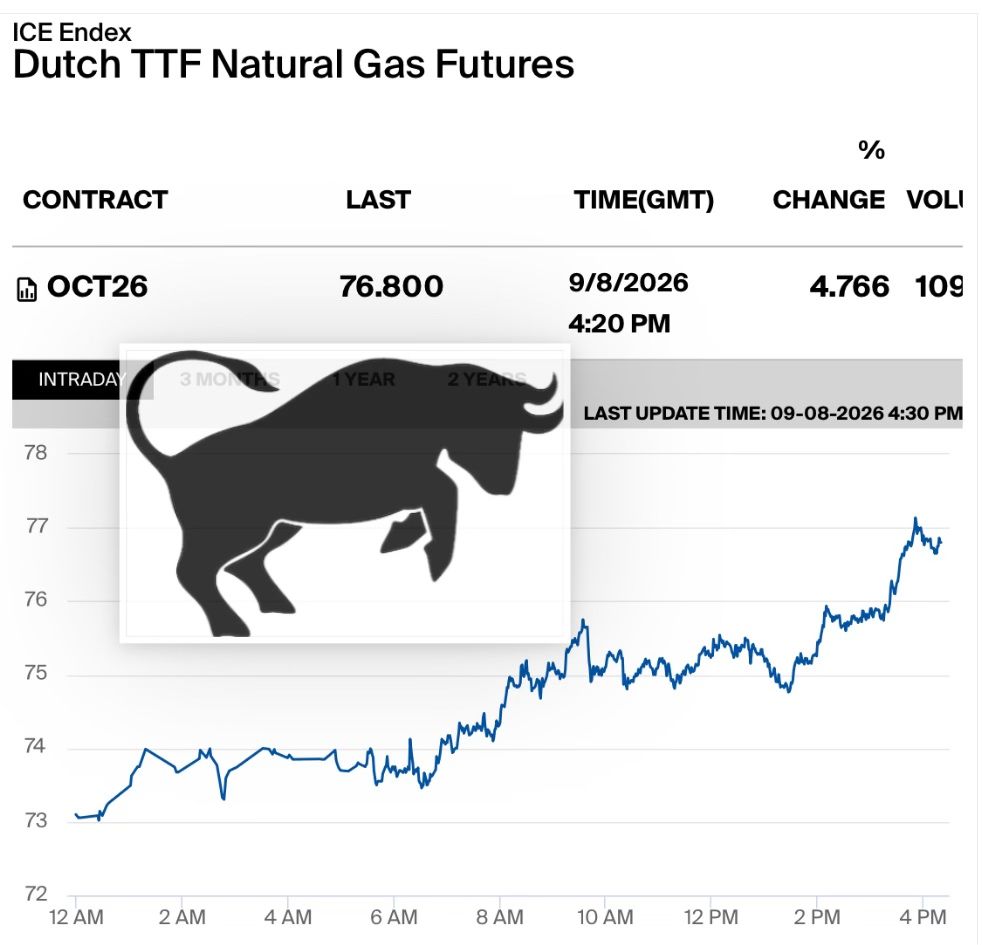
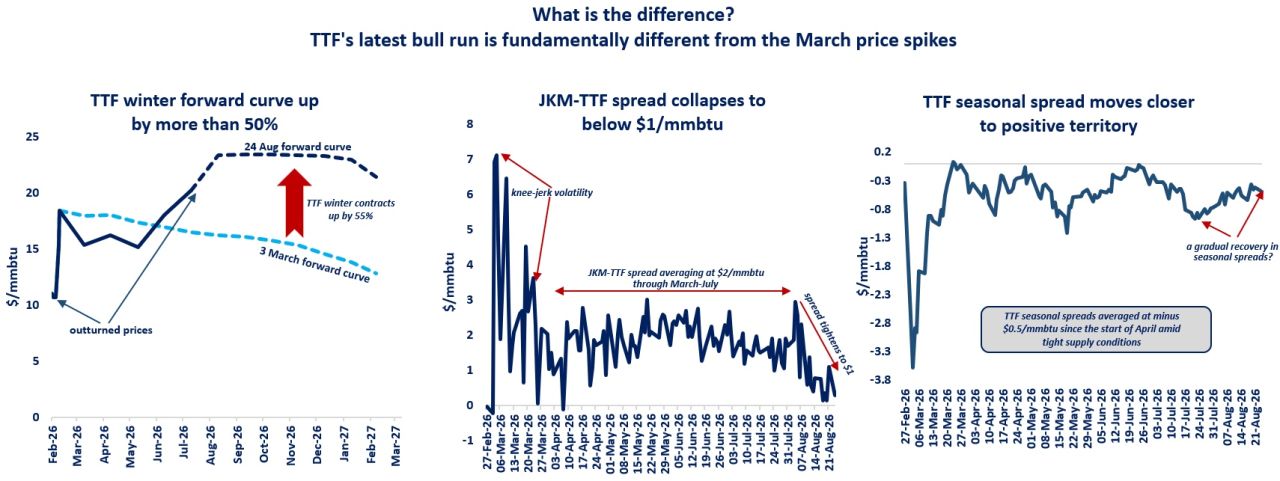
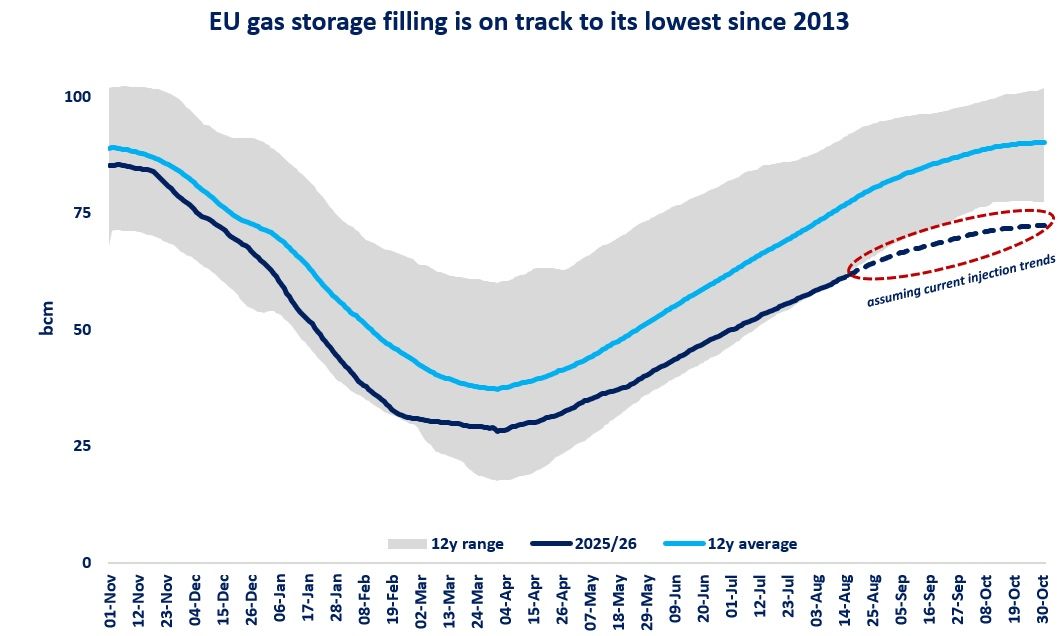
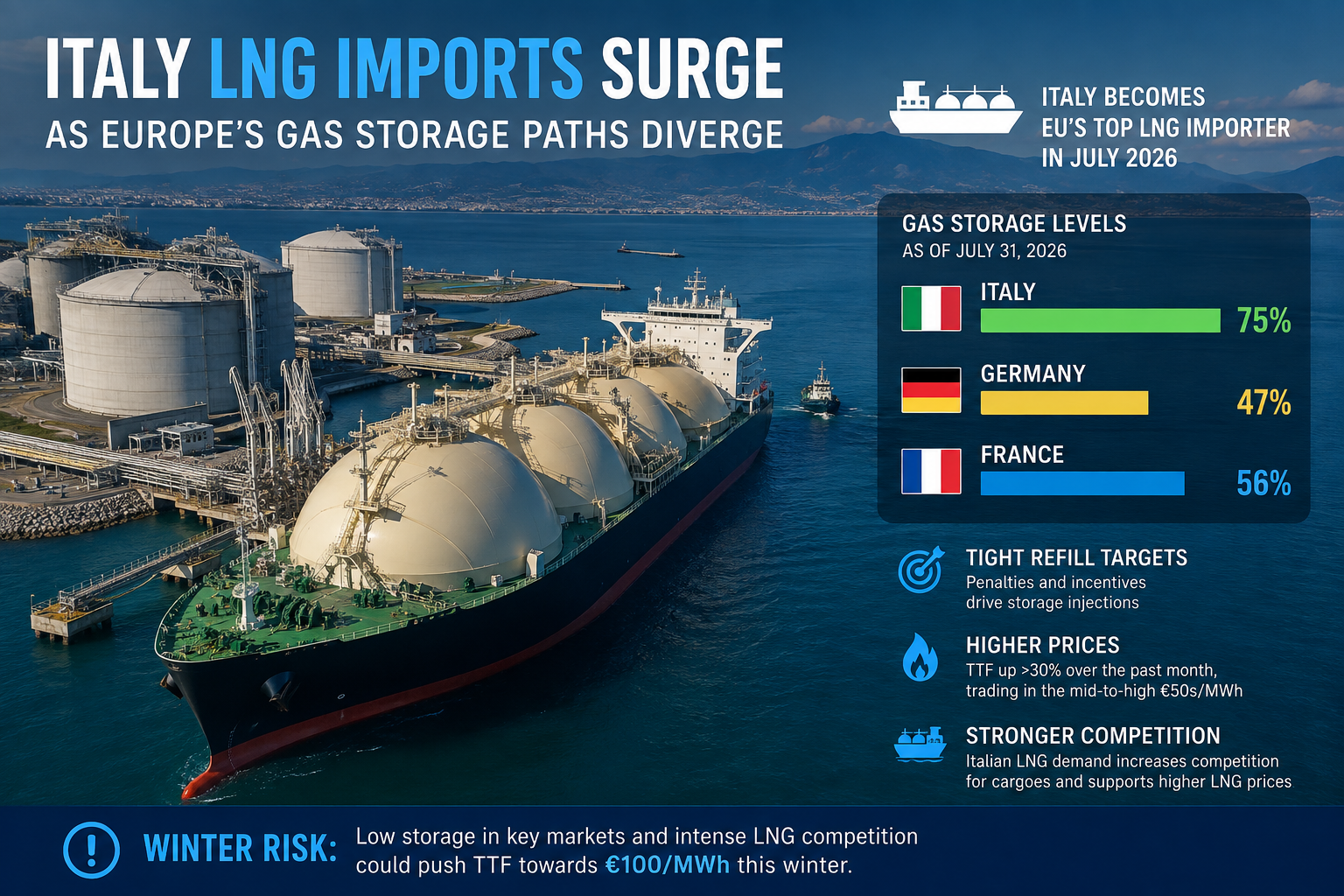
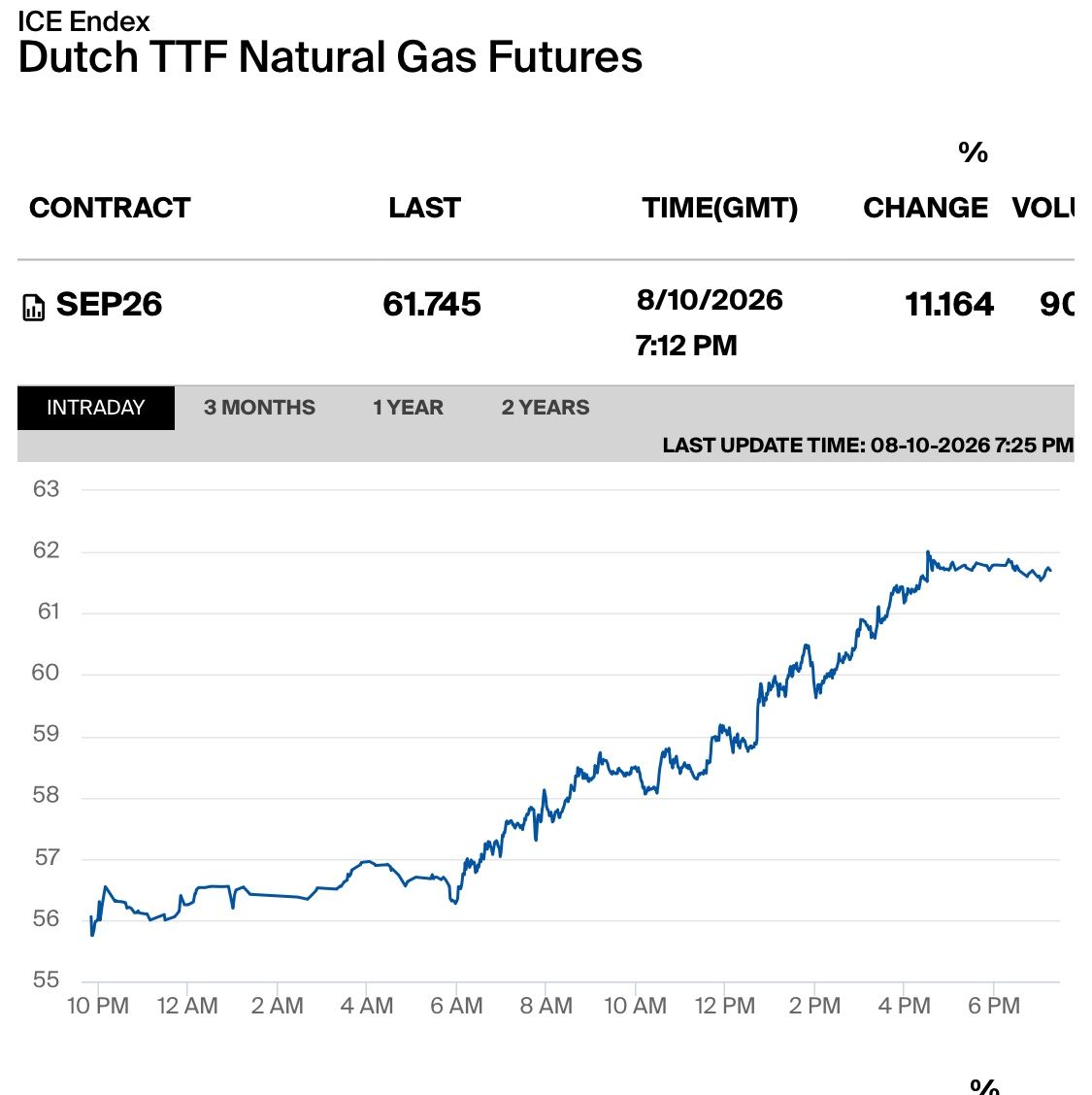
TTF prices surged in August as tighter global LNG supply, stronger European gas demand and Norwegian outages combined to put renewed upward pressure on the market. The increase came as gas prices across Europe and Asia climbed to their highest levels since the start of the Hormuz crisis.
Asian and European gas prices in August rose to their highest since the start of the Hormuz crisis, amid tighter supply fundamentals and stronger gas demand.
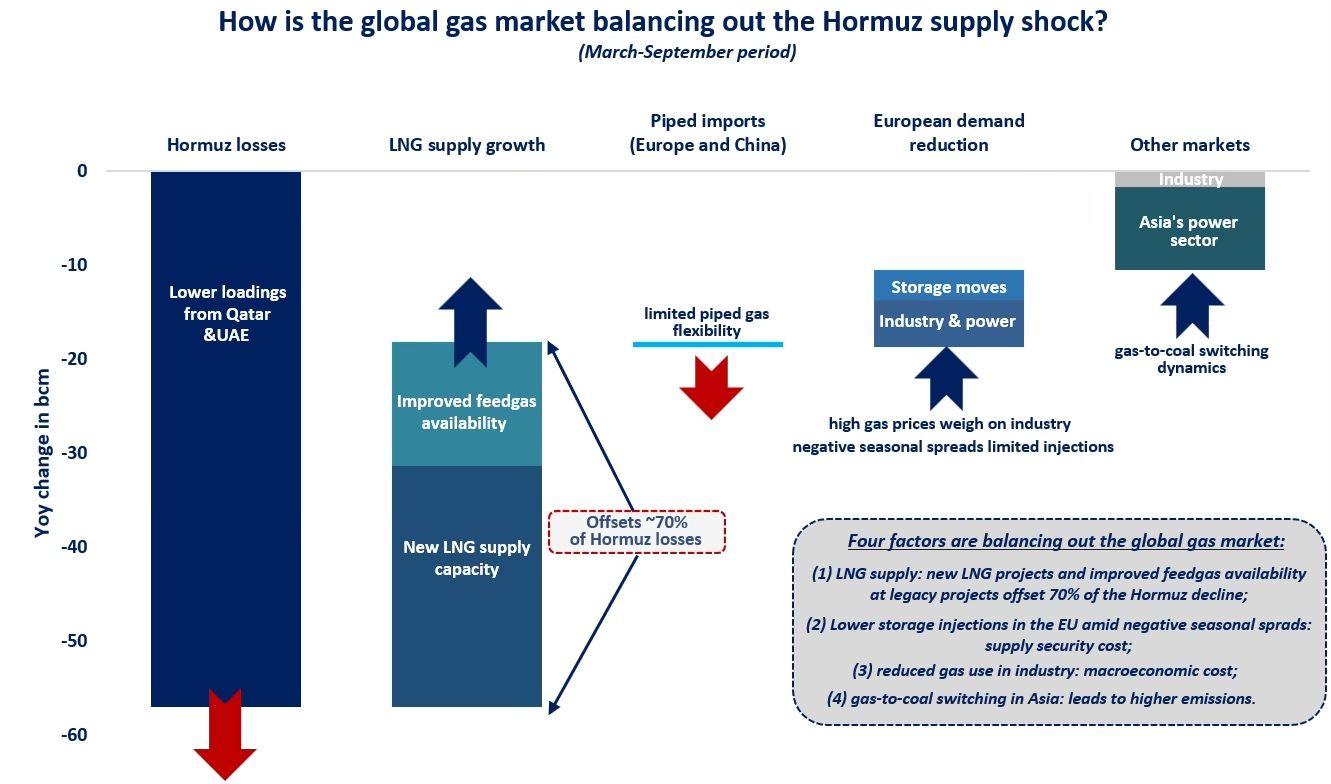
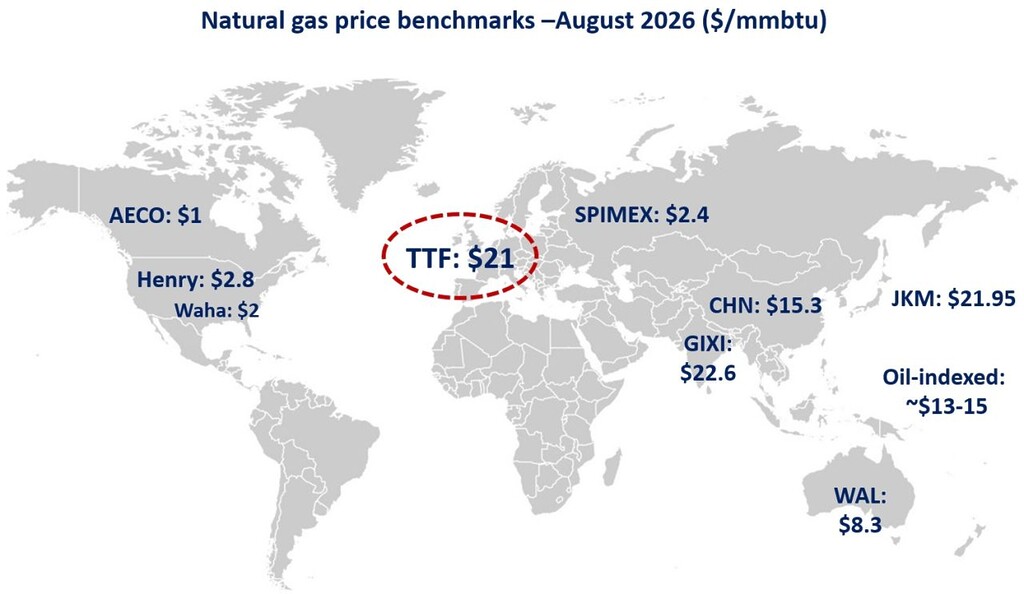
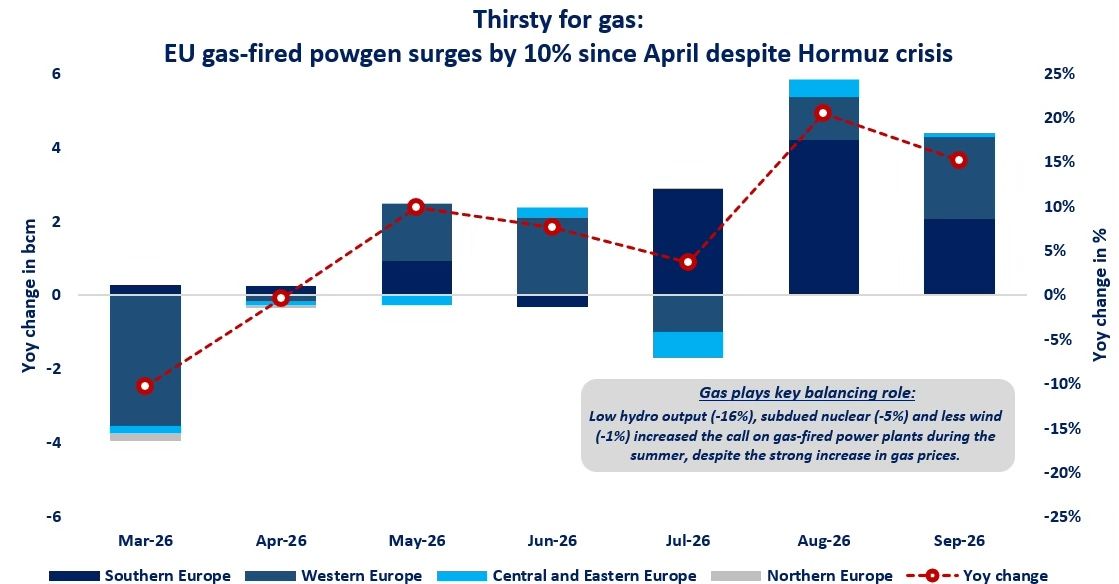
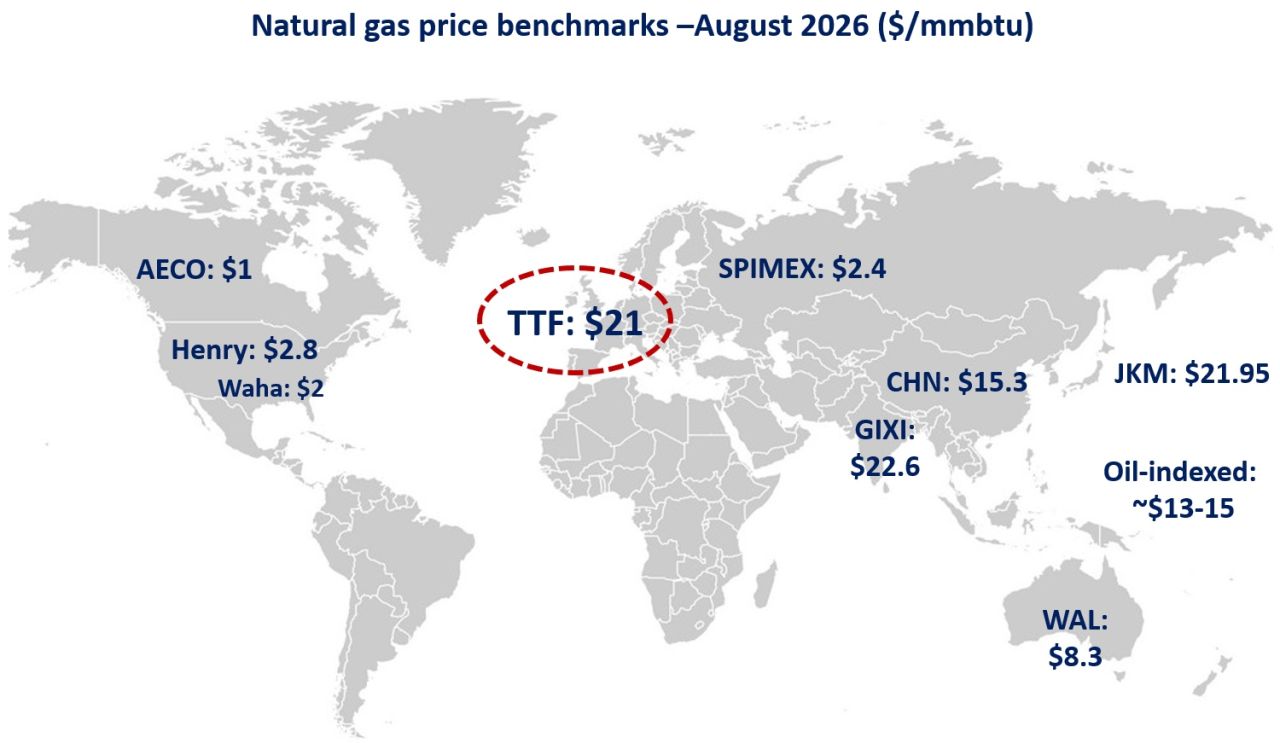
In Europe, TTF month-ahead prices rose by almost 90% YoY to an average of $21/MMBtu — their highest level since December 2023. Global LNG supply fell by more than 6% YoY as the Strait of Hormuz remains effectively closed, choking off Qatari and Emirati LNG flows. Tightening supply fundamentals have coincided with stronger European gas demand, up by 3% amid higher gas use in the power sector. Sizzling heatwaves, low hydro and nuclear outages boosted gas-fired power generation in the EU by more than 10% YoY, adding further upward pressure on gas prices.
In Asia, JKM prices moved in tandem with TTF, up by 90% YoY to an average of $22/MMBtu. Very importantly, the spread between JKM and TTF narrowed from $2/MMBtu in the previous months to just $1/MMBtu in August, highlighting an increasingly fierce competition between Asia and Europe for flexible LNG cargoes.
Meanwhile, oil-indexed LNG contracts are still trading at a hefty discount compared to spot LNG prices, with an estimated price range of $13–15/MMBtu — which is well above the $10–11/MMBtu averages seen last year.
In the US, Henry Hub prices fell by 5% YoY to an average of $2.8/MMBtu. Strong domestic gas production together with high storage levels is putting downward pressure on gas prices, despite a very strong increase in gas-fired power generation (up by 5%) amid sizzling heatwaves and expanding data centres.
In the Permian, Waha prices returned to positive territory in the last few months and averaged at $2/MMBtu in August — their highest level since February 2025. More takeaway capacity with the start-up of the Hugh Brinson and GCX Expansion pipelines allowed for a healthy recovery in Permian gas prices, while also weighing on gas prices at other hubs, including Henry Hub and Agua Dulce.
In Canada, AECO prices almost doubled compared to last year to an average of just $1/MMBtu — still the world’s cheapest natural gas. Stronger domestic demand together with the ramp-up of the LNG Canada facility is providing upward pressure on gas prices.
What is your view? How will gas prices evolve over the coming months as we are approaching the heating season? Could we see further upward volatility? Any bearish factors to consider?
Source: Greg Molnár