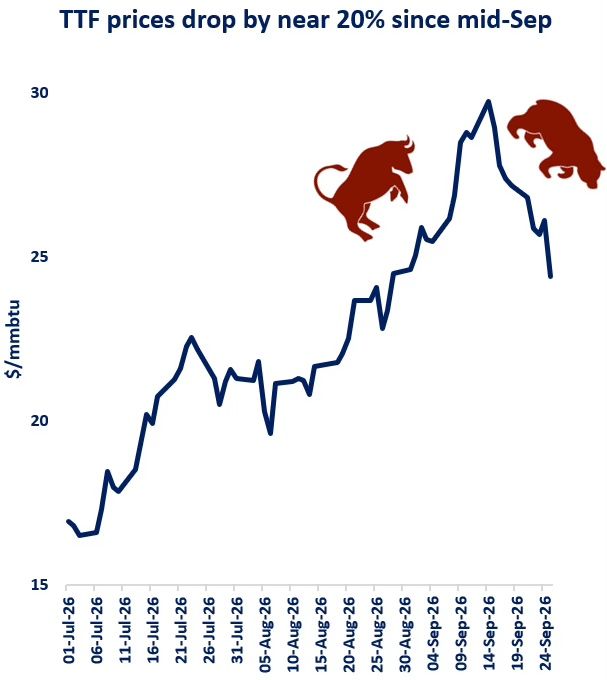
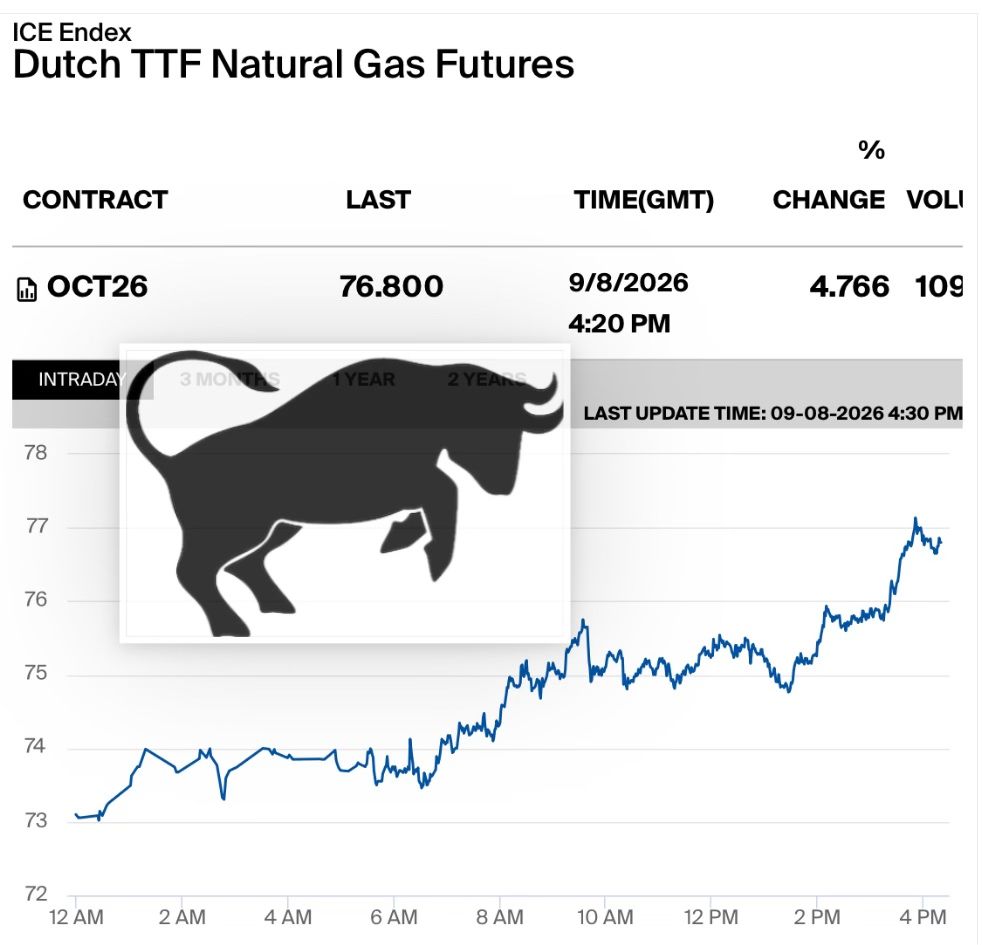
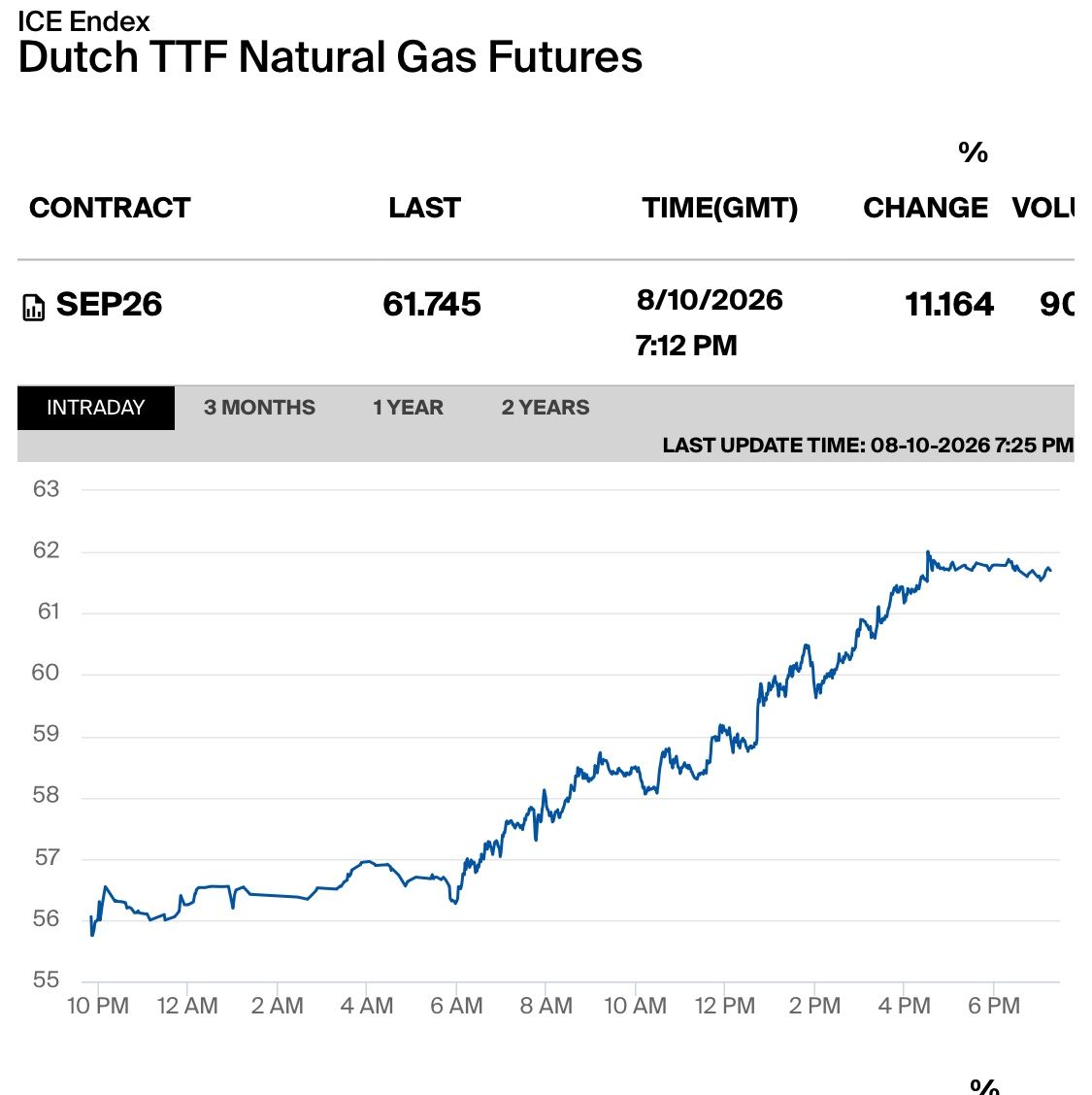
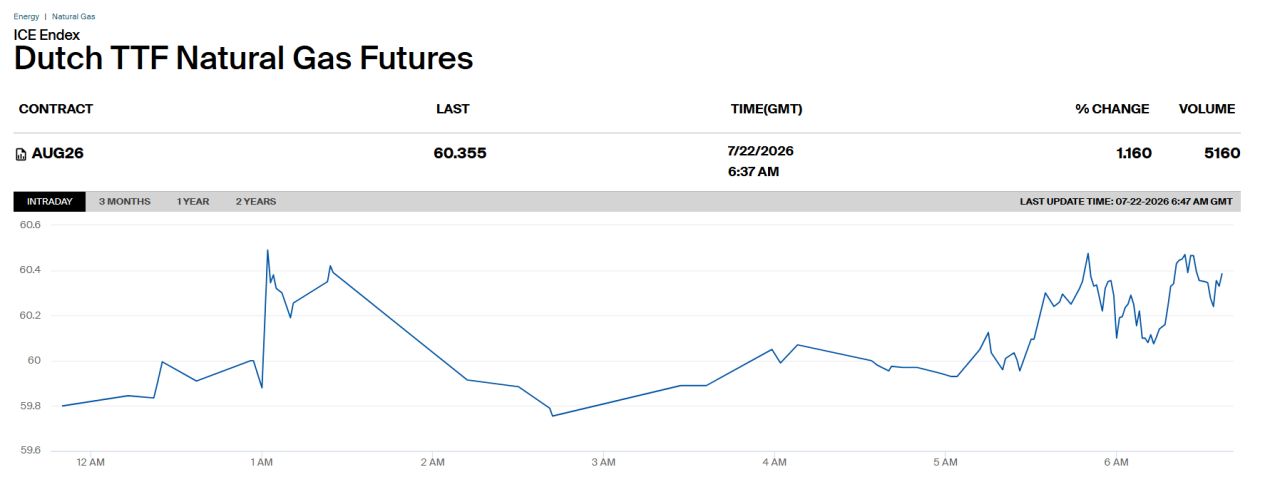
TTF gas prices surged by more than 60% since the start of July. The current upward trend seems to be more fundamentals driven than the panic price surge witnessed in March, reflecting a profound change in market sentiment ahead of the heating season.
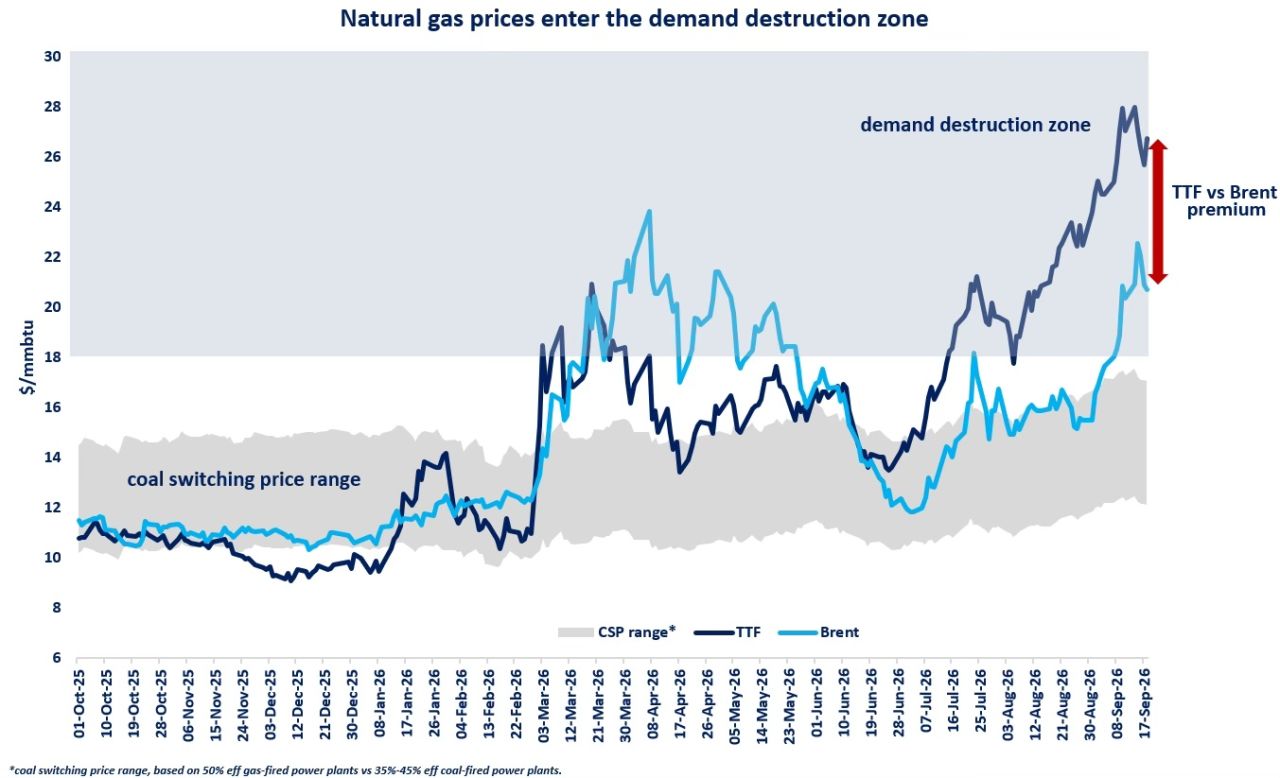
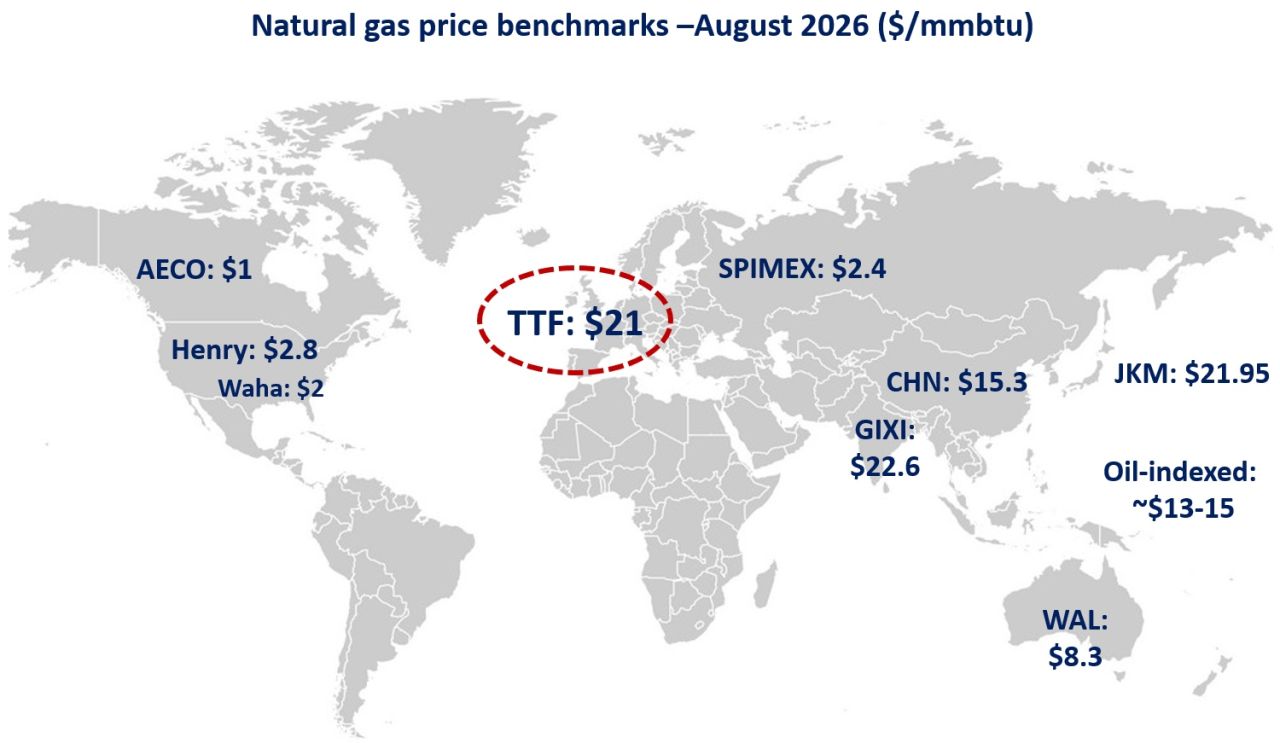
TTF prices closed yesterday at their highest level since January 2023, standing at over $23/MMBtu, which is well above the coal-switching price range and could incentivise production optimisation across certain gas- and energy-intensive industries.
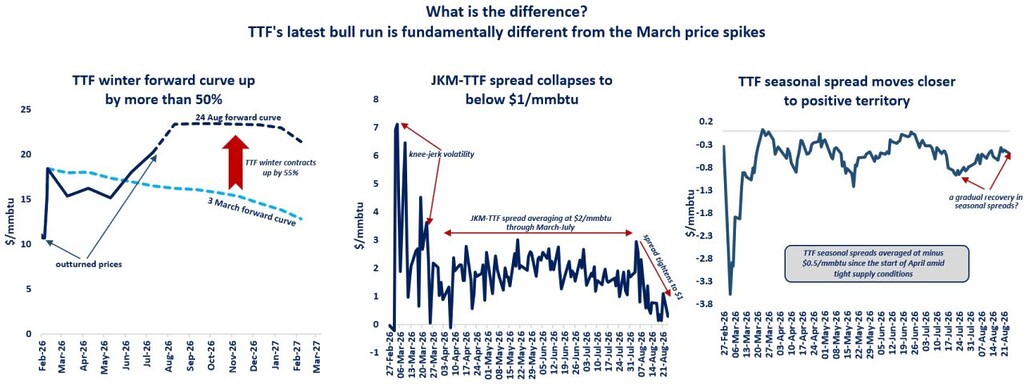
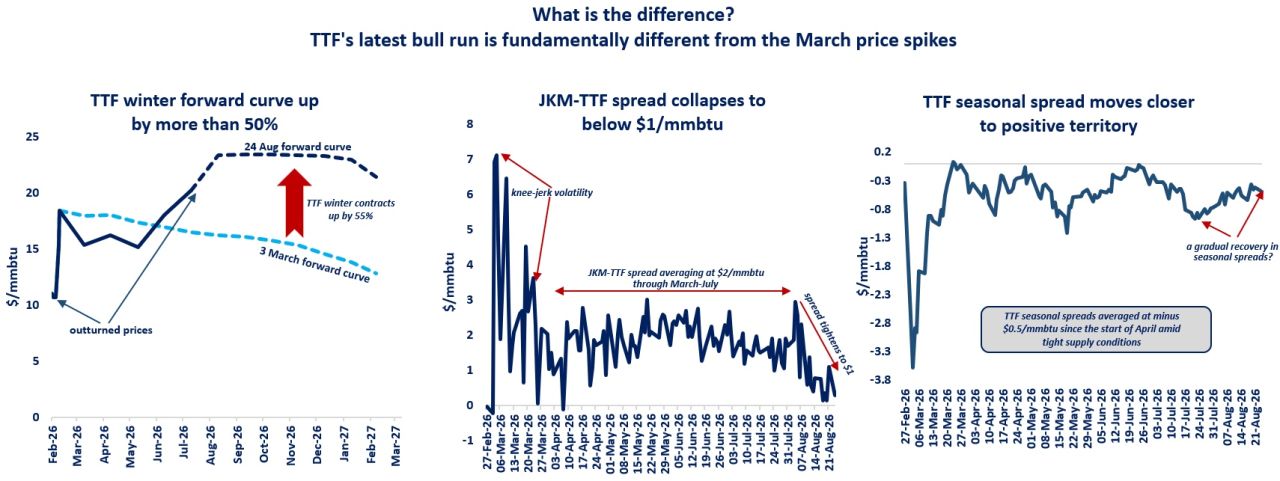
Besides the absolute price levels, there are three important changes in pricing dynamics compared to the knee-jerk volatility seen in March:
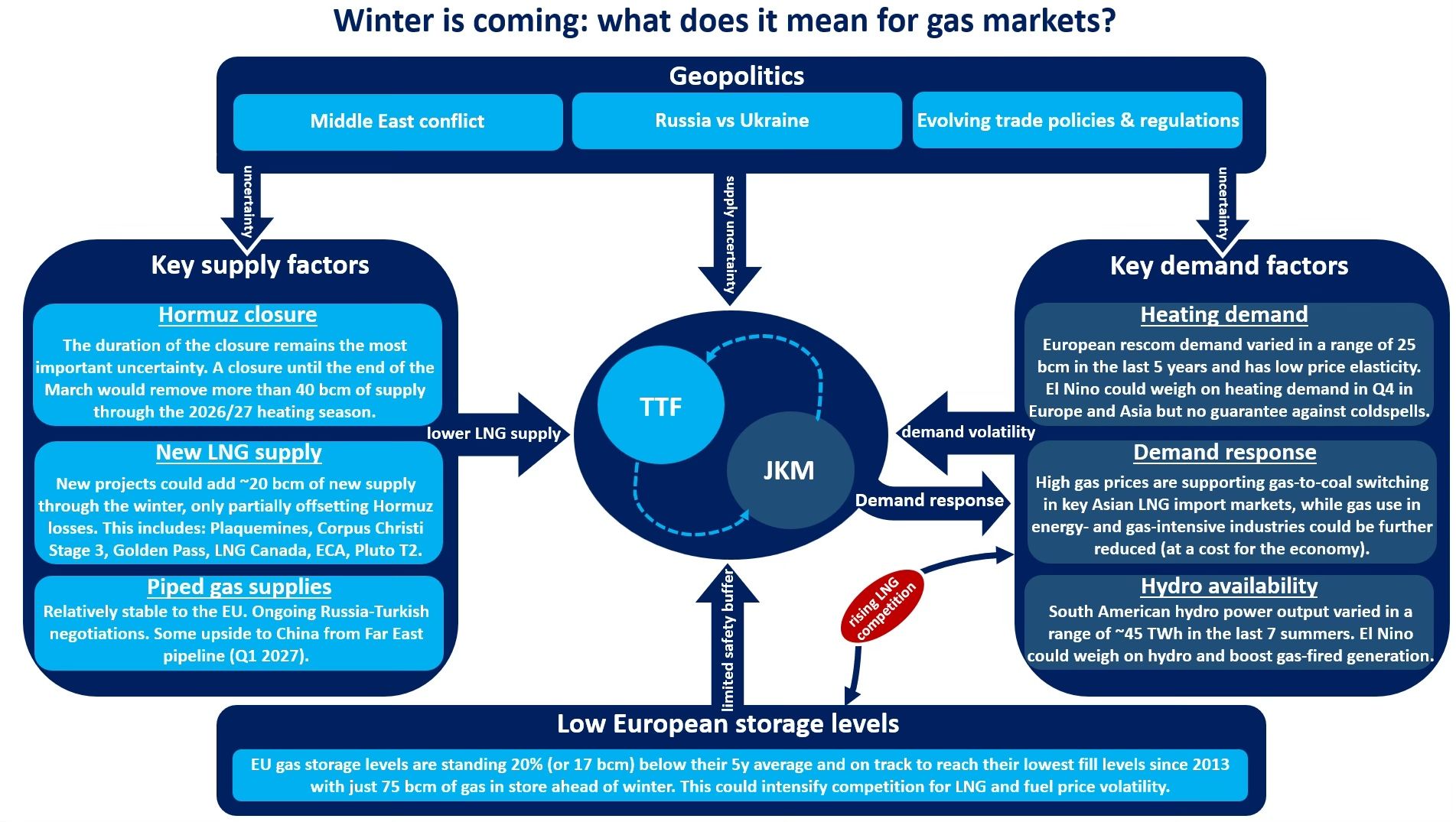
(1) The forward curve is up: the TTF winter contracts are up by more than 55% compared to the March forward curve. TTF winter contracts are now trading at $23/MMBtu, indicating that the market is pricing in a more prolonged disruption of flows through the Strait of Hormuz;
(2) The JKM-TTF spread halved: JKM displayed a premium of over $2/MMBtu compared to TTF through the March-July period. This hefty premium was needed to attract more flexible LNG cargoes towards Asia and at the expense of Europe. The JKM-TTF spread practically halved since the start of August to just around $1/MMBtu.
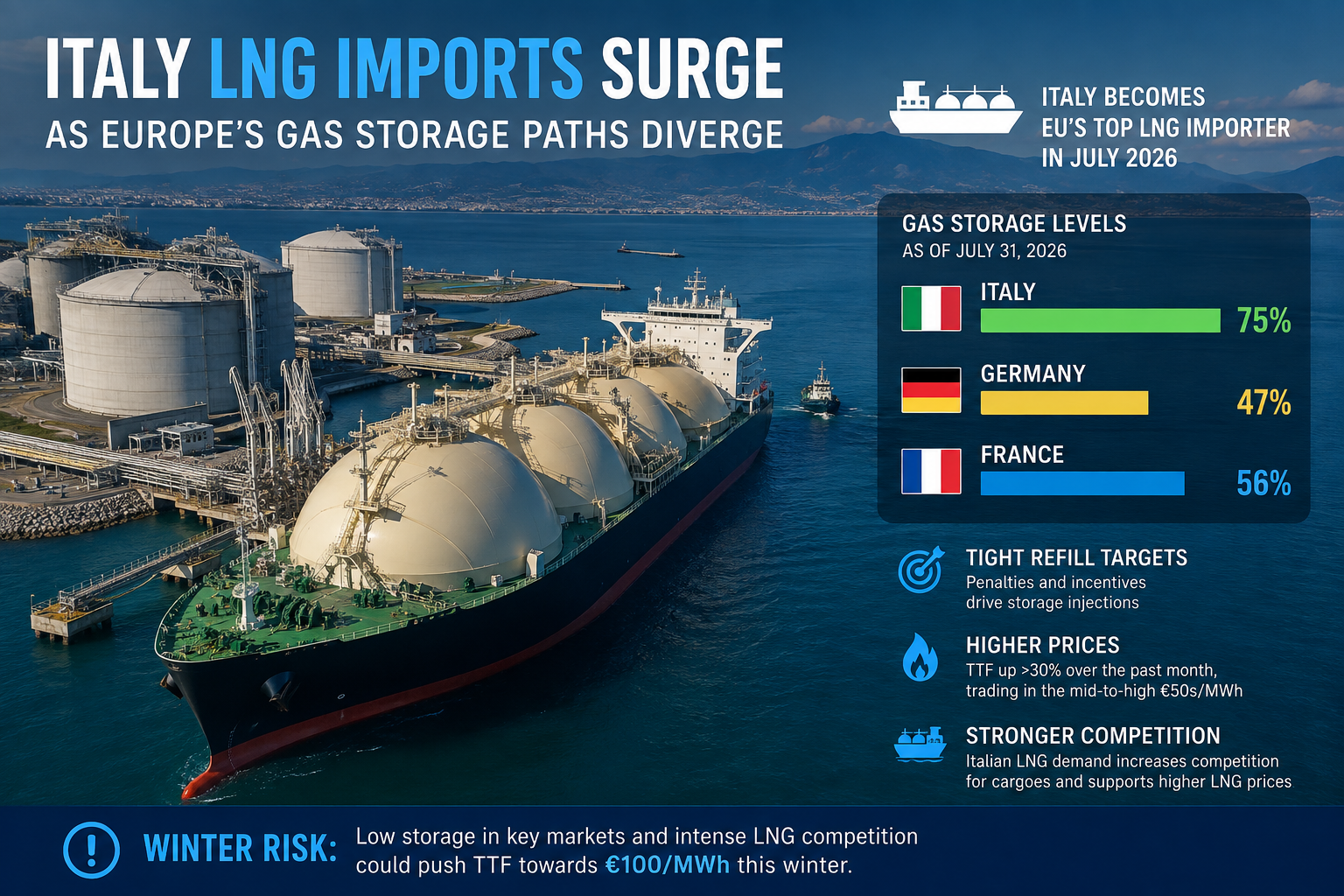
This reflects a growing competition for flexible LNG and indicates that Europe is ready to compete more aggressively as we approach the heating season;
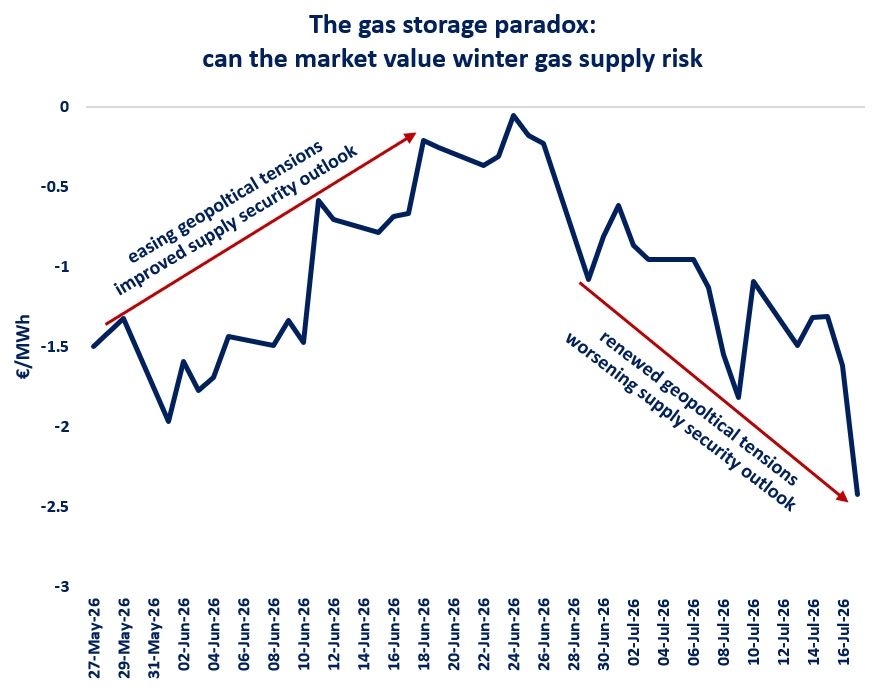
(3) TTF seasonal spreads are moving to recovery: seasonal spreads on TTF averaged at minus $0.5/MMBtu since the start of April, reducing the commercial incentive for storage filling. This might be changing, with the negative spread moderating from minus $0.8/MMBtu in the second half of July to below minus $0.5/MMBtu in recent days.
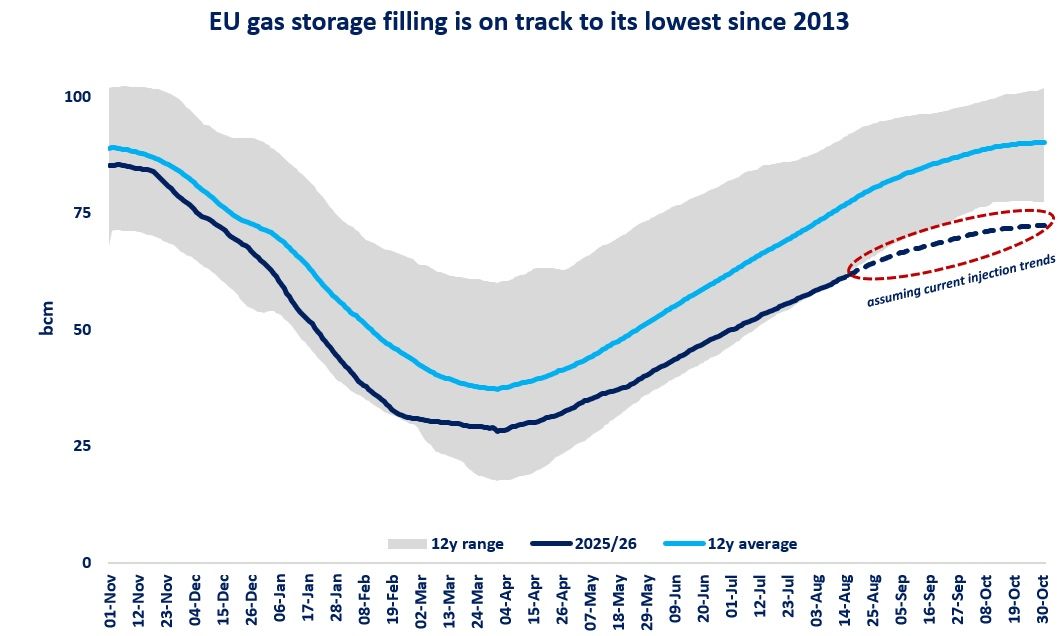
This might reflect the growing concerns of European market players regarding low storage levels, which in turn provides more upside to winter contracts (as risk premium needs to be priced in).
These three pricing dynamics will be key to watch in the coming weeks and months as we approach the heating season.
It is also very clear that TTF’s current bull run is fundamentally different from the knee-jerk volatility seen in March: the current surge is not panic, it is a reflection of increasingly tight supply-demand fundamentals.
What is your view? How will gas prices evolve in the coming months? Do you see more upside risks or could the bears be back?
Source: Greg Molnár, LinkedIn, August 2026.