Dutch gas storage levels remain well below historical averages as the Netherlands approaches winter 2026–27, but increased LNG imports are helping compensate for lower inventories. With TTF prices rising amid geopolitical uncertainty, the balance between storage injections, LNG availability and winter demand is becoming increasingly important.
The Netherlands is heading into winter with less gas in storage, but LNG is stepping up to help balance the system.
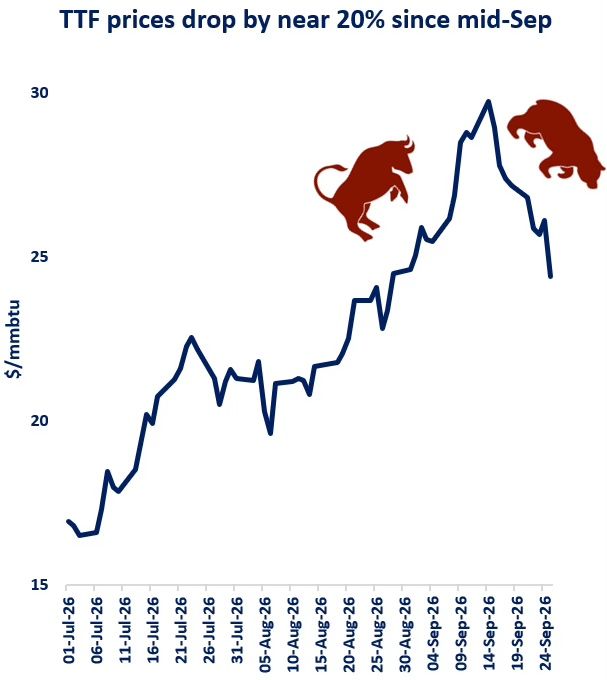
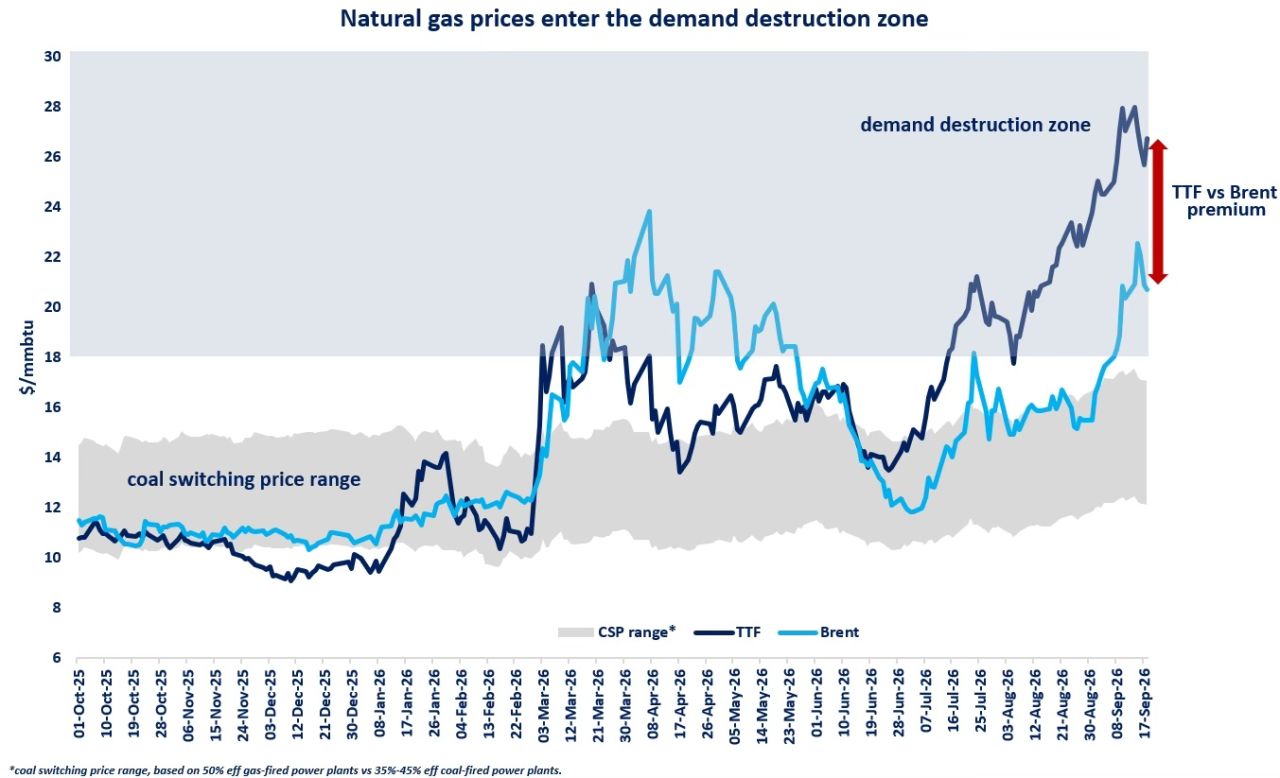
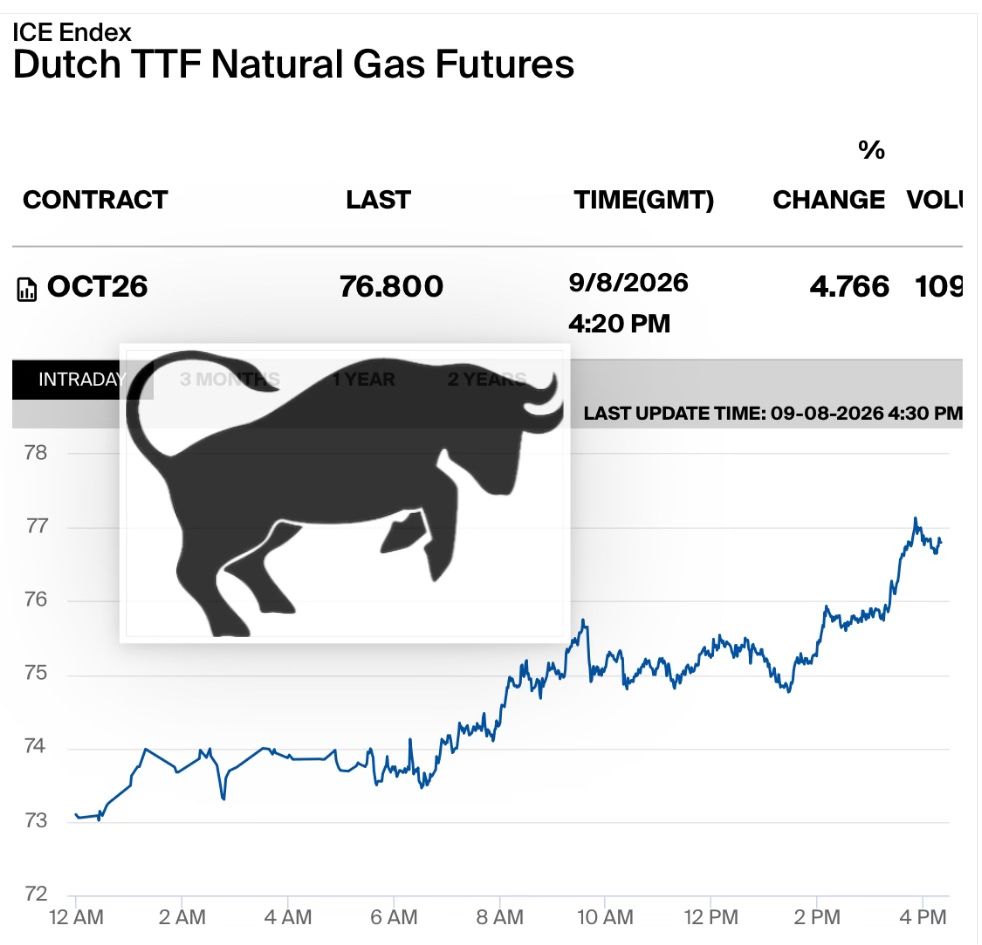
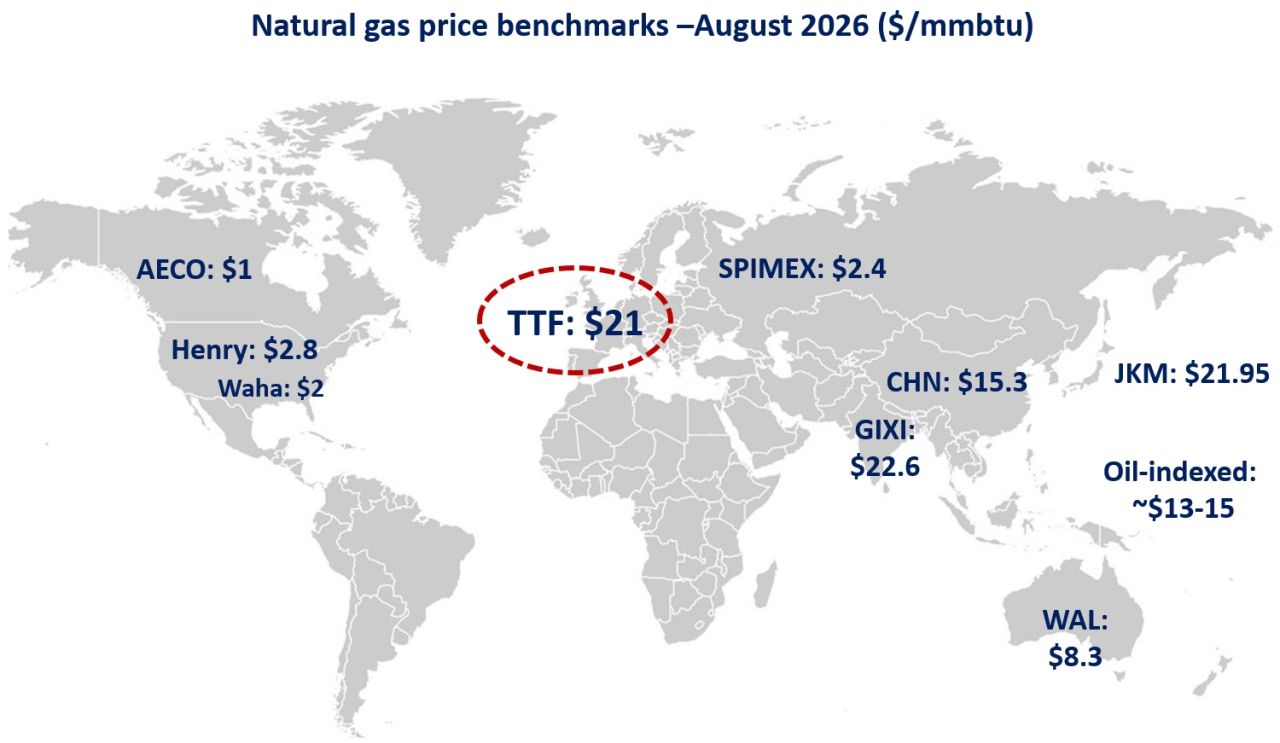
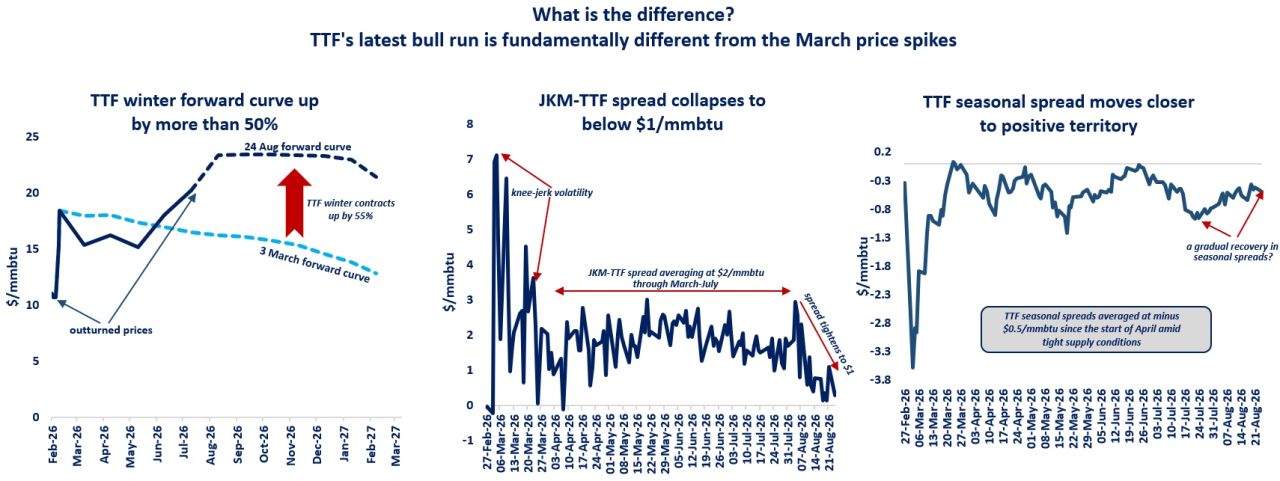
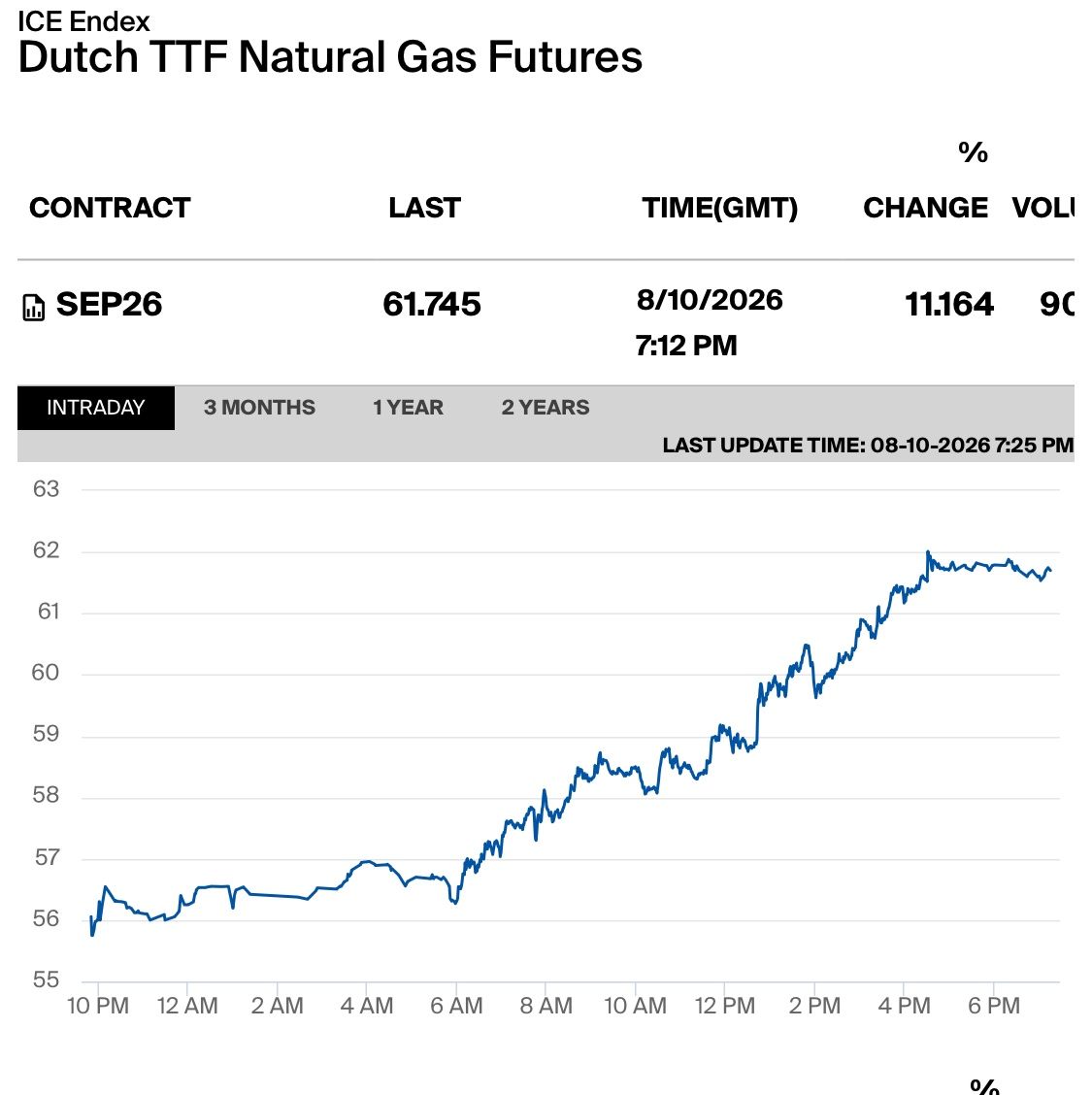
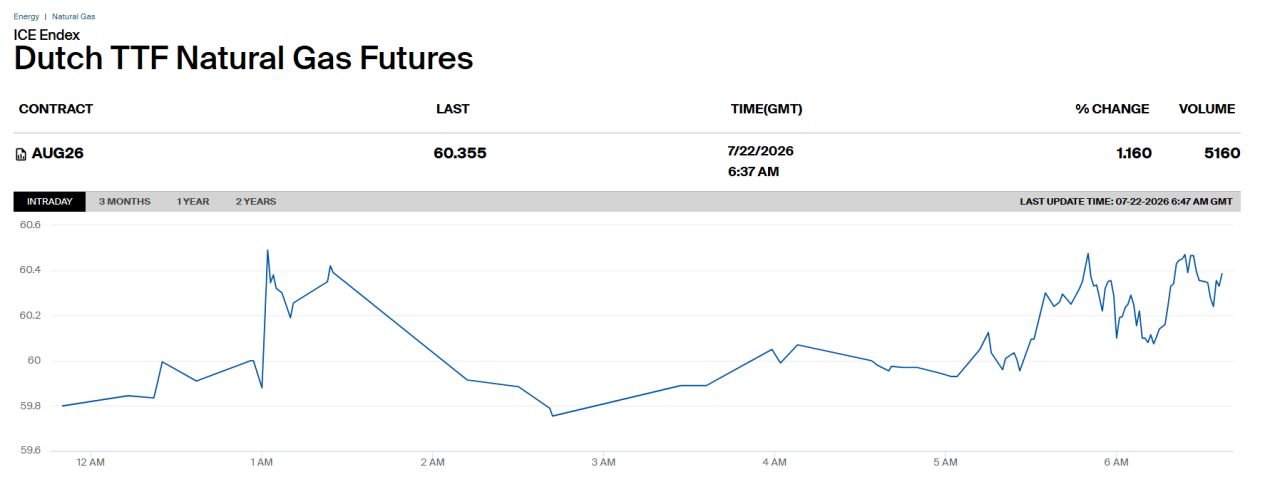
For the past six weeks, Dutch TTF prices have remained above €70/MWh, reaching a peak of €87.62/MWh on 14 October. The last time prices were this high was in late 2022, during the energy crisis triggered by the Russia-Ukraine war.
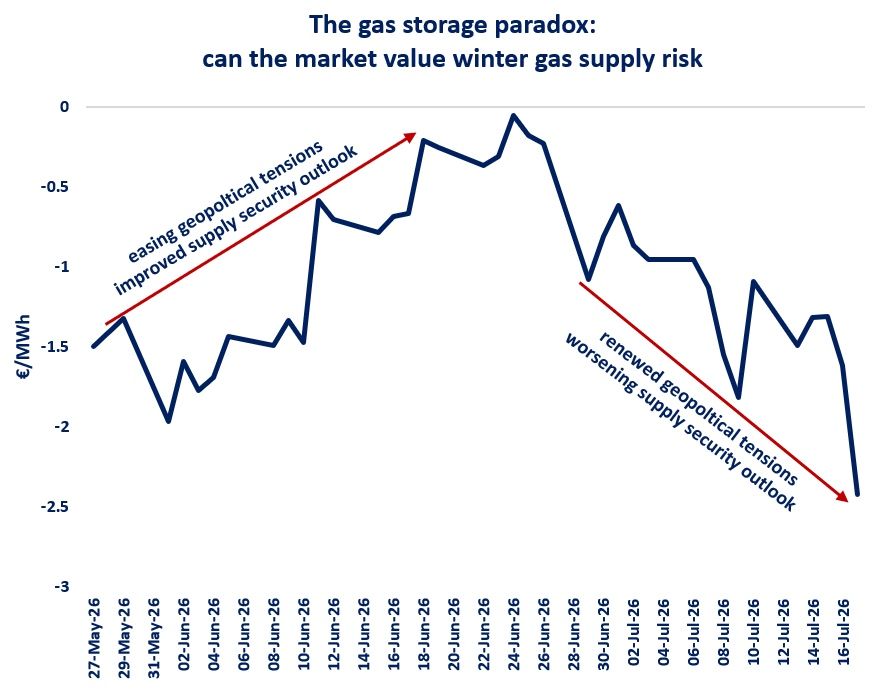
At the same time, commercial storage filling has remained challenging as the inverted seasonal spread reduces the incentive to inject gas.
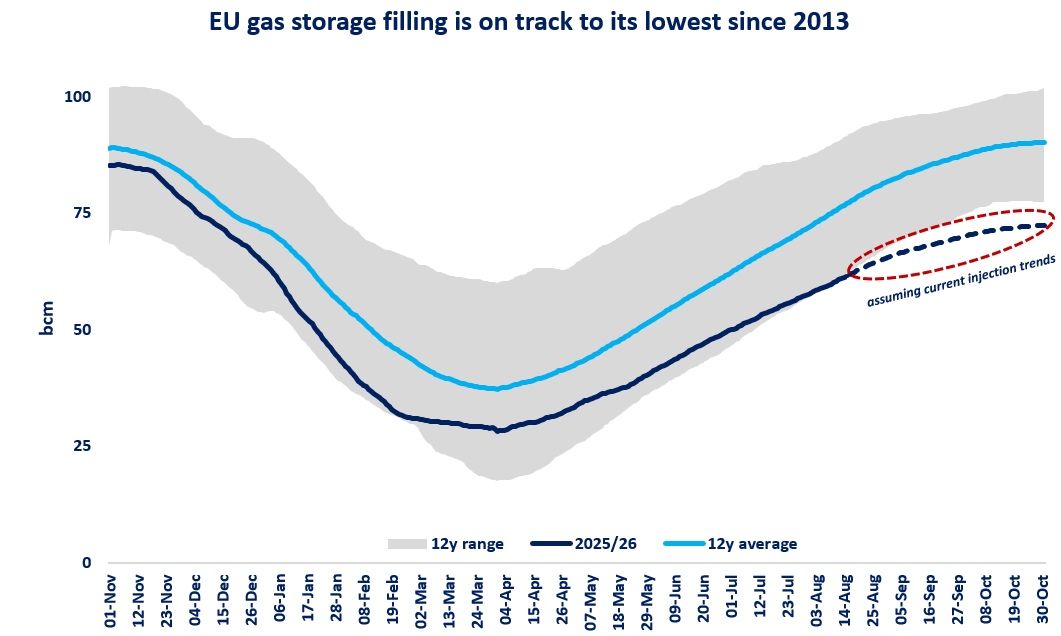
Dutch storage inventories recently passed 63% (89 TWh), well below the historical mid-October average of 88% (127 TWh). Normally, that would raise alarm bells.
But the benchmark itself has changed.
Following the European Commission’s request to reduce filling requirements, the Dutch government lowered its target from 115 TWh to 93 TWh, or 64% of capacity. The rationale was clear: forcing additional purchases into a tight market could put further upward pressure on wholesale prices.
So the Netherlands is now close to its new target, just with a much smaller buffer than originally planned.
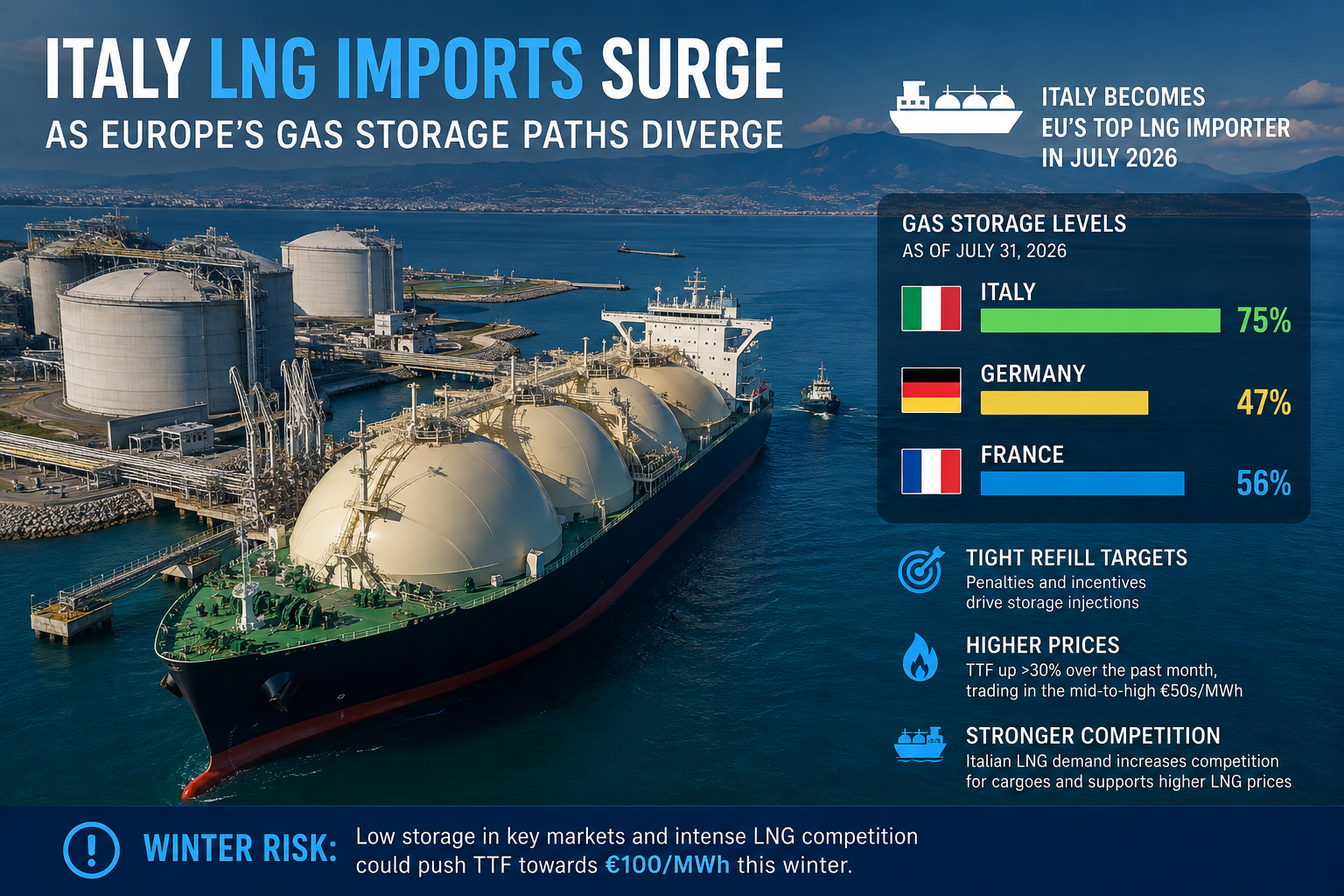
This is where LNG becomes increasingly important.
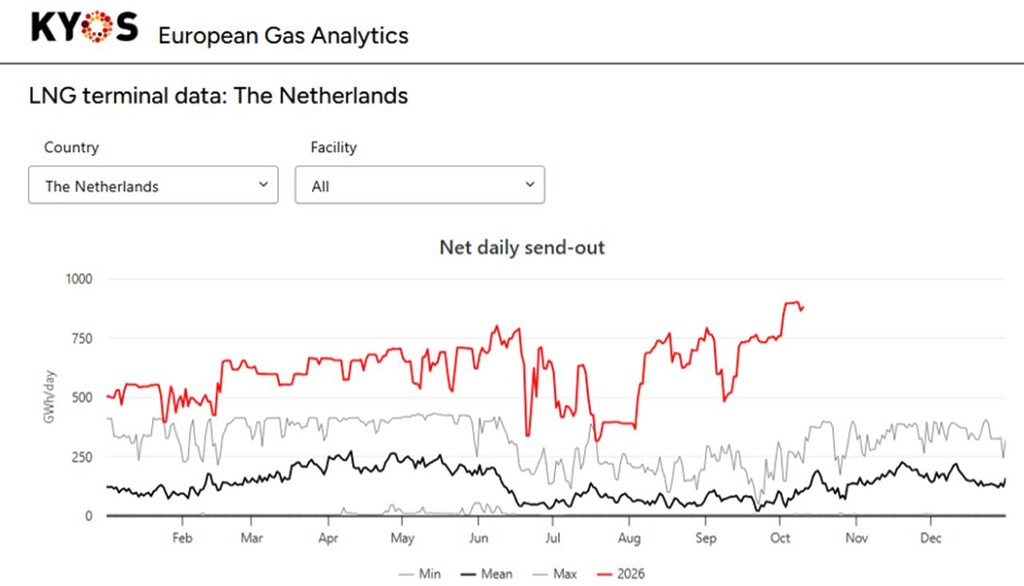
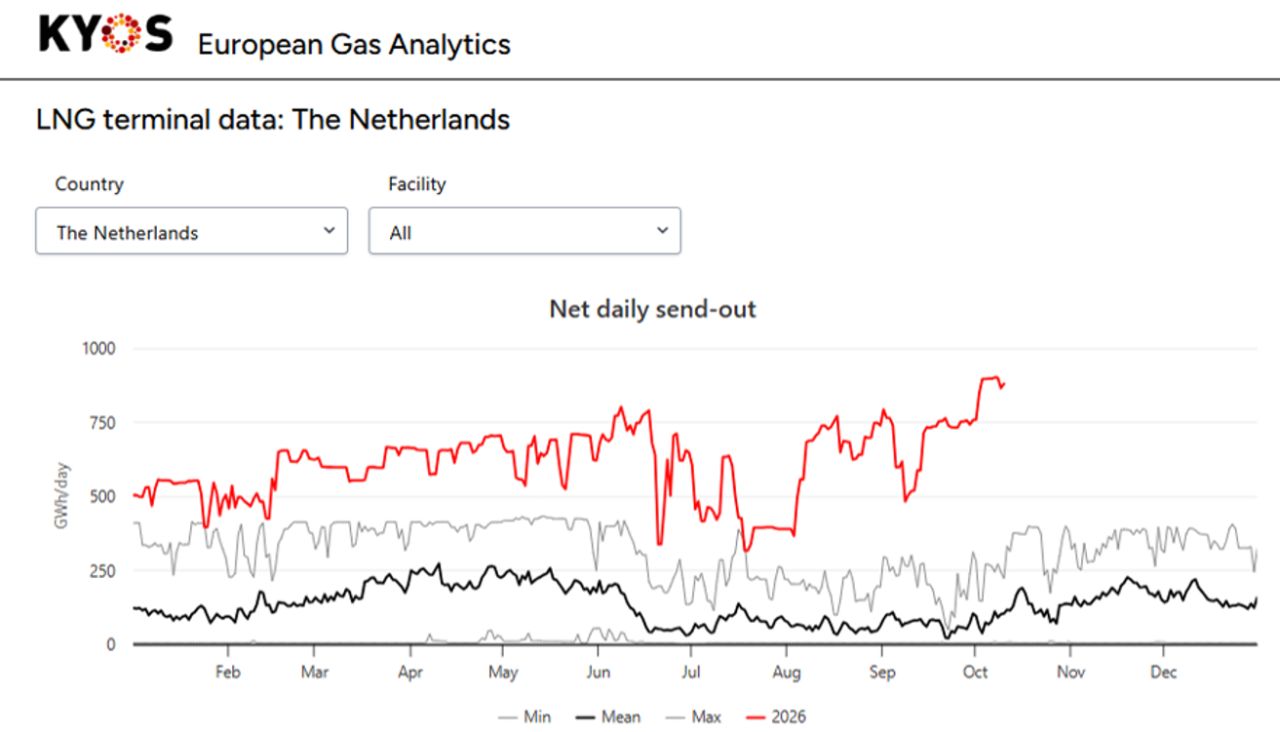
This year’s net daily LNG send-out has consistently remained above historical maximum levels, according to data on the KYOS European Gas Analytics platform, reaching a new high of 900 GWh/day last week.
The timing is notable: Gate LNG’s fourth tank went live on 1 October, adding 4 bcm/year of regasification capacity and boosting the Netherlands’ ability to offset lower storage through LNG imports.
In other words: the Dutch gas system is leaning more on LNG flexibility to offset a smaller storage buffer.
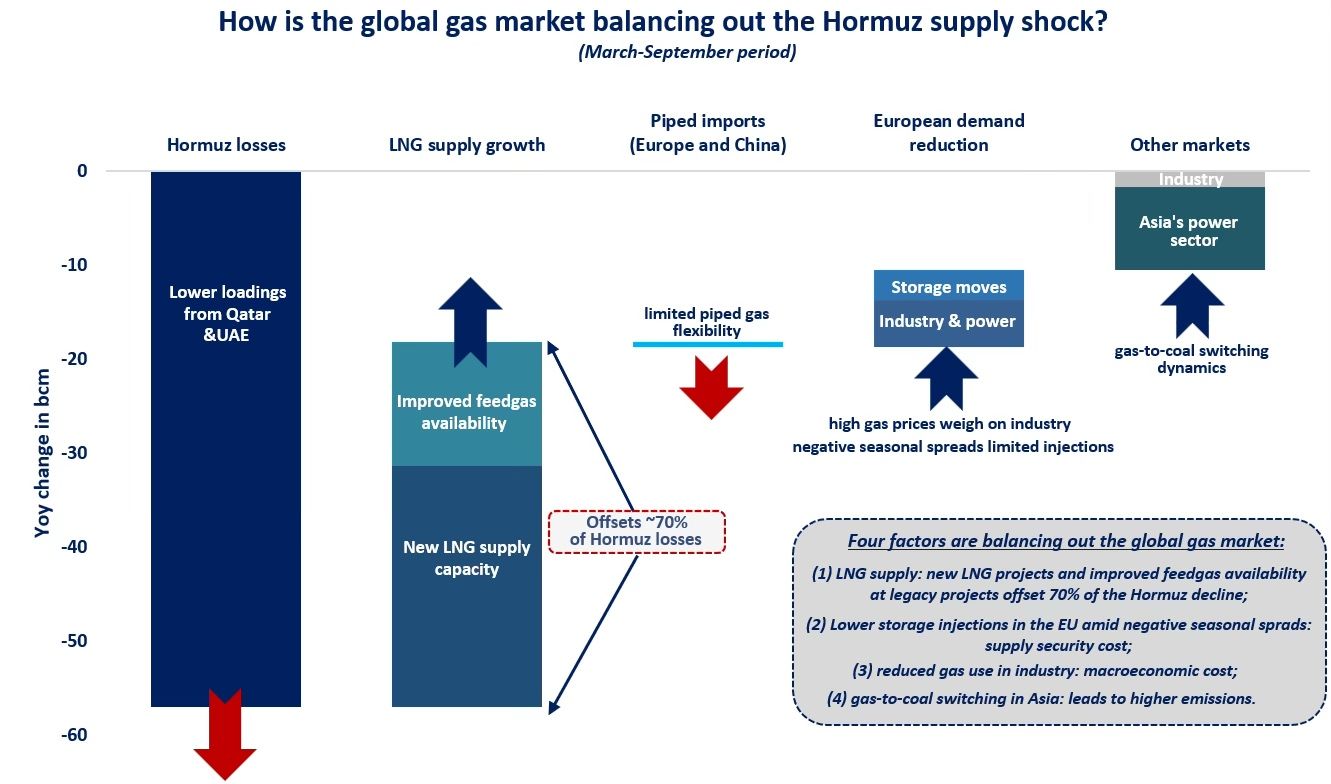
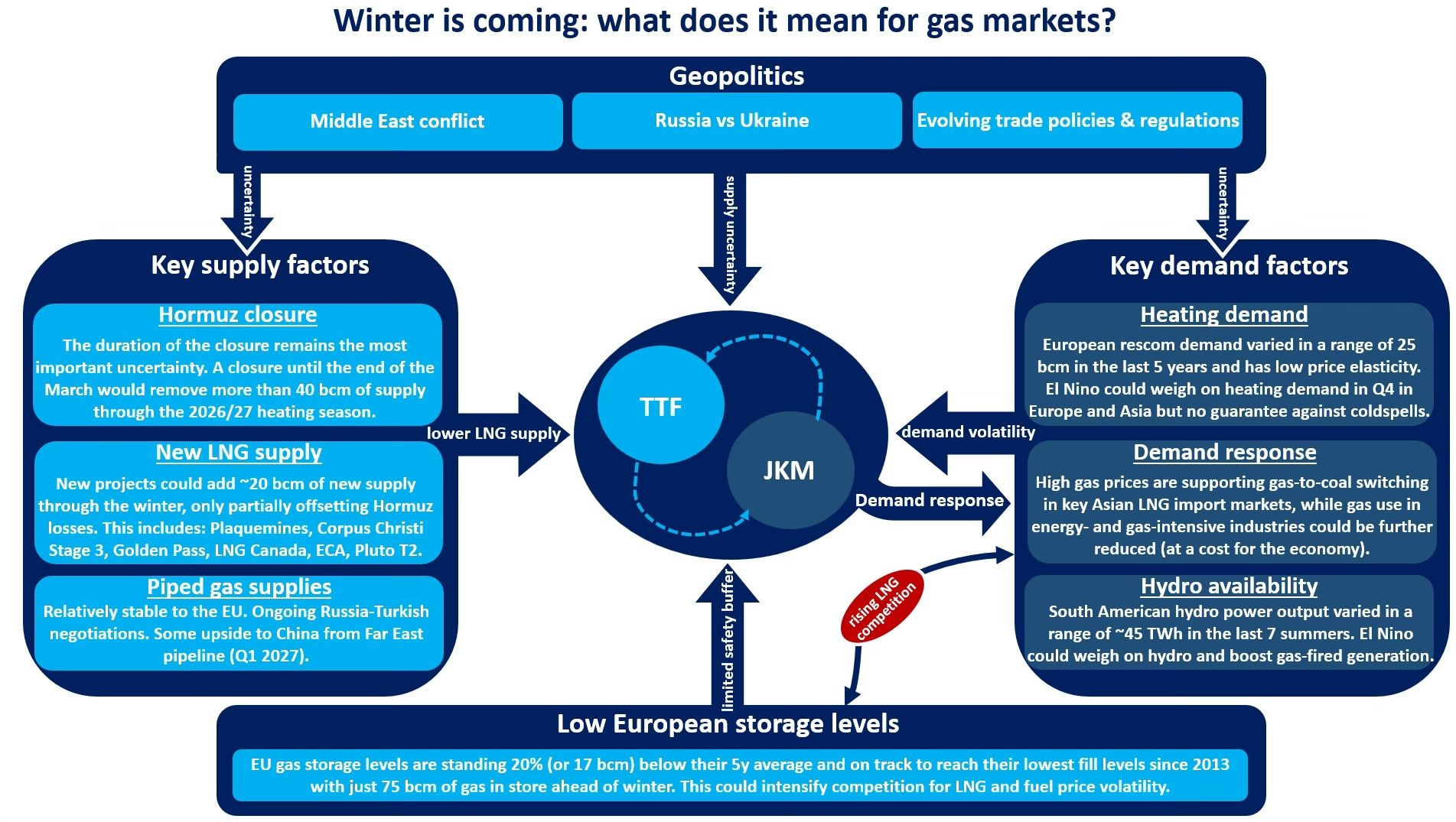
With uncertainty around the Strait of Hormuz still weighing on global LNG markets, important questions remain:
- How much geopolitical risk is already priced into the market? Will gas prices keep climbing?
- Can Europe accelerate storage injections before winter?
- Will LNG imports be enough if winter demand exceeds expectations?
In energy markets, uncertainty is not an exception. It is the baseline.
Rather than attempting to predict a single future outcome, the key challenge is understanding how assets and portfolios perform across a range of possible scenarios.
Source: KYOS Energy Consulting B.V. — LinkedIn, 14 October 2026.