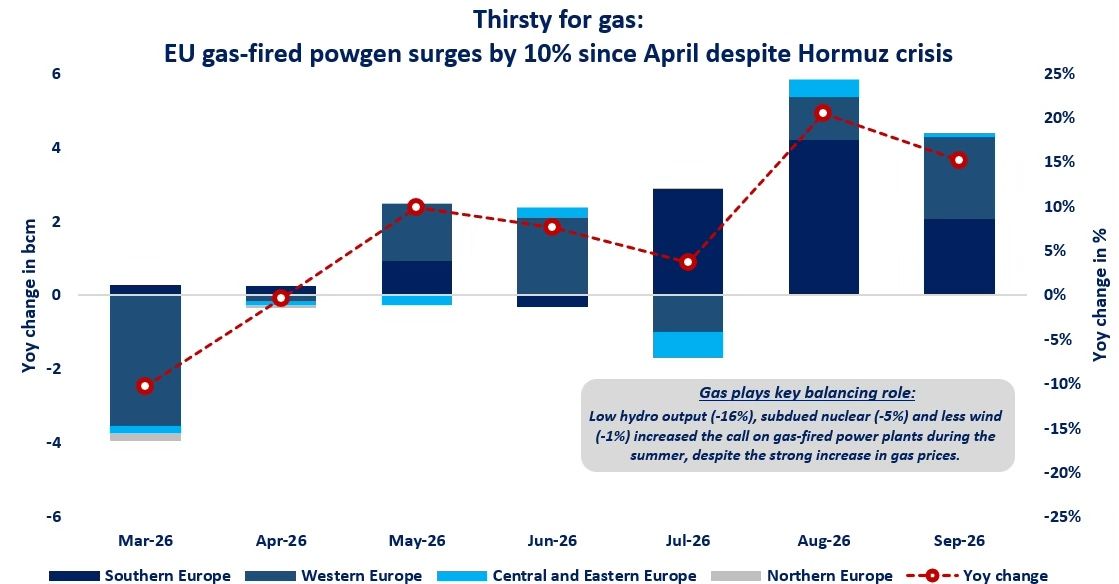
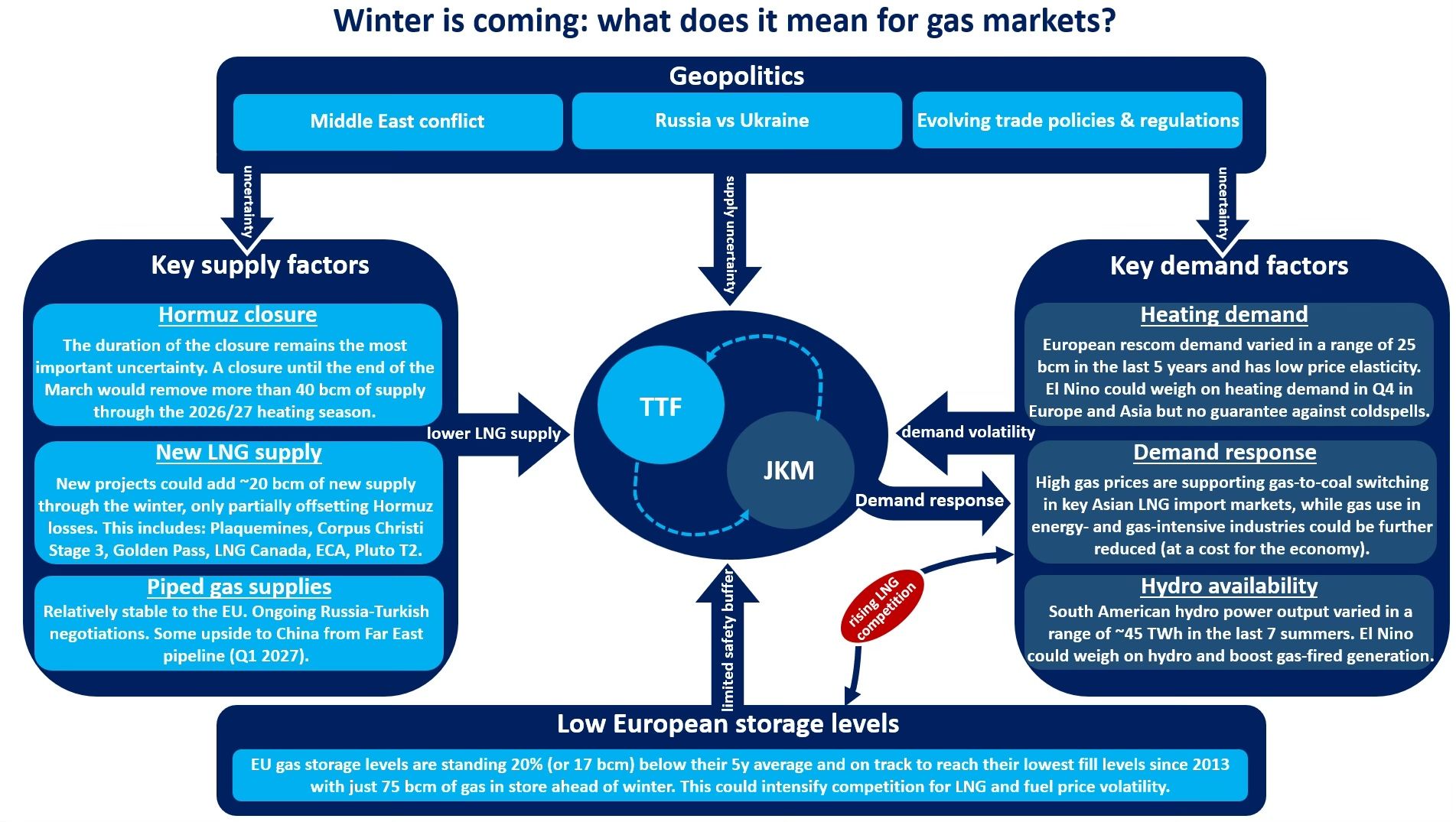
A difficult balancing act: the global gas market is balancing out the Hormuz supply shock with growing macroeconomic pain, higher emissions and ultimately reduced supply security ahead of the 2026/27 winter season.
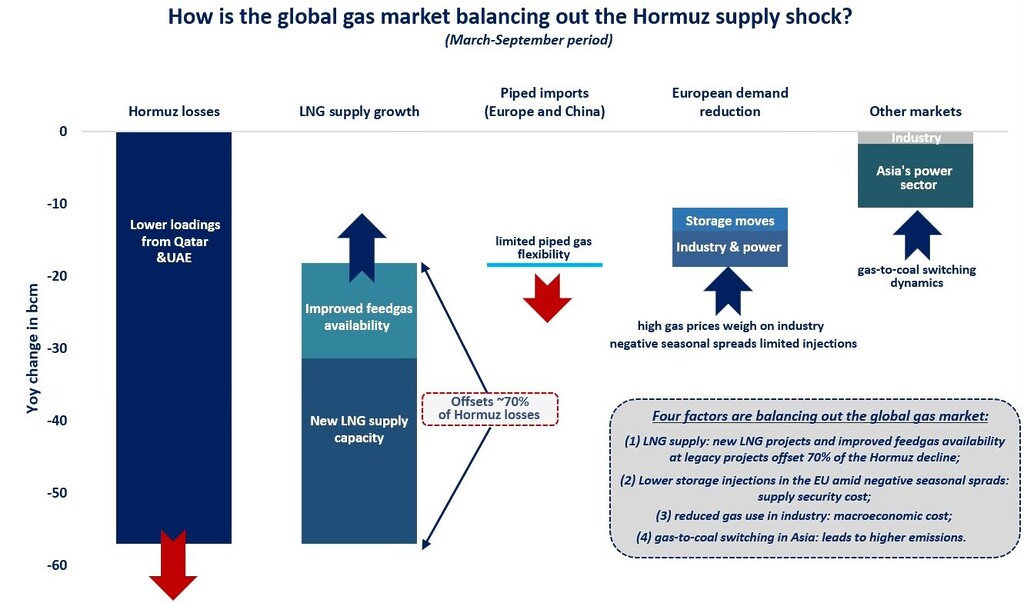
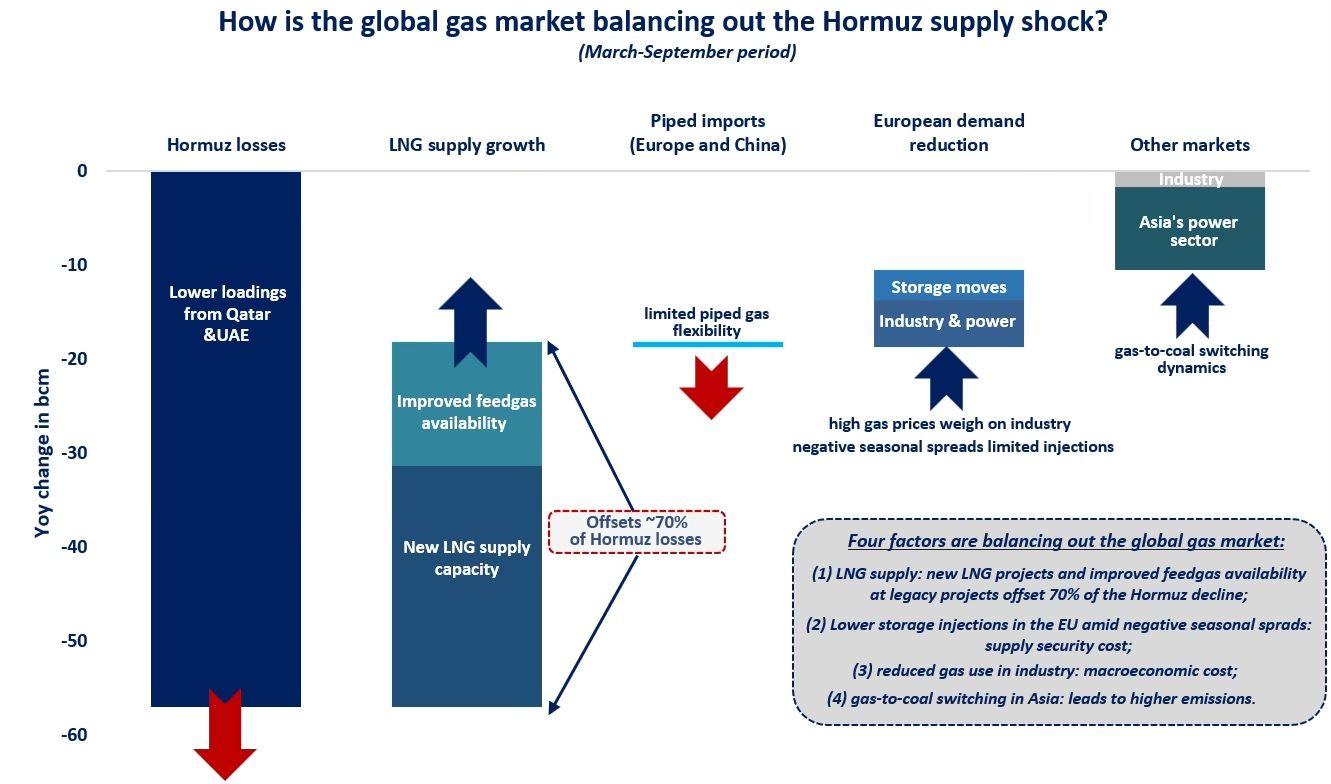
The de facto closure of the Strait of Hormuz choked off almost 60 bcm of LNG supply from the global gas market since the beginning of March, equating to almost 20% of the EU’s annual gas demand.
Four key factors are balancing out this unprecedented LNG supply shock:
(1) Non-Hormuz LNG supply
Non-Hormuz LNG grew by a staggering 15% yoy through the March–September period, adding almost 40 bcm of LNG to the global gas market and offsetting nearly 70% of the Hormuz losses. This very strong growth is supported both by the ramp-up of new LNG projects (Plaquemines, Corpus Christi Stage 3, LNG Canada and Golden Pass), as well as improved feedgas availability at certain legacy producers (such as Nigeria or Malaysia).
In contrast, piped gas supplies remained broadly flat compared to last year, highlighting the limited upside flexibility in piped gas trade, with pipelines typically running close to their nameplate capacity.
(2) Lower storage injections
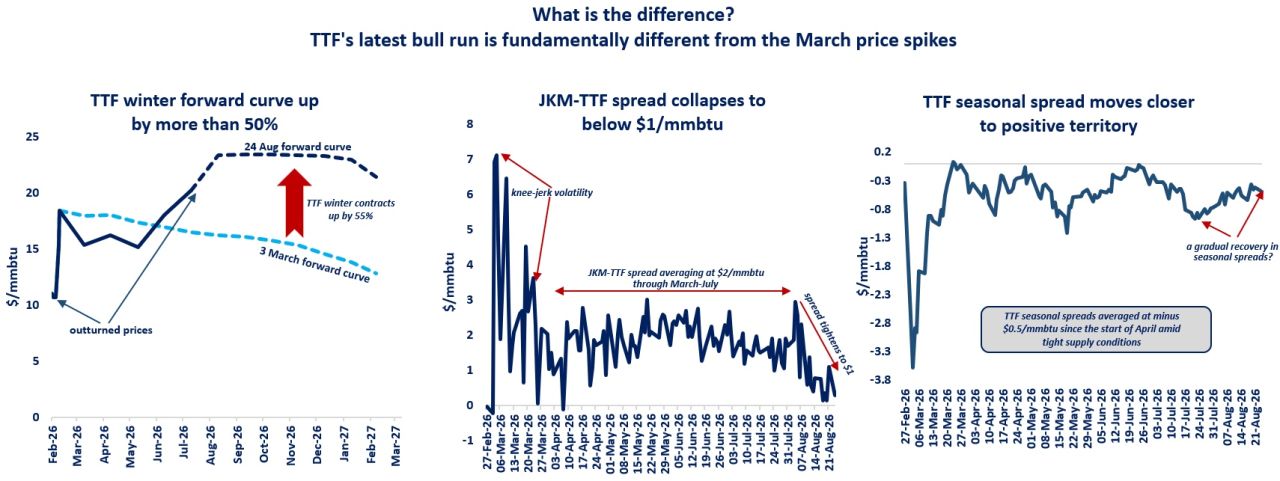
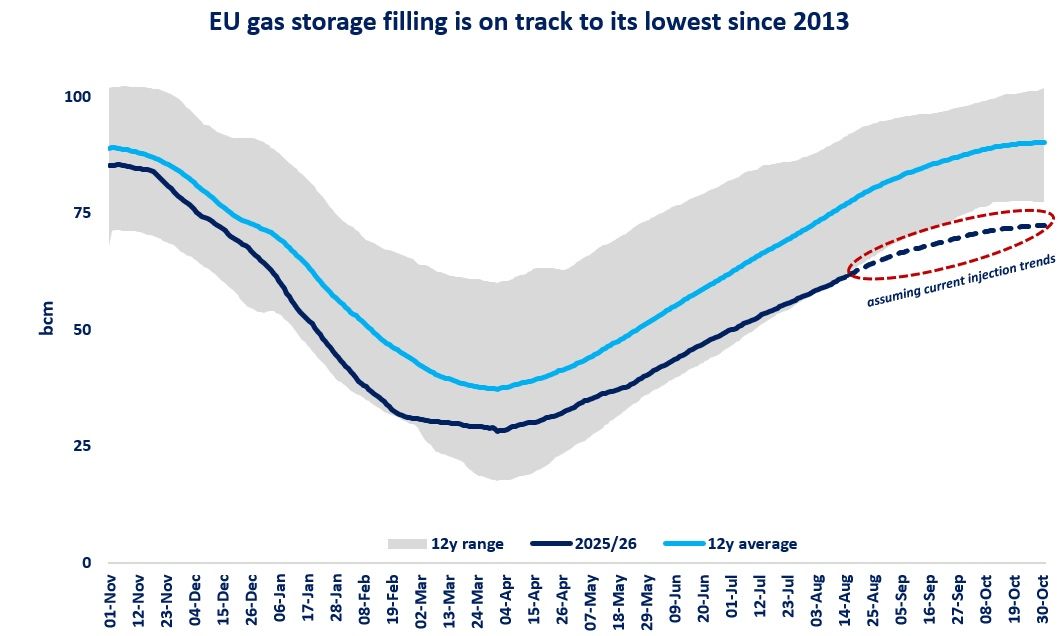
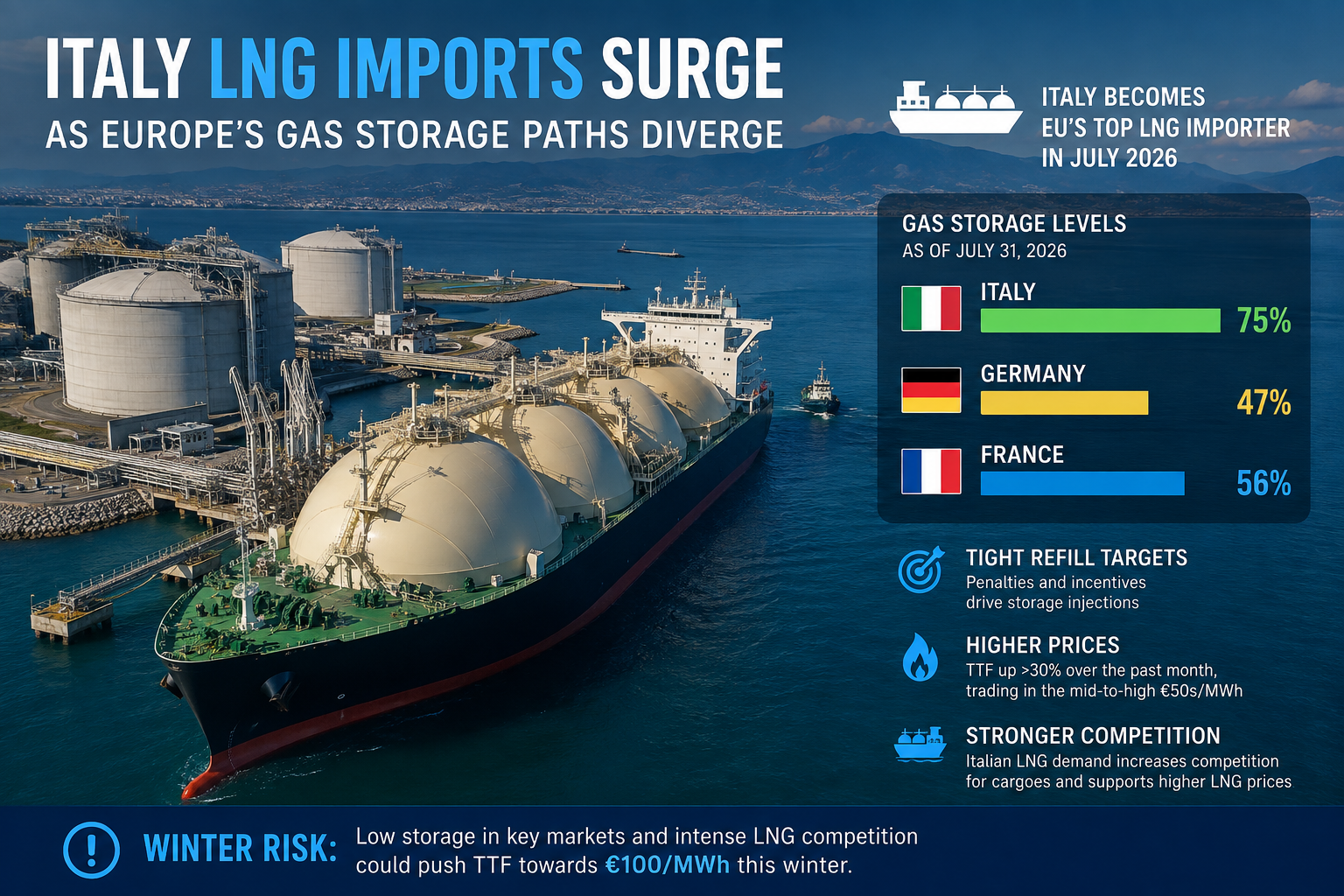
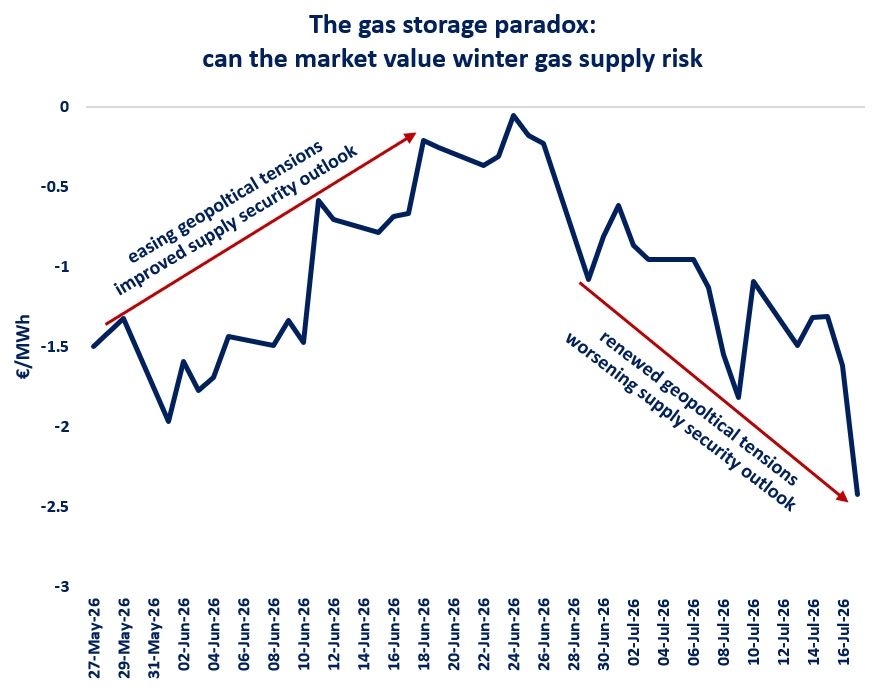
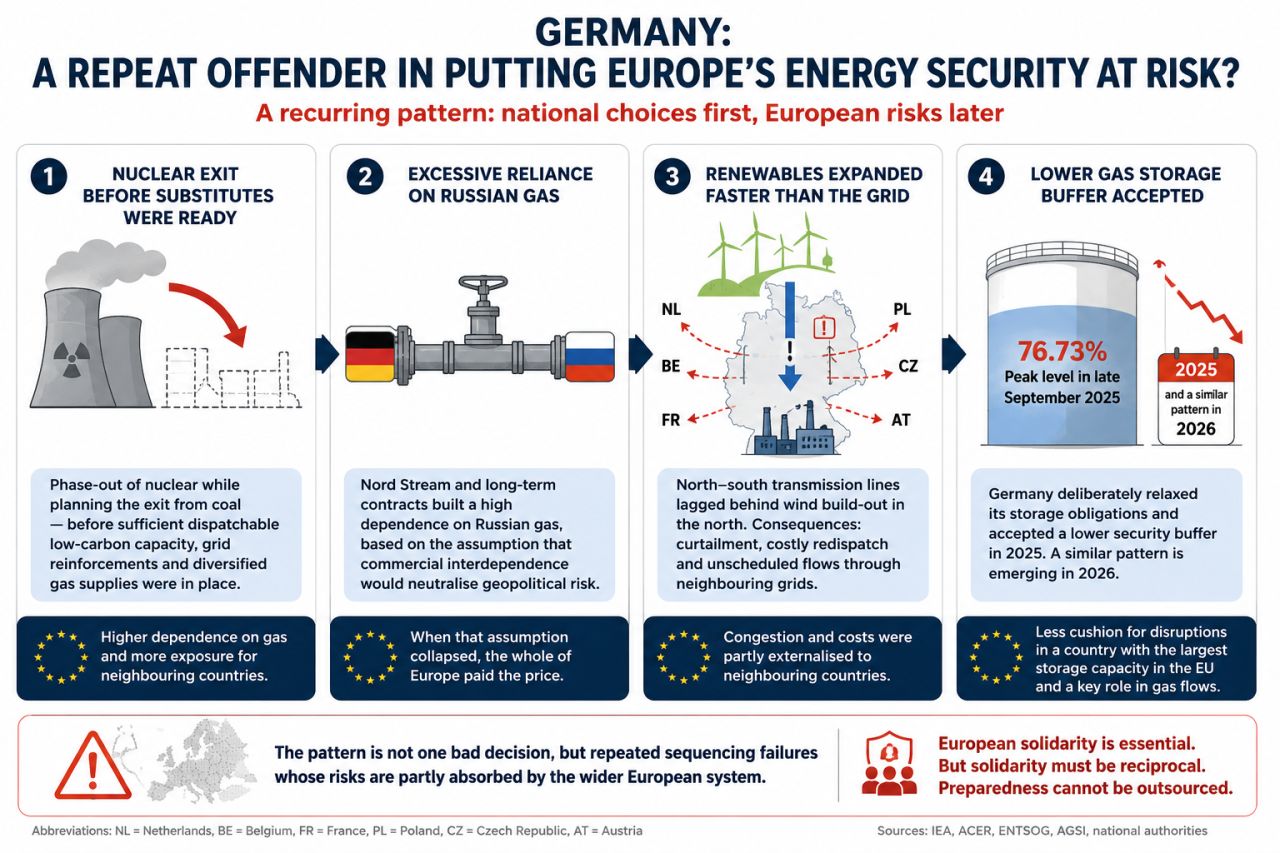
A key balancing item this summer was the EU’s subdued storage filling, down by around 10% yoy since the beginning of April. The lower storage intake might have moderated summer spot prices. On the flip side, this results in decade-low storage levels and a reduced security buffer ahead of the 2026/27 winter season.
(3) Industrial gas use
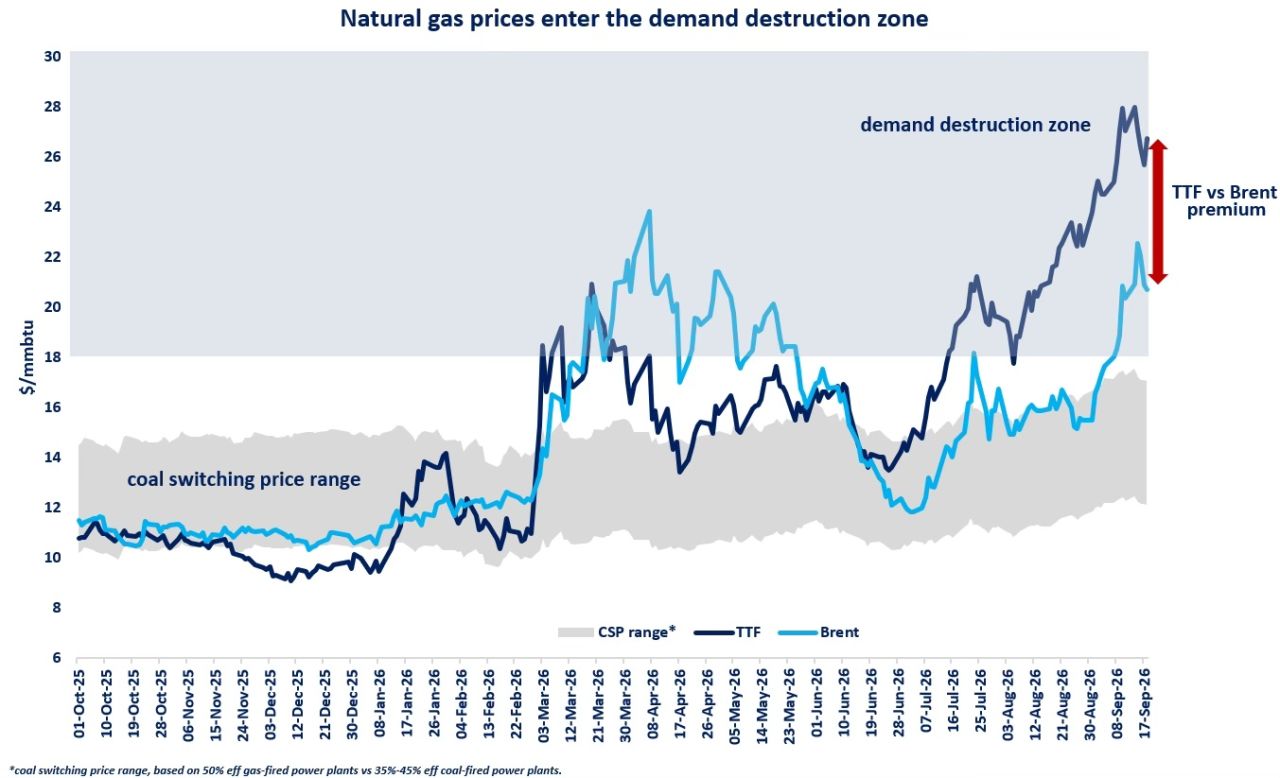
The strong increase in gas prices is already weighing on industrial gas demand. In Europe, gas use in industry dropped by almost 10% yoy in the third quarter, with losses primarily concentrated in the gas- and energy-intensive sectors. This balancing item comes at an important macroeconomic cost.
(4) Gas-to-coal switching
Asia’s gas burn in the power sector dropped by around 10% yoy since March, saving around 9 bcm of gas demand. Almost half of this demand reduction was concentrated in China. Asia’s vast coal-fired power fleet is playing a key role in balancing out the current supply shock, although this also comes at a cost: higher carbon emissions and worsening air quality.
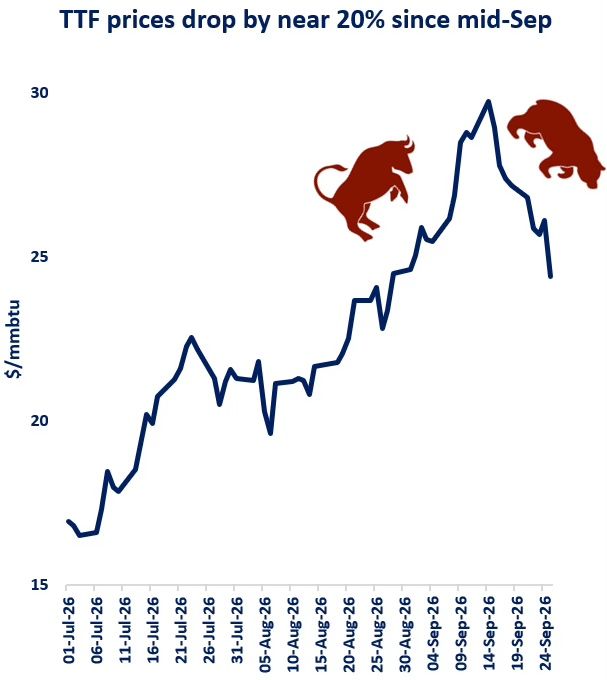
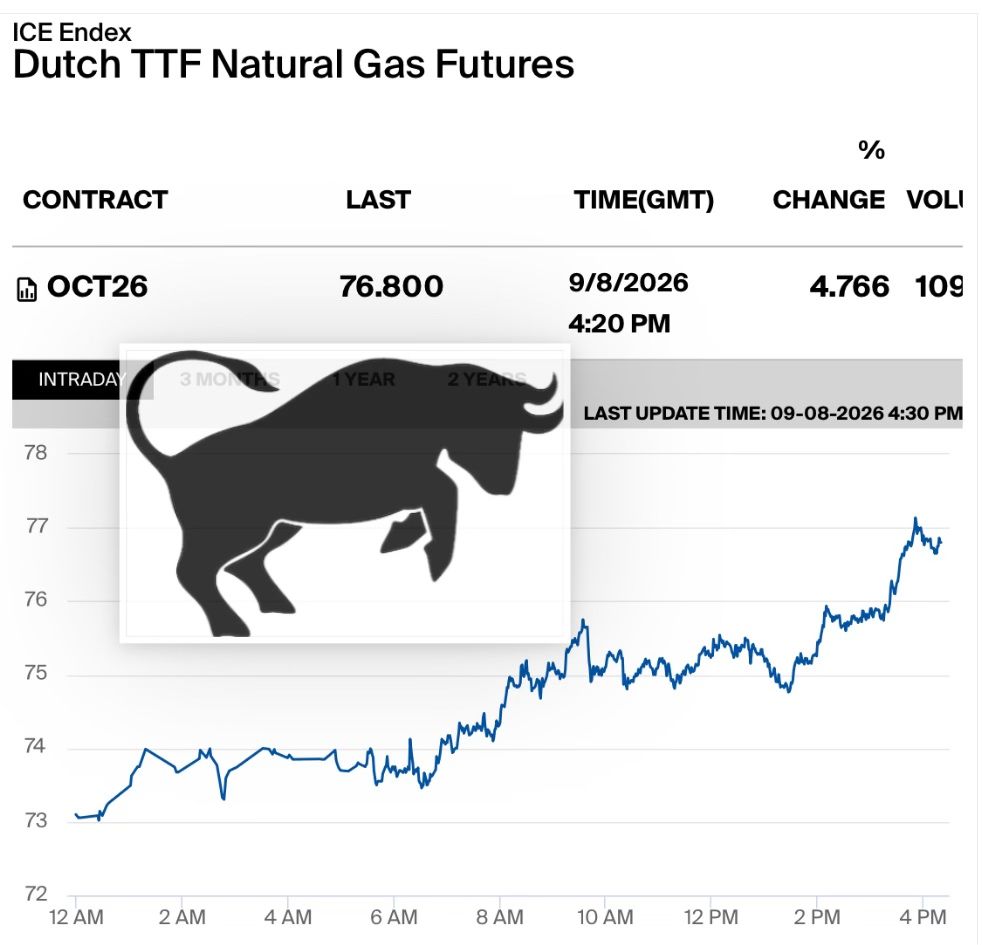
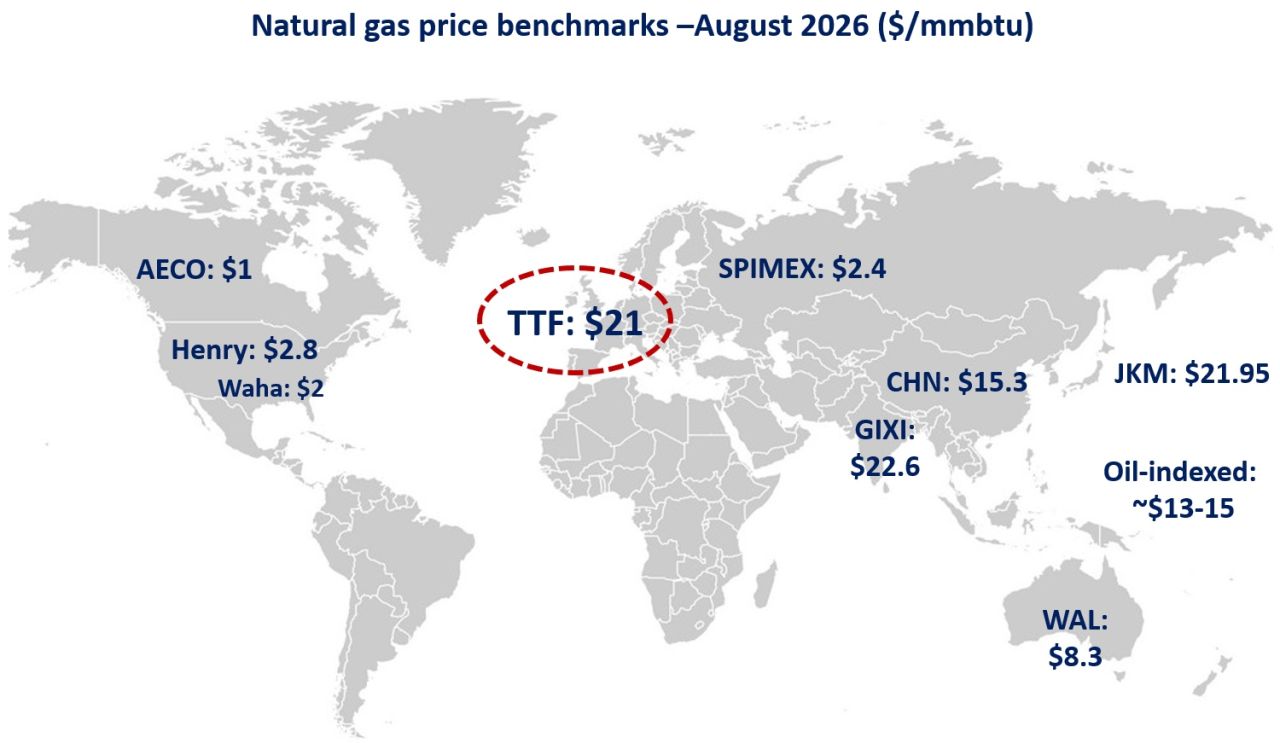
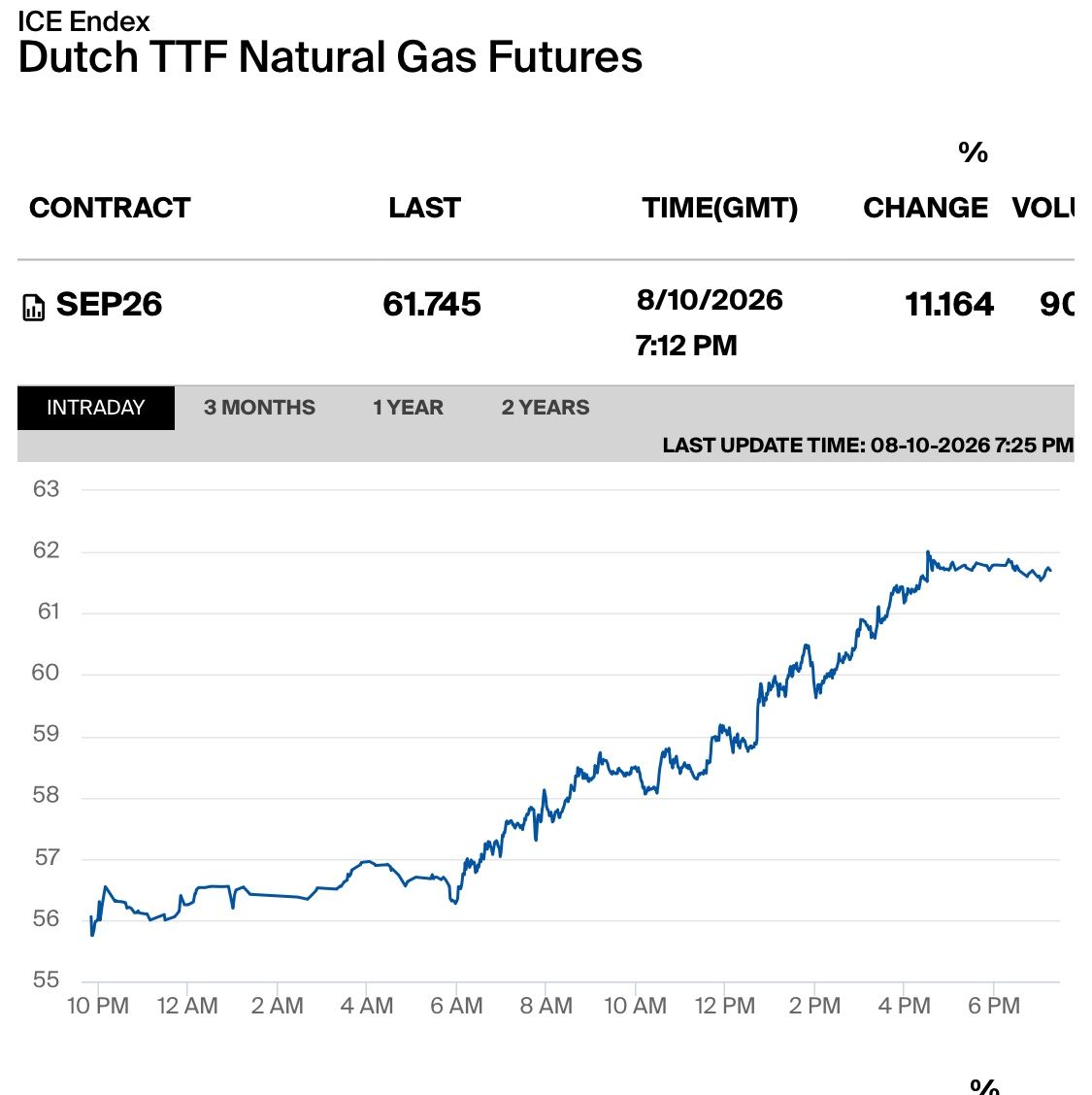
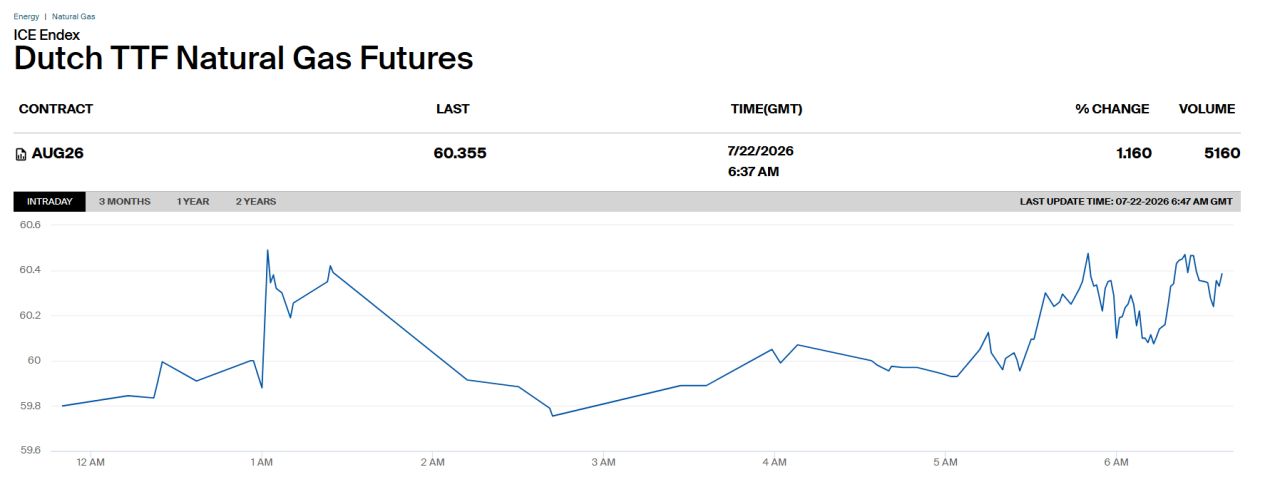
Once again, price signals through benchmarks like TTF and JKM are playing a key role in helping the market to balance out. These signals should not be distorted. They are not the root cause of the issue, just a symptom of a profoundly disrupted global gas market.
The current crisis also highlights the importance of continued investments in the gas and LNG value chain. Without all the new LNG projects which are ramping up production, we would be in a full-blown energy crisis today and with significantly higher gas prices both in Asia and Europe.
What is your view? How will the market balance out through the upcoming winter season? What are the key flexibility mechanisms which are still out there?
Source: Greg MOLNAR (Linkedin)