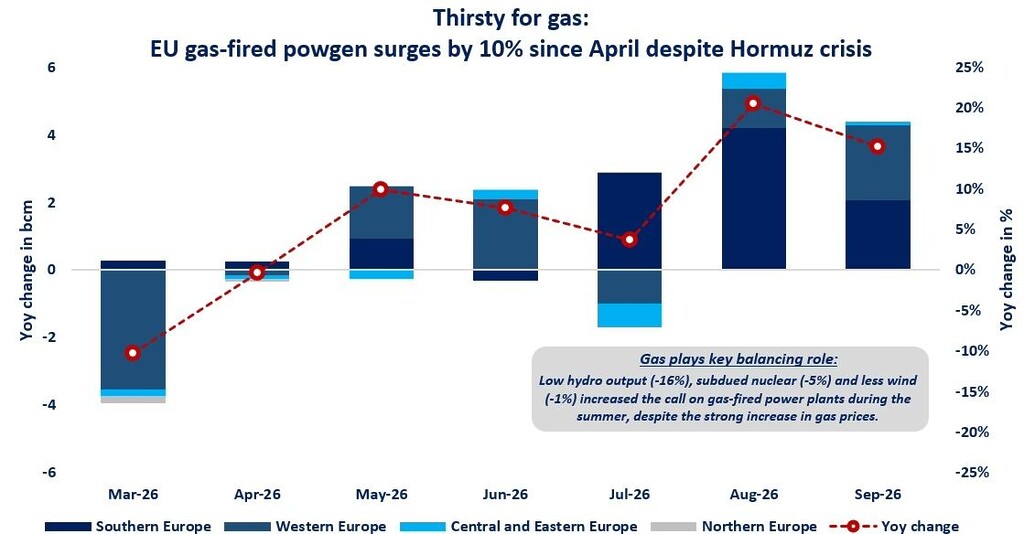
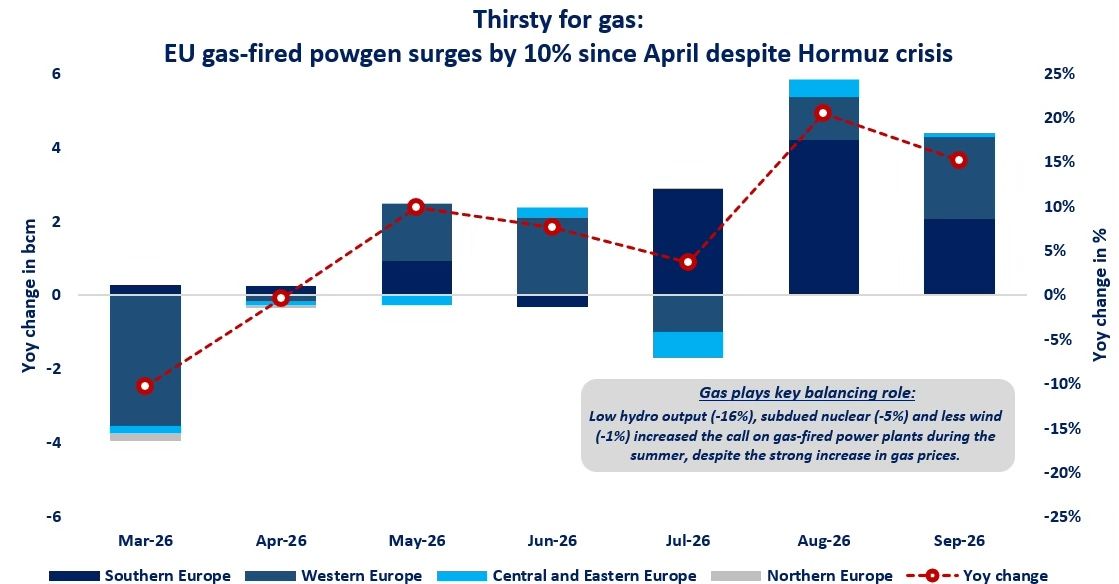
Thirsty for gas: gas-fired power in the European Union surged by 10% yoy since April despite the Hormuz crisis and the sharp increase in gas prices.
The steep decline in hydro power generation (-16%), together with subdued nuclear power output (-5%) and slower wind speeds (-1%) increased the call on gas- and coal-fired power plants in the European Union, which are playing a key back-up role when renewables power generation is not matching up with demand.
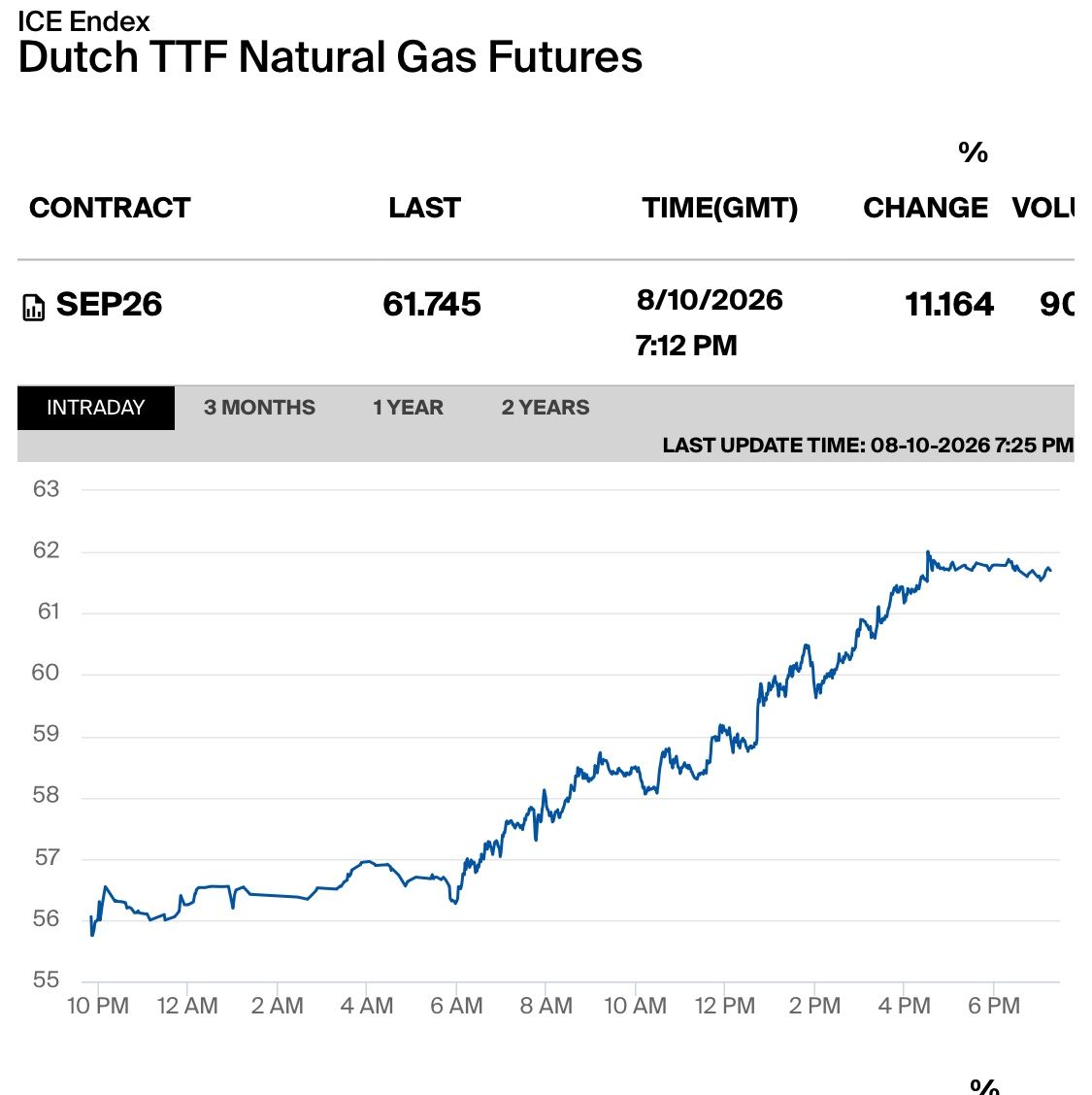
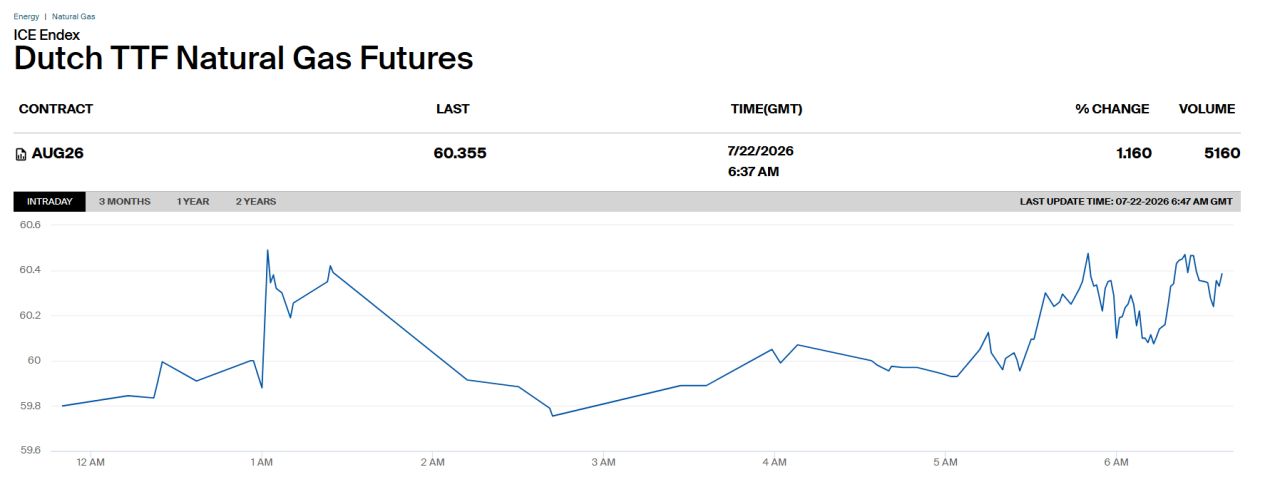
Gas burn in the EU’s power sector surged by almost 10% yoy since April, translating into around 3 bcm of incremental gas demand at a time when gas prices surged to their highest levels since the 2022/23 crisis.
This highlights once again the key balancing role played by gas-fired power plants in the European power sector and also the reduced price sensitivity of gas-to-power demand.
While in the past gas and coal-based generation have been competing in the thermal space, this competition is now possible only in a limited number of EU markets (essentially Germany and Poland).
This means that in many markets gas-fired power generation is the only back-up option after the phase-out of coal-based generation. This is especially true for the hydro-reliant South European markets such as Italy and Spain.
The reduced price-sensitivity of the European gas-fired power generation means also that the market needs to look after other flexibility mechanisms on the demand side.
In the EU context there are essentially two other flexibility mechanisms:
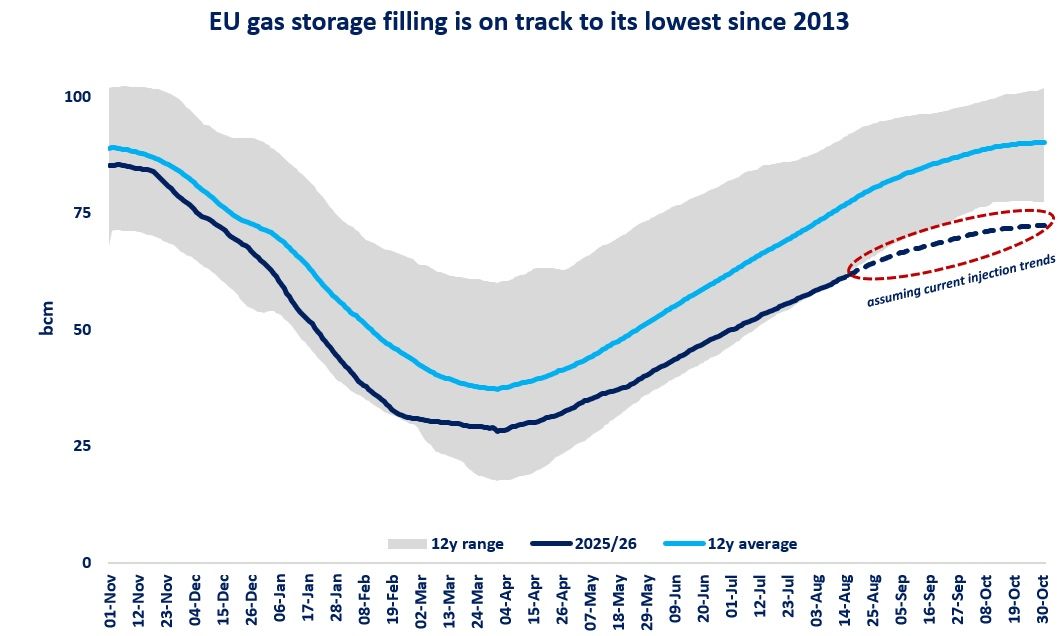
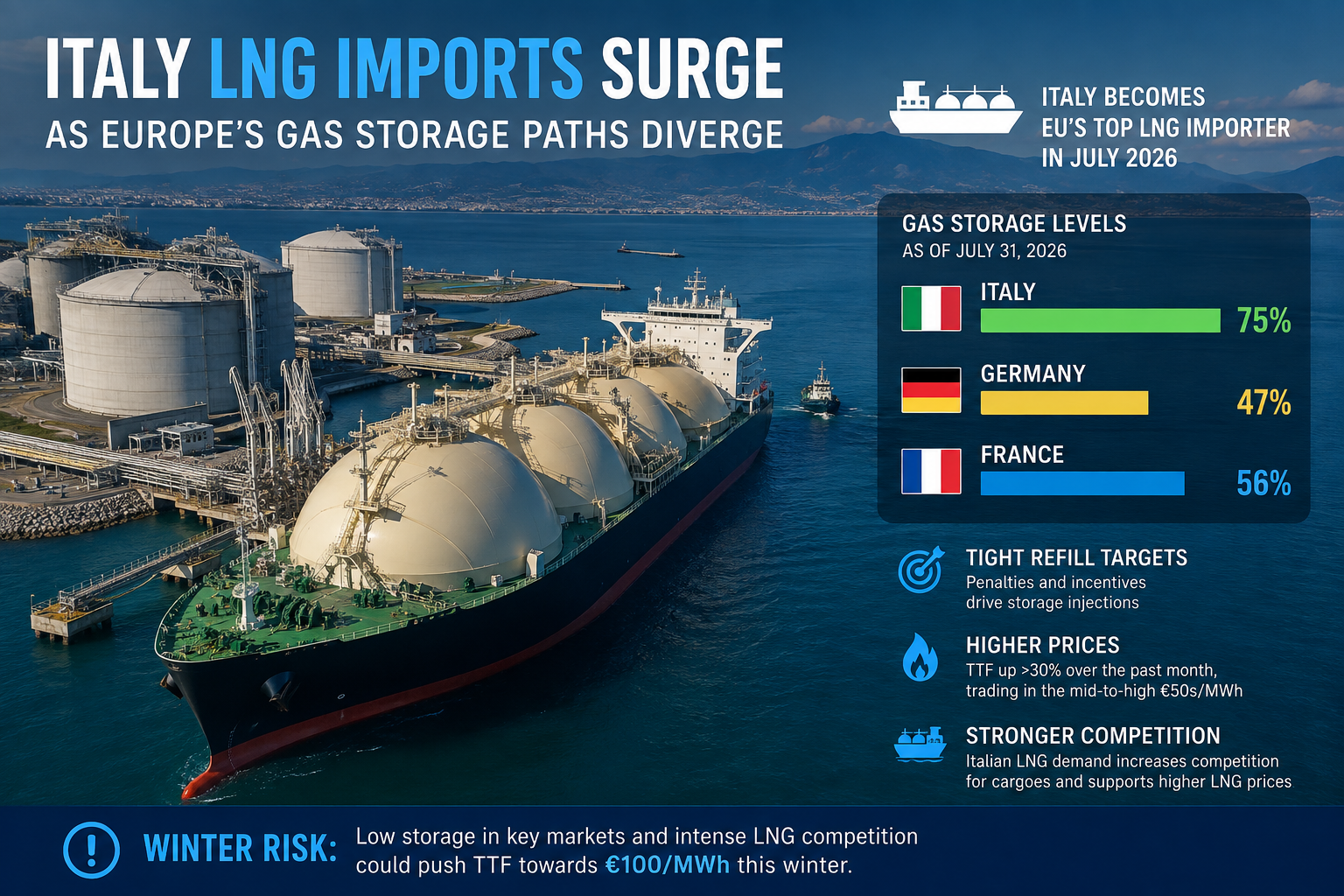
(1) Storage operations: EU storage injections are down by 14% yoy amid lower LNG inflows and stronger gas burn in the power sector;
(2) Industrial demand: gas use in industry dropped by an estimated 5% yoy since April primarily driven by gas-intensive sectors such as fertilisers and petrochemicals.
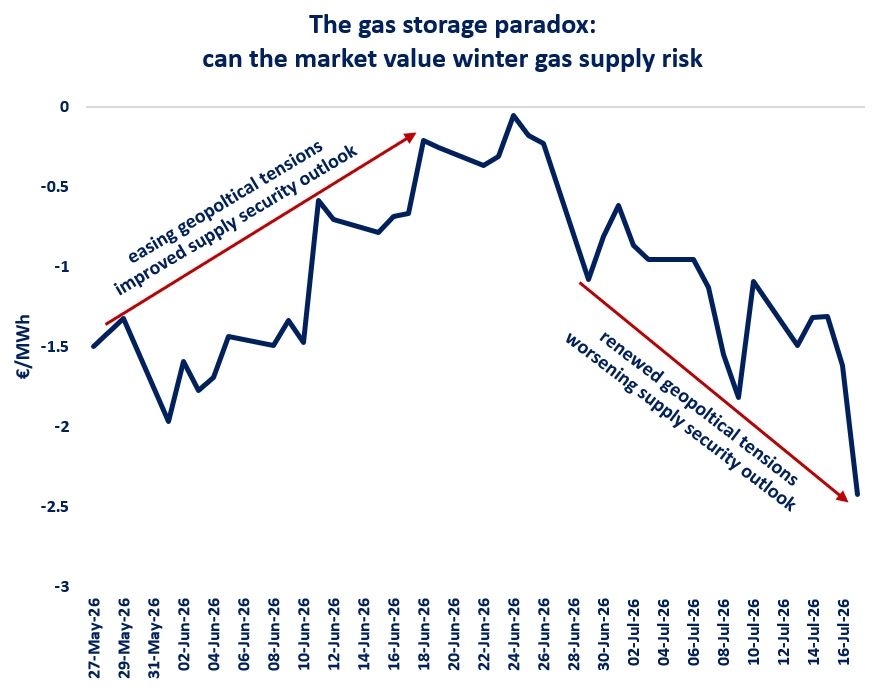
Both of these flexibility mechanisms come at an important cost: lower storage injections reduce the safety buffer of the European market ahead of winter, while reduced gas use in industry is weighing on the region’s economic competitiveness (and food supply security).
What is your view? How is the role of natural gas changing in the European power market? Is industry becoming the new balancing item? What is the economic cost of this?
Source: Greg MOLNAR (Linkedin), 5 October